The True Cost of LED Sign Ownership: Beyond the Install Price
When most business owners ask "what does a sign cost?", they're asking about the install price — what you pay the sign company to design, fabricate, permit, and install the sign. That's the headline number. It's the one that goes in the budget. It's the one you negotiate.
It's also not the whole story. The true cost of owning a commercial sign over its 15-to-20-year operational life is meaningfully higher than the install price, and the difference between a cheap sign and a quality sign over that timeline is almost always larger than the upfront price gap. This guide walks through where the actual costs sit, why the cheap install often costs more long-term, and how to think about sign cost as a total ownership decision instead of a one-time purchase.
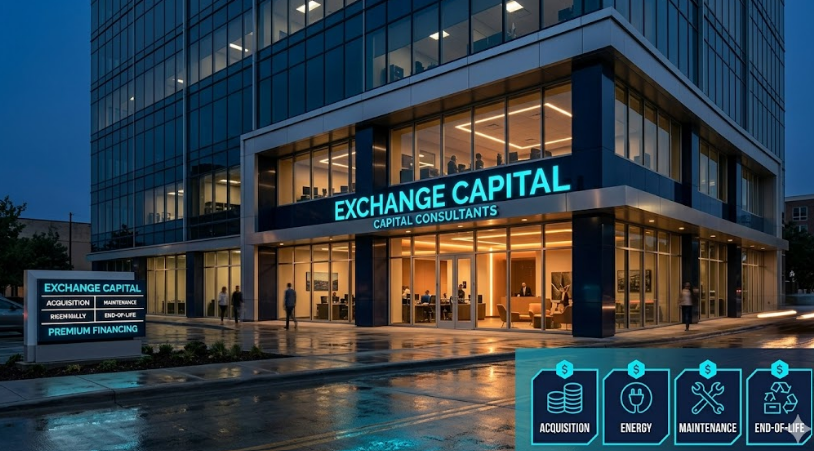
Total cost of LED sign ownership is shaped by four categories. Quality builds consistently win the long-term math:
- 4 cost categories: Acquisition · Energy · Maintenance · End-of-life
- Quality vs cheap: Quality signs cost ~20-30% less in total over 15 years
- LED retrofit: Cuts sign energy 60-70% vs fluorescent, payback 2-4 years
- LED lifespan: 50,000-100,000 hours (quality) vs 20,000-40,000 (cheap)
- Power supply replacement: Every 5-7 years on quality builds
- Service call frequency: 5-7 years (quality) vs 1-2 years (cheap)
The four cost categories of sign ownership
Every commercial sign has four cost categories that accumulate over its operational life. Understanding all four is the difference between buying a sign cheap and buying a sign smart.
1. Acquisition cost
The headline number. Design and rendering, fabrication labor, materials, engineer-sealed structural drawings if required, electrical drawings, permit fees, project management, installation labor, and crane services if applicable. Paid once, upfront.
2. Energy cost
Your sign uses electricity every night for its entire operational life. For most channel letter and box sign installations this is modest but not zero — and it compounds across 15+ years. Digital billboards and LED message centers scale up significantly because they run more hours and use more total wattage.
3. Maintenance cost
LED modules eventually fail. Power supplies eventually fail. Sign faces eventually fade from UV exposure. Mounting hardware eventually needs inspection. All of this carries cost over the sign's life — and this is the category where cheap signs and quality signs diverge most dramatically.
4. End-of-life cost
Eventually the sign needs replacement, refurbishment, or removal. Rarely budgeted at time of purchase but absolutely real. Quality signs can be refurbished and extend operational life by 10-15 years on the same cabinet. Cheap signs typically can't be refurbished and require full replacement.
Insist on UL-listed components. UL listing isn't a brand thing — it's a safety and quality standard. Non-UL components have failure rates 2-3x higher than UL-listed equivalents and can complicate insurance coverage if the sign causes electrical issues.
Acquisition: what you're actually paying for
When you get a quote for a channel letter sign or pylon sign, the line items typically include: design and rendering, fabrication labor, materials (aluminum returns, acrylic faces, LED modules, power supplies, mounting hardware), engineer-sealed structural drawings if required, electrical drawings, permit fees, project management, installation labor, and crane services if applicable.
Cheap signs cut corners on one or more of these. Common cost-cutting tactics:
- Lower-grade LED modules — shorter lifespan ratings, faster brightness degradation
- Lower-grade power supplies — failure rates 2-3x higher than UL-listed quality units
- Thinner aluminum returns — more vulnerable to dent damage and weather
- Generic acrylic face material — yellows faster from UV exposure
- Reduced trim cap quality — separates from the letter over time
- Skipped permitting — saves money upfront, costs much more in fines and remediation
The cheap sign and the quality sign look identical when installed in week one. The difference shows up in year three, when the cheap sign starts having LED failures and the quality sign hasn't had its first service call yet.
Energy: smaller than people think, but it compounds
A modern LED channel letter sign uses dramatically less energy than a fluorescent-illuminated sign of the same size. The transition from fluorescent to LED happened around 2010, and any sign manufactured today should be LED. If you have an older fluorescent sign, retrofitting to LED typically saves 60 to 70 percent on energy costs.
For a typical commercial storefront sign operating 12 hours per night, annual energy cost is modest — small relative to other operating costs but real. Pylon signs use more. LED message centers use significantly more. Large-format digital billboards use the most (often running 24 hours per day).
Where energy matters most: digital signage. If you're operating a digital billboard or LED message center, energy efficiency in the display matters more than for any other sign type. Specify high-efficiency display systems with ambient light sensors (automatic brightness reduction at night) to keep operating costs reasonable across the sign's life.
LED retrofit conversions typically pay back in 2 to 4 years from energy savings alone, before counting reduced maintenance costs. Older fluorescent-illuminated signs are nearly always retrofit candidates if the cabinet is structurally sound.
Maintenance: where total cost is actually decided
This is the category where the quality differential between cheap and quality signs shows up most clearly. Over a 15-year operational life, maintenance cost differences often exceed the upfront price gap by several times.
A quality channel letter sign with UL-listed components, premium LED modules, and proper installation typically goes 5 to 7 years before any maintenance service call. The first service call is usually a single power supply failure or a few failing LEDs in one letter. The rest of the sign continues operating normally.
A cheap channel letter sign starts having LED failures in year 2 to 3. The failures multiply. By year 5, you've had three or four service calls. By year 7, you're considering full replacement because individual LED replacements are no longer cost-effective relative to the underlying structure.
This is why scheduled maintenance contracts make economic sense for multi-location brands and property managers. Catching component failures early (before they cascade) and conducting periodic preventive maintenance dramatically reduces total cost of ownership compared to reactive break-fix-only servicing.
Typical maintenance categories over a 15-year sign life
- LED module replacements: 2-5 failures on quality signs, 10-15+ on cheap signs
- Power supply replacements: 1-2 failures (5-7 year cycle)
- Face replacement: Typically once at year 8-12 due to UV yellowing; sooner on cheap face material
- Electrical service: Occasional wiring, conduit, or breaker issues
- Cabinet repair: Vehicle impact, weather damage, vandalism — sporadic but real
- Cleaning: Annual or bi-annual to maintain illumination quality
End-of-life: the cost most people don't budget
Eventually your sign reaches end of operational life. The structure may still be sound (aluminum doesn't degrade meaningfully in 20 years), but the LED components are obsolete, the face is faded beyond cost-effective replacement, and the technology has moved on enough that retrofit isn't worthwhile.
At that point, three options:
Option 1: Full replacement
Cost is approximately the same as original acquisition (in nominal dollars; less in real dollars due to LED technology improvements). The typical path for storefronts undergoing renovation or rebranding.
Option 2: Refurbishment
Replace the LED modules, power supplies, and faces while keeping the cabinet structure. Cost is roughly 30 to 50 percent of new-sign cost. Adds another 10-15 years of operational life on the same cabinet. Typical path for property owners with sound existing signage who want to extend life without full replacement. See our sign repair and maintenance service for refurbishment details.
Option 3: Removal without replacement
Cost is just the removal labor and disposal — modest. The path for properties closing, rebranding to a different sign type, or relocating.
Smart buyers anticipate end-of-life cost during initial purchase. Quality signs with good cabinet construction can be refurbished, extending total operational life from 15 years to 25-30 years on a single cabinet structure. Cheap signs typically can't justify refurbishment investment because the cabinet doesn't merit it.
Quality build vs cheap build: side-by-side
Here's how the two approaches actually compare across the four cost categories over a 15-year operational period. The cheap build wins on upfront cost. The quality build wins on everything else.
| Factor | Quality Build | Cheap Build |
|---|---|---|
| Upfront cost (relative) | Higher (baseline) | ~20-30% less |
| LED module rating | 50,000-100,000 hours | 20,000-40,000 hours |
| Power supply quality | UL-listed, multi-year warranty | Generic, often no warranty |
| Annual energy use | Lower (efficient LEDs) | Higher (less-efficient LEDs) |
| First service call | Year 5-7 | Year 2-3 |
| Service calls over 15 yrs | 3-4 typical | 8-12 typical |
| Face material replacement | Year 10-12 (UV yellowing) | Year 6-8 |
| Refurbishment potential at year 15 | Yes (extends 10-15 yrs) | No (cabinet not worth it) |
| 15-year total cost (relative) | Lower (~20-30% savings) | Higher (cumulative) |
Warranty terms are a useful proxy for component quality. A manufacturer who warranties their LEDs for 5 years has confidence in the LED quality. A manufacturer offering 1-year warranty (or no warranty) is signaling they expect failures within that timeframe.
The quality sign path pays back
Across thousands of installed signs, the pattern is consistent: quality signs cost more upfront and less over their lifetime. The premium pays back through reduced maintenance, longer operational life, lower energy use, and better refurbishment potential.
The payback timeline depends on use intensity and operating hours, but the pattern holds. For a typical commercial storefront operating 12 hours per night, the quality premium usually pays back within 5 to 8 years through reduced service calls alone. Add energy savings and end-of-life refurbishment potential, and the total advantage over 15 years routinely reaches 20-30 percent in favor of the quality build.
This isn't a "you get what you pay for" sales pitch. It's documented industry behavior across the sign industry's installed base. Cheap signs cost more over time because they fail more often, fail earlier, and can't be refurbished when they fail.
How to buy smart
Three practical guidelines for thinking about sign cost as ownership cost rather than purchase cost.
1. Insist on UL-listed components
UL listing isn't optional. It's a safety and quality standard. Non-UL components can save money upfront but have failure rates 2-3x higher and create insurance complications if the sign causes electrical issues. Quality sign companies use UL-listed components as standard; cheap ones don't.
2. Get warranty terms in writing
Quality sign companies warranty LED modules for 5 years and power supplies for 2-3 years. Cheap sign companies offer 1-year warranties or no warranty. The warranty differential tells you what to expect from component reliability.
3. Budget for maintenance from day one
A scheduled maintenance program for a portfolio of signs typically costs less than reactive break-fix servicing on the same portfolio. If you own multiple signs (multi-location retail, hospitality, restaurants), a maintenance contract is almost always net-positive over a 10-year period. Single-location owners benefit too, particularly from preventive inspections that catch component failures early.
Quality sign + maintenance contract = lowest 20-year TCO. The maintenance contract extends operational life by 5-10 years beyond what reactive servicing produces. For multi-location brands, this scales to significant total savings. See our guide on multi-location brand rollouts for portfolio-level strategies.
The bottom line
The cheapest sign at purchase is rarely the cheapest sign over its operational life. The premium for quality fabrication, UL-listed components, and proper installation consistently pays back through reduced maintenance, longer operational life, and better refurbishment potential. The math works out in favor of the quality build over a 10-to-15-year ownership horizon.
If you're buying a sign as a single transaction (cheapest install wins), you're optimizing wrong. If you're buying a sign as a 15+ year operating asset (lowest total cost over operational life wins), the math shifts dramatically toward the quality build — almost regardless of upfront price difference.
Plan accordingly. Buy quality components. Specify UL-listing. Budget maintenance from the start. The result is a sign that costs less over time, looks better longer, and can be refurbished and extended at end of operational life.
Quality builds + maintenance contracts = lowest TCO
UL-listed components, multi-year warranty, scheduled maintenance, LED retrofit conversions, and refurbishment included. Request a free quote with full lifecycle service options for your specific project.
Frequently Asked Questions
What factors affect the total cost of a commercial LED sign?
How long do commercial LED signs last?
What is the energy cost of running a commercial LED sign?
Is LED retrofit worth it for older signs?
What's the difference between quality LEDs and cheap LEDs?
How often do commercial signs need maintenance?
Do quality signs really save money over cheap signs?
What's the warranty on commercial LED signs?
Can I extend my sign's operational life beyond 15 years?
What components fail first on a commercial LED sign?
American LED Signage is part of a network of commercial lighting and signage specialists focused on long-lifecycle quality builds. For projects beyond storefront signage, see our partner sites: Dallas commercial LED, Fort Worth LED installations, Arlington LED specialists, Irving LED lighting, statewide Texas LED lighting, wholesale LED components for UL-listed components, American Starlight Ceilings for premium fiber optic ceiling work, fiber optic lighting systems, pool and aquatic LED lighting, and modular building solutions.