Commercial LED Sign Maintenance: The Complete Guide to Keeping Your Sign Bright, Safe & Code-Compliant
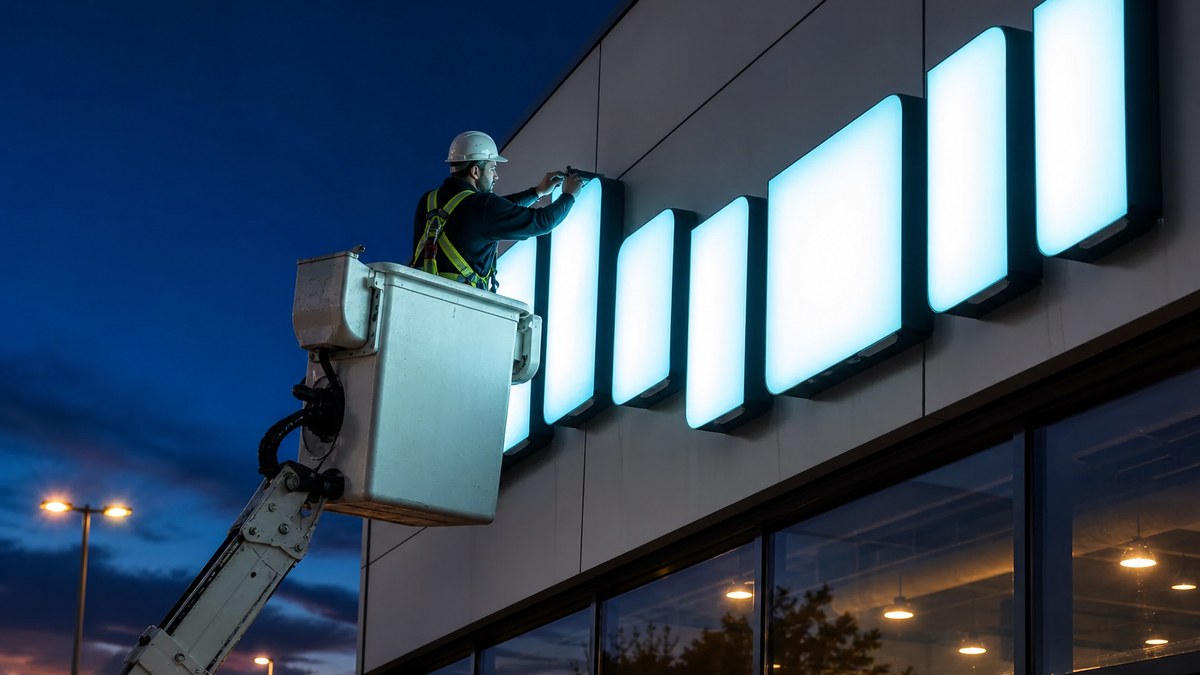
Commercial LED sign maintenance is the routine inspection, cleaning, testing, and parts replacement that keeps your sign fully lit, safe, and working for its full 10–20+ year life. LED signs are far more durable than neon or fluorescent signs, but they are not maintenance-free. Power supplies age, water finds its way into cabinets, pixels fail, and controllers lose their settings. A good sign repair and maintenance plan catches those problems while they are small.
Here is the problem most business owners run into: nobody looks at the sign until a letter goes dark. By then, a simple fix (a loose connection or a clogged drain hole) has often turned into a failed power supply, a corroded circuit, or a code violation. A dark letter in your name also sends a message to every customer who drives by.
This guide explains exactly what to check, how often to check it, which problems you can spot yourself, and when to call a licensed sign technician. It covers channel letter signs, pylons, monuments, box signs, and LED message centers — plus how climate in places like Houston, Boston, Phoenix, and Miami changes your maintenance schedule.
Commercial LED signs need a simple visual check monthly, a closer inspection quarterly, and a professional inspection once a year:
- Monthly: Walk-by check at night for dark letters, dim sections, flicker, or dead pixels
- Quarterly: Check photocell/timer, clean faces, clear weep holes, look for water staining and loose hardware
- Annually: Professional inspection of power supplies, wiring, disconnect switch, mounting, and controller
- After storms: Inspect for impact damage, water intrusion, and loose faces or raceways
- Most common failure: LED power supplies (drivers) — not the LEDs themselves
- LED module life: commonly rated 50,000–100,000 hours before significant dimming
- Safety rule: Anything above ground level or inside the cabinet is a job for a licensed sign technician
Why LED signs still need maintenance
LEDs themselves last a very long time. Most quality sign modules are rated for 50,000 to 100,000 hours before they drop to about 70% of their original brightness. At 12 hours a day, that is 11 to 22 years of light. So why do LED signs go dark long before that?
Because an LED sign is a system, not a light bulb. Every lit sign includes power supplies, wiring, connectors, a disconnect switch, a photocell or timer, a sealed cabinet or letter returns, and — for digital signs — receiving cards, controllers, fans, and software. Each part has its own lifespan and its own enemies: heat, water, UV, vibration, and power surges.
Maintenance is how you manage those weak points. It protects your investment, keeps your brand looking sharp, and keeps the sign compliant with electrical code and local sign ordinances. It is also the single best way to lower the true cost of LED sign ownership over the life of the sign.
When an LED sign goes dark, the LEDs are rarely the problem. In most service calls the fault is a power supply, a loose or corroded connection, water intrusion, or a failed photocell or timer. That is good news — those are usually repairable without replacing the sign.
The most common LED sign problems
Knowing what typically fails helps you recognize problems early and describe them clearly when you request service. Here are the issues sign technicians see most often.
1. Power supply (driver) failure
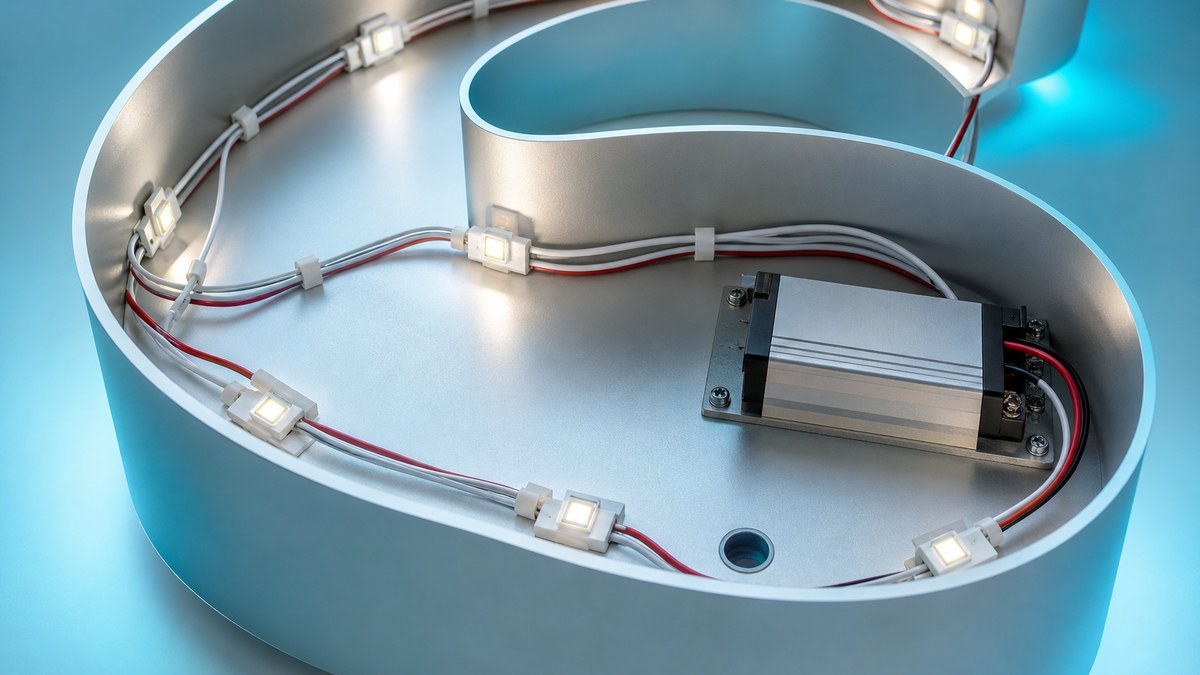
LED modules run on low-voltage DC power. Power supplies convert your building's AC power to that DC. They work hard, run warm, and sit inside enclosed letters or cabinets, so they are the most common failure point. Signs of a failing power supply include a whole letter or section going dark, flickering, or a sign that turns on late and cuts out in heat.
2. Water intrusion and corrosion
Water is the number one enemy of any illuminated sign. Channel letters are built with small drain (weep) holes so condensation and rain can escape. When those holes clog with dirt, insects, or debris, water pools inside the letter, corrodes connections, and shorts modules. Look for water stains, rust streaks below letters, or fogging behind faces.
3. Loose or failed connections
Thermal expansion, wind vibration, and time loosen wire connectors. One bad connection can take out an entire string of modules. This often shows up as one part of a letter lit and the rest dark.
4. Photocell and timer problems
If your sign is on during the day, off at night, or turning on at the wrong time, the photocell or timer is the first suspect. Photocells get dirty or blocked, and timers lose settings after power outages or daylight saving changes.
5. Dead pixels and module failure on digital signs
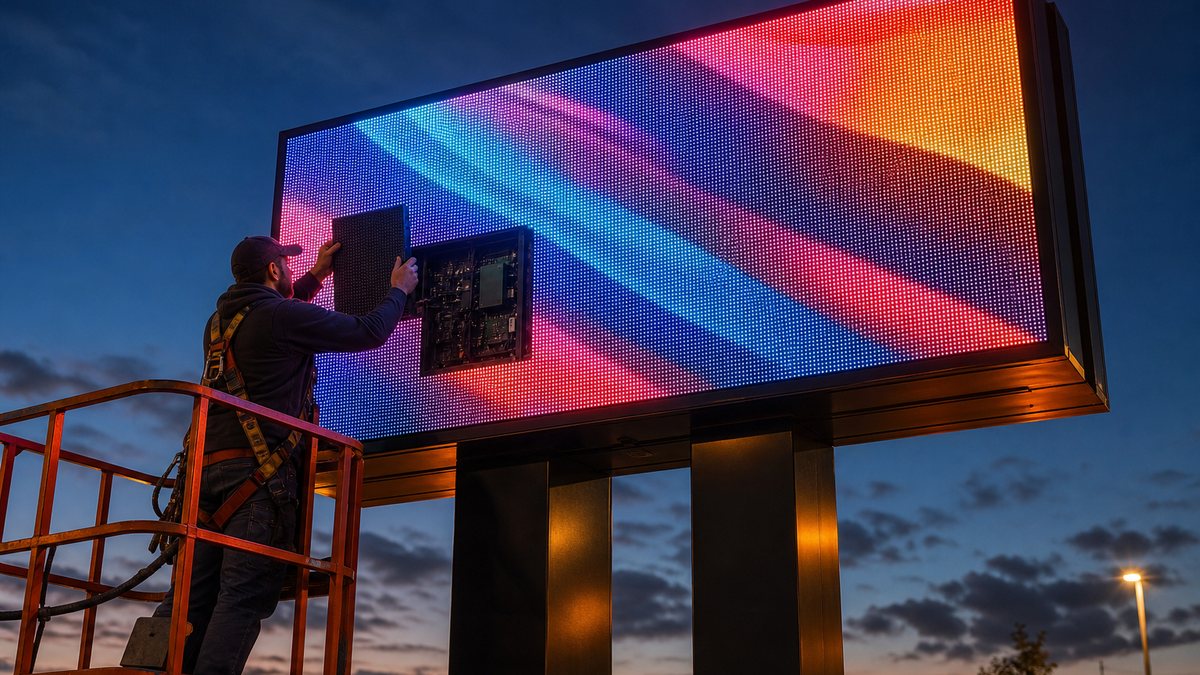
On LED message centers and digital billboards, individual pixels or whole modules can fail. You will see black squares, stuck colors, or lines across the display. Modules are designed to be swapped, so this is usually a straightforward repair.
6. Controller and communication issues
A frozen display, a blank screen with power present, or content that will not update usually points to a receiving card, controller, network, or software problem rather than the LEDs.
Symptom-to-cause troubleshooting chart
Use this chart to narrow down what is happening before you call for service. It will help your technician arrive with the right parts.
| What You See | Most Likely Cause | Urgency | Who Should Fix It |
|---|---|---|---|
| Entire sign dark | Tripped breaker, disconnect switch, photocell/timer, or main power supply | High | Check breaker; then licensed tech |
| One letter or section dark | Power supply or connection for that circuit | Medium | Licensed sign technician |
| Flickering or pulsing | Failing power supply or loose connection | Medium–High | Licensed sign technician |
| Sign on during the day | Dirty or failed photocell, or timer settings | Low | Owner check, then tech |
| Water stains or rust streaks | Clogged weep holes, failed seals | Medium | Licensed sign technician |
| Black squares on digital sign | Failed pixel module | Medium | Digital sign technician |
| Digital display frozen | Controller, receiving card, or network | Medium | Digital sign technician |
| Loose face, sagging raceway | Hardware failure, wind or impact damage | High (safety) | Licensed sign technician immediately |
Your commercial LED sign maintenance checklist
A simple, repeatable schedule catches most problems before customers notice them. Here is the schedule we recommend for most commercial signs.
Monthly: the 60-second night check
- Drive or walk past after dark and look at the whole sign
- Look for dark letters, dim sections, flicker, or color differences
- On digital signs, scan for dead pixels, lines, or stuck colors
- Confirm the sign turns on and off at the right times
- Take a quick photo so you can compare month to month
Quarterly: the closer look
- Check the photocell for dirt, spider webs, or anything blocking it
- Reset timers after power outages and daylight saving changes
- Look for water stains, rust streaks, fogging, or insect nests
- From the ground, check for loose faces, trim cap, or raceway
- On monuments and pylons, clear landscaping, debris, and irrigation spray
- On digital signs, check that fans run and vents are clear
Annually: professional inspection
- Test and inspect every power supply and circuit
- Tighten and inspect connections; replace corroded connectors
- Clear weep holes and check gaskets and seals
- Verify the disconnect switch, grounding, and bonding
- Inspect mounting hardware, anchors, and structural attachments
- Clean faces and returns so the sign is bright and even
- On digital signs, check modules, receiving cards, controller, firmware, and brightness settings
Keep a simple sign log: the install date, service dates, parts replaced, and photos. It makes troubleshooting faster, supports warranty claims, and helps you plan ahead instead of reacting to a dark sign.
Maintenance by sign type
Every sign type has its own weak spots. Here is what to watch on each.
Channel letter signs
Channel letters are individually built letters with LED modules inside. Watch for clogged weep holes, cracked or faded acrylic faces, loose trim cap, and water inside the returns. Halo-lit (reverse) letters need clear standoffs so light can wash the wall evenly — see our halo-lit vs front-lit guide for how each style is built.
Lighted box signs (cabinets)
Box signs have one large cabinet. Seals and gaskets matter most. A failed gasket lets in water and bugs, which show up as dark spots on the face. Faces can yellow or crack with UV exposure over time.
Pylon and pole signs
Pylon signs face the most wind and weather. Beyond the electrical checks, inspect the structure: pole paint and rust, cabinet attachment, and the base. Foundations are engineered to last decades, but visible cracking or leaning needs immediate attention — our pylon foundation engineering guide explains why.
Monument signs
Monument signs sit at ground level, so landscaping, sprinklers, lawn equipment, and vehicles are the biggest threats. Keep sprinklers aimed away from the sign and keep plants trimmed so light and letters stay visible.
LED message centers and digital billboards
Digital signs need the most care because they include electronics that run hot. Keep vents and filters clear, confirm fans work, check brightness auto-dimming (so the sign is readable in daylight and not glaring at night), and keep controller software current. Most local codes also limit digital sign brightness and message timing, so settings matter for compliance too.
Dark letters, flicker, or a frozen display? We can help.
Licensed sign technicians, UL-listed replacement components, and nationwide service for channel letters, pylons, monuments, box signs, and LED message centers. Tell us what you are seeing and we will get you a free quote.
How climate changes your maintenance schedule
Where your sign lives matters as much as what kind of sign it is. Adjust your schedule for your local climate.
| Climate | Example Markets | Main Threat | Extra Attention |
|---|---|---|---|
| Hot & humid, hurricane-prone | Houston, Miami, Tampa | Water, humidity, wind | Weep holes, seals, post-storm inspections |
| Extreme heat | Phoenix, Las Vegas | Heat, UV | Power supply heat, face fading, digital sign cooling |
| Cold, snow, freeze-thaw | Boston, Chicago, Denver | Ice, moisture cycles | Seals, cracked faces, snow load on cabinets |
| Coastal salt air | Miami, San Francisco, coastal markets | Corrosion | Hardware, connectors, finishes |
| Mild, rainy | Portland, Seattle | Constant moisture | Drainage, moss, seal condition |
For example, a sign in Houston faces heavy humidity and hurricane season, so clear weep holes and after-storm checks matter most. A sign in Boston deals with freeze-thaw cycles that crack seals and faces. In Phoenix and Las Vegas, heat is the enemy of power supplies and digital sign electronics. Signs in Miami need extra attention to corrosion from salt air.
What you can do yourself — and what you should not
Owners can handle a lot of the monitoring. But LED signs are electrical equipment, often mounted high, and they are covered by electrical code. Know where the line is.
Safe for owners and staff
- Monthly night checks and photos
- Checking the breaker and resetting timers
- Cleaning dirt or webs off a ground-level photocell
- Keeping landscaping, sprinklers, and debris away from monument signs
- Reporting problems early with clear photos
Leave to a licensed sign technician
- Opening letters, cabinets, or digital sign enclosures
- Any work on power supplies, wiring, or the disconnect switch
- Anything that requires a ladder, bucket truck, or crane
- Replacing faces, modules, or controller components
- Any structural concern, loose parts, or storm damage
Electric signs are covered by the National Electrical Code (Article 600) and are typically built with UL-listed components. Using a licensed, insured sign company keeps your sign safe, keeps your insurance and warranties intact, and avoids code problems with your city or landlord.
If any part of your sign is loose, hanging, sparking, or damaged after a storm, turn it off at the disconnect or breaker if it is safe to do so, keep people clear of the area below it, and call a sign professional right away.
Repair, retrofit, or replace?
Maintenance keeps a good sign running. But sometimes a repair is not the best use of your money. If your sign still uses neon or fluorescent lamps, an LED retrofit can cut energy use and maintenance while keeping your existing cabinet or letters. If faces are badly faded, the structure is corroded, or your brand has changed, a new sign may make more sense.
We break this decision down in detail in our sign repair vs replace guide. The short version: fix it when the structure is sound and the problem is isolated; retrofit when the lighting technology is outdated; replace when the structure, faces, and electronics are all near the end of their life.
If you manage many locations, a consistent maintenance program across every site keeps your brand looking the same everywhere — one of the biggest challenges we cover in our guide to multi-location brand rollouts.
What to look for in a sign maintenance partner
The right service partner makes maintenance simple. Look for:
- Licensed and insured sign and electrical technicians
- Experience with your sign types — channel letters, pylons, monuments, and digital displays
- UL-listed replacement parts that match your sign's original specifications
- Clear reports with photos after every visit
- Nationwide coverage if you have more than one location
- Emergency response for storm damage and safety issues
American LED Signage designs, fabricates, installs, and services commercial signs in all 50 states, with project teams in 20 major metro hubs. See where we work on our locations page, browse finished projects in our gallery, or explore our full list of sign services.
Get a sign inspection or repair quote today
Whether you need a one-time repair, a full inspection, or an ongoing maintenance plan for multiple locations, our team will review your sign and send a clear, free quote. No obligation.
Frequently Asked Questions
How often should a commercial LED sign be maintained?
How long do LED signs last?
Why is part of my LED sign not lighting up?
Why is my LED sign flickering?
Why does my sign stay on during the day?
Can I repair my LED sign myself?
How do you fix dead pixels on an LED message center?
What causes water damage in channel letter signs?
Should I repair or replace my old sign?
Do you offer sign maintenance for multiple locations?
Need lighting beyond your sign? Our partner network covers Dallas commercial LED lighting, Fort Worth LED lighting, Arlington LED specialists, Plano commercial LED, Irving LED installations, and statewide Texas LED lighting, plus wholesale LED components. For interiors and new buildings, see American Starlight Ceilings, fiber optic lighting systems, modular building solutions, and modular structures in Dallas.