Programmable LED Signs: A Buyer's Guide to Pixel Pitch, Brightness, Size & Sign Codes
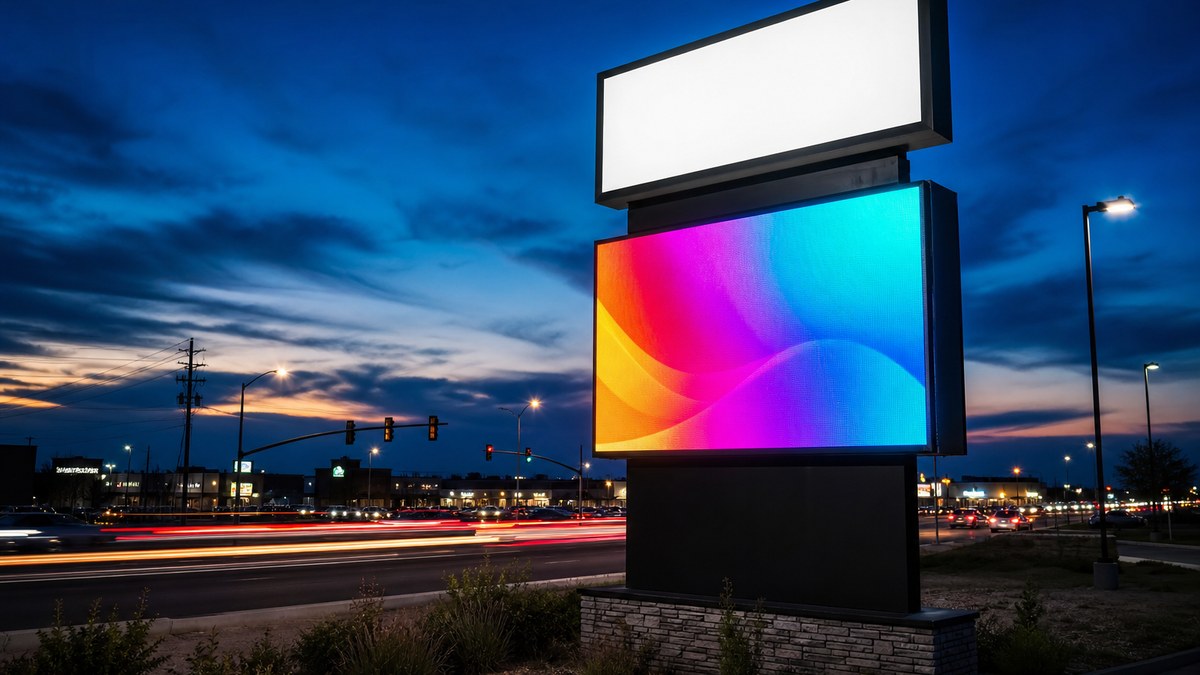
A programmable LED sign lets you change your message in seconds instead of sending a crew up a ladder with plastic letters. Also called an electronic message center (EMC), a digital sign, or an LED message center, it is the most flexible piece of signage a business can own. One display can run a lunch special at 11 a.m., a hiring banner at 3 p.m., and an event countdown after dark.
But buying one is not like buying a TV. The right programmable LED sign depends on how far away your customers are, how fast they are driving, how bright the sun hits your frontage, and what your city allows. Choose the wrong pixel pitch and your text turns to mush. Ignore the local sign code and your permit gets rejected. This guide walks through every decision in plain language, so you can talk specs with confidence and get a display that actually works for your site.
We will cover pixel pitch, brightness and auto-dimming, sizing for traffic speed, color options, software and connectivity, mounting, sign code rules, lifespan, and what drives the cost of a project. When you are ready, our team can scope the right display for your property anywhere in the country.
The best programmable LED sign is the one sized and specified for your viewing distance, traffic speed, and local sign code. Key specs to get right:
- Pixel pitch: 8–20mm is typical for outdoor on-premise signs; 10mm and 16mm are the most common choices
- Viewing rule: Minimum comfortable viewing distance in feet ≈ 3 × pixel pitch in mm
- Brightness: Outdoor full-color displays commonly run 5,000–8,000+ nits in daylight with automatic dimming at night
- Night limit: Many codes follow the 0.3 footcandles-over-ambient standard
- Hold time: Many cities require each message to stay static for 8 seconds or more
- Lifespan: Quality LEDs are commonly rated around 100,000 hours to half brightness
- Permits: Nearly every jurisdiction requires a sign permit and electrical permit for an EMC
What is a programmable LED sign?
A programmable LED sign is an outdoor or indoor display made of thousands of light-emitting diodes arranged in a grid. Software controls which LEDs light up, in what color, and for how long. That lets you show text, graphics, photos, animation, and video, and change them from a laptop or phone.
Most commercial programmable signs fall into three groups. On-premise EMCs sit on your own property and advertise your own business, usually as part of a pylon sign or monument sign. Wall-mounted digital displays attach to a building face. Off-premise digital billboards advertise other businesses and fall under much stricter state and federal rules.
This guide focuses on on-premise programmable LED signs, the kind churches, schools, restaurants, car dealers, shopping centers, clinics, and retail stores use every day.
Programmable LED sign vs. static lighted sign
A static lighted box sign or set of channel letters shows one message forever. It builds your brand. A programmable LED sign shows many messages and drives action: promotions, events, hours, and timely offers. Most businesses pair the two. The brand name stays on a static cabinet at the top of the pylon, and the EMC sits below it to carry changing messages.
| Feature | Static Lighted Sign | Programmable LED Sign |
|---|---|---|
| Message changes | Requires new face or letters | Seconds, remotely |
| Content types | Logo and name | Text, graphics, photos, video |
| Permit scrutiny | Standard sign permit | Extra EMC rules (brightness, hold time) |
| Typical role | Brand identity | Promotions, events, wayfinding |
| Power and data | Power only | Power plus communications link |
Pixel pitch: the spec that matters most
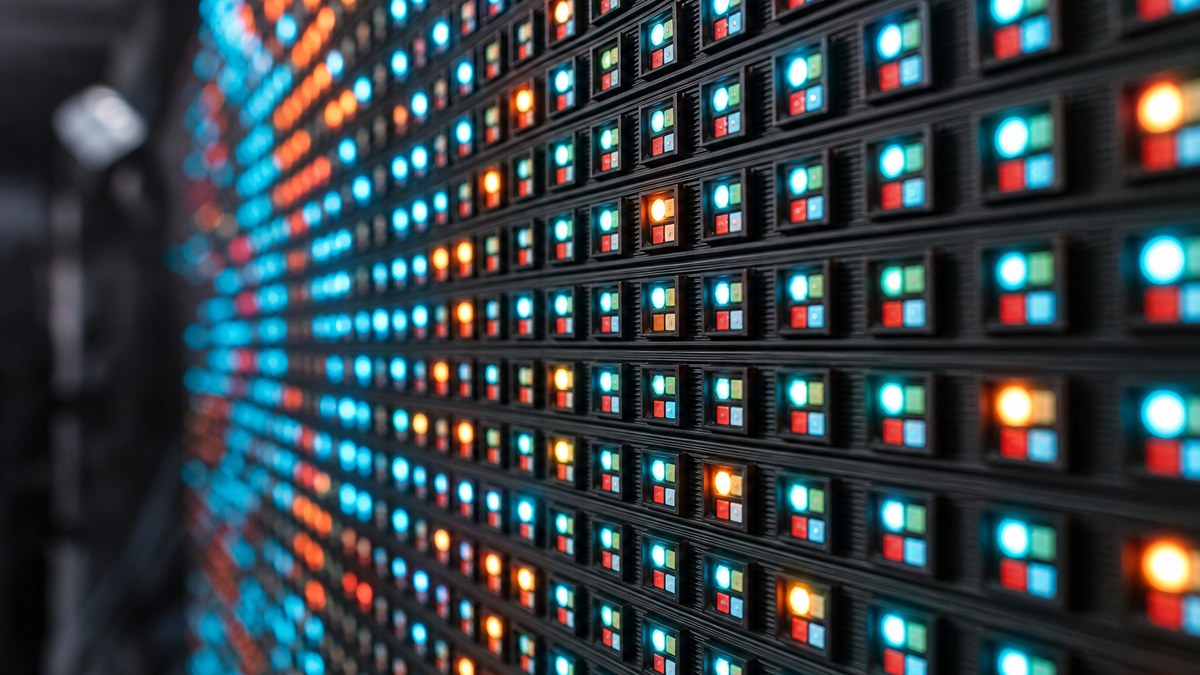
Pixel pitch is the distance, in millimeters, from the center of one pixel to the center of the next. A 10mm sign has pixels 10mm apart. A 16mm sign has pixels 16mm apart. Smaller pitch means more pixels in the same space, which means sharper text and smoother images up close.
Pitch drives resolution, and resolution drives what you can show. Take a common 4-foot by 8-foot display face (about 1,219mm by 2,438mm):
- At 10mm pitch: roughly 122 pixels tall by 244 pixels wide
- At 16mm pitch: roughly 76 pixels tall by 152 pixels wide
- At 20mm pitch: roughly 61 pixels tall by 122 pixels wide
That difference is big. At 10mm you can show two or three lines of crisp text plus a logo. At 20mm you may fit one bold line. More pixels also means photos and video look like photos and video instead of blocky mosaics.
The viewing distance rule of thumb
A common industry rule: the minimum comfortable viewing distance in feet is about three times the pixel pitch in millimeters. A 10mm display looks good from about 30 feet and beyond. A 16mm display looks good from about 48 feet and beyond. Closer than that, viewers start to see individual dots instead of a smooth image.
The rule works in both directions. If most of your viewers are drivers 200 feet away on a highway frontage road, paying for an ultra-fine pitch buys sharpness nobody can see. If your sign sits beside a drive-thru lane or a sidewalk, a coarse pitch will look rough to the people closest to it.
| Pixel Pitch | Min. Viewing Distance | Best Fit |
|---|---|---|
| 4–6mm | 12–18 ft | Storefront windows, drive-thru menus, pedestrian plazas |
| 8–10mm | 24–30 ft | Monument signs, parking lots, city streets under 35 mph |
| 12–16mm | 36–48 ft | Pylon signs on arterial roads, 35–50 mph traffic |
| 16–20mm | 48–60 ft | Tall pylons and highway frontage, 55+ mph traffic |
| 20mm+ | 60+ ft | Billboard-scale displays viewed from long range |
Think about the closest viewer who matters, not the farthest. A sign that looks sharp to a customer turning into your lot will still read well from far away, as long as the text is big enough. Pitch sets sharpness; character height sets distance.
How big should your programmable LED sign be?
Size comes down to two questions: how far away can people read your text, and how long do they have to read it? Both depend on traffic speed and site layout.
Character height and legibility
A widely used legibility guideline is about 1 inch of letter height for every 30 feet of viewing distance under good conditions. To be read from 300 feet, your letters should be about 10 inches tall. On an LED sign, each character also needs enough pixels to form clean letters, usually at least 7 pixels tall for simple fonts and more for smooth fonts.
Put those together and you see why pitch and size are linked. At 16mm pitch, a 7-pixel character is about 4.4 inches tall. That reads from roughly 130 feet. If you need 400 feet of legibility, you need characters around 13 inches tall, which takes a taller display or a finer pitch with more rows of pixels.
Reading time at traffic speed
A car at 45 mph travels about 66 feet per second. If your sign is legible from 400 feet, a driver has about six seconds to notice and read it, and they will only glance at it for part of that time. That is why the best EMC messages are short: one idea, six to eight words, big type, high contrast.
| Traffic Speed | Feet per Second | Design Guidance |
|---|---|---|
| 25 mph | ~37 ft/s | Smaller display, 2–3 lines of text works |
| 35 mph | ~51 ft/s | Medium display, 1–2 lines, bold fonts |
| 45 mph | ~66 ft/s | Larger display, one short message per frame |
| 55–65 mph | ~81–95 ft/s | Tall pylon display, very short messages, huge type |
Your maximum size is also capped by the local sign code. Many cities limit EMC area to a percentage of the total sign face, or to a fixed number of square feet per street frontage. We check those limits before recommending a size, so your design is permit-ready from day one. Our sign permit timelines guide shows how long approvals usually take by state.
Brightness, nits & automatic dimming
Brightness is measured in nits (candelas per square meter). Outdoor signs have to fight direct sunlight, so outdoor full-color programmable LED signs commonly run in the 5,000 to 8,000+ nit range at full output. Indoor displays need far less, often under 1,500 nits.
But full output is only for daytime. At night, the same sign at full brightness would glare into traffic and nearby homes, and it would violate most sign codes. That is why every quality outdoor EMC includes a light sensor (photocell) and automatic dimming. The sign reads ambient light and steps its brightness down at dusk and back up at sunrise.
The 0.3 footcandle standard
The International Sign Association recommends that EMCs not exceed 0.3 footcandles above ambient light, measured at a distance based on the sign's size. The common formula is the square root of the sign area (in square feet) times 100. A 100-square-foot display is measured at 100 feet. Many cities have written this standard directly into their codes, and others set their own nit limits for day and night.
Brightness complaints are the number one reason cities tighten EMC rules. A sign with working auto-dimming and a sensible night setting keeps neighbors happy and keeps your display legal. It also extends LED life, because LEDs that run cooler last longer.
Sign code rules for electronic message centers
Programmable LED signs face more rules than static signs. Codes vary by city, county, and zoning district, but the same categories show up almost everywhere.
1. Message hold time
Many cities require each message to stay static for a minimum time before it changes. Eight seconds is common, and some codes require much longer. Toledo, Ohio, for example, allows a message change no more than once every eight seconds. For off-premise digital billboards, Federal Highway Administration guidance has long pointed to dwell times in the 4 to 10 second range, with 8 seconds a common choice.
2. Transitions and animation
Some codes allow full-motion video. Many ban flashing, scrolling, and animation, or limit how fast one message can change to the next. A few only allow an instant change with no fade or wipe. Your software should let you lock settings to match the code.
3. Brightness and dimming
As covered above, most codes require automatic dimming and set a night maximum, often the 0.3 footcandle standard or a fixed nit value.
4. Distance from homes
Many codes restrict EMCs near residential zones. Some require the sign to face away from homes, some require it to turn off overnight, and some ban EMCs within a set distance. Toledo, for example, requires EMCs within 100 feet of residential zoning to be off from 10 p.m. to 6 a.m. or when the business is closed.
5. Size and percentage limits
Codes often cap the EMC portion of a sign, such as a percentage of the total sign area, or a set number of square feet.
6. Malfunction default
A growing number of codes require the display to go dark or show a static image if it malfunctions, so a glitching sign never flashes at drivers.
Rules differ sharply between markets. A display that is legal in Las Vegas may need different settings in Portland or Washington, DC. Always design to the code for your exact parcel and zoning district, not a general rule.
Monochrome, tricolor or full-color?
Programmable LED signs come in three color types. Each has a place.
- Monochrome: One color, usually red or amber, sometimes white. Great for text-only messages like gas prices, time and temperature, or school announcements. Simple and very readable.
- Tricolor: Red, green, and amber. Adds some variety for text and simple graphics, but it is far less common today.
- Full-color (RGB): Red, green, and blue diodes mixed to create millions to billions of colors. Shows photos, logos in brand colors, and video. This is the standard choice for most businesses now.
Full-color displays do more, but they also demand better content. A great full-color sign with cluttered, low-contrast graphics performs worse than a clean monochrome message. Plan for good design either way.
| Color Type | Content | Best For |
|---|---|---|
| Monochrome | Text, simple symbols | Fuel pricing, schools, time and temperature |
| Tricolor | Text, basic graphics | Legacy upgrades, simple promotions |
| Full-color RGB | Text, logos, photos, video | Retail, restaurants, dealers, churches, venues |
Software, connectivity & content control
The display is only half the system. The other half is how you get content onto it and keep it running.
Connectivity options
Most modern programmable LED signs connect through a cellular modem, Wi-Fi, or a wired Ethernet or fiber link to your building. Cellular is simple and independent of your network. Wired links are the most reliable and are common for large displays. Older signs used radio links or direct cables, which is one reason many owners upgrade.
Cloud-based scheduling
Today's software is usually cloud-based. You log in from a browser or phone, build messages from templates, and schedule them by time of day and day of week. Good platforms let you set different content for mornings and evenings, run countdowns, pull in weather or time data, and give different staff members different permission levels.
Remote monitoring
Look for remote diagnostics: temperature sensors, power supply status, module health, and a screenshot of what is actually on the display. Monitoring catches problems early, often before customers notice. It pairs well with a planned sign repair and maintenance program. See our commercial LED sign maintenance guide for a full checklist.
Get a display sized for your site and your code
We review your viewing distances, traffic speed, and local EMC rules, then recommend the right pixel pitch, size, and mounting. UL-listed components, engineered structures, and permit handling included.
Mounting options: pylon, monument or wall
Where you mount the display changes its size, its pitch, and its structural needs.
On a pylon sign
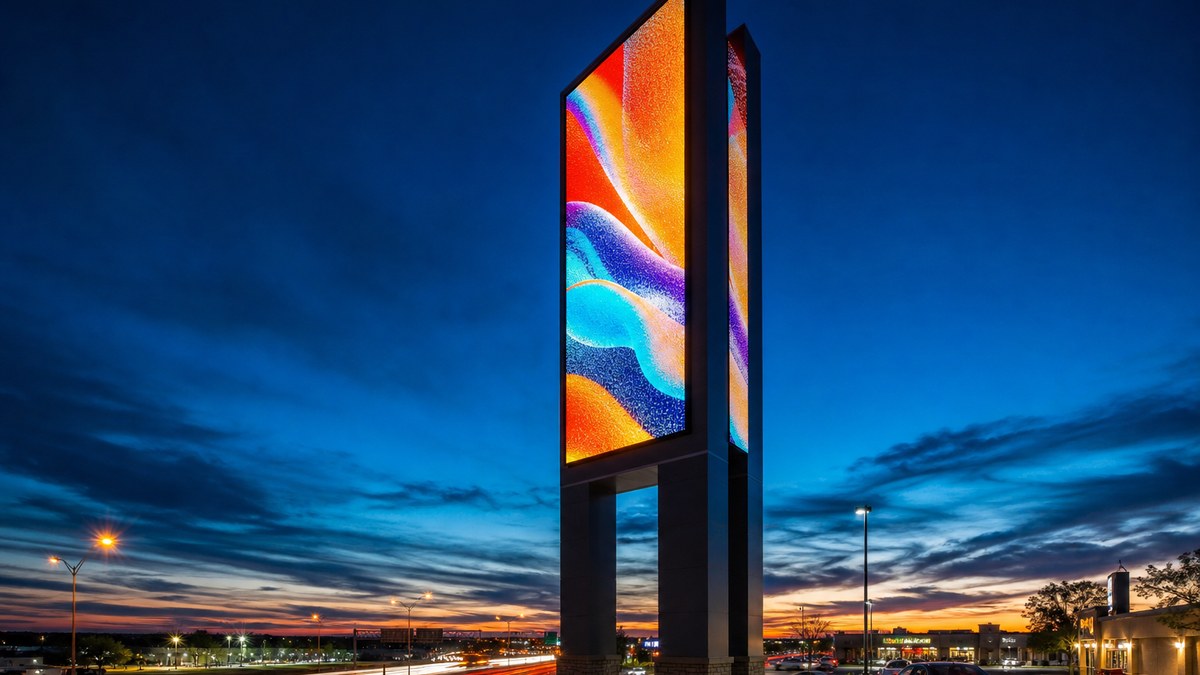
Pylons put the EMC high above traffic, which is ideal for highway and arterial frontage. Adding a display to an existing pylon is common, but the new cabinet adds weight and wind area. A structural review is needed to confirm the pole and foundation can carry it. Our pylon sign foundation engineering guide explains how those loads are calculated.
On a monument sign
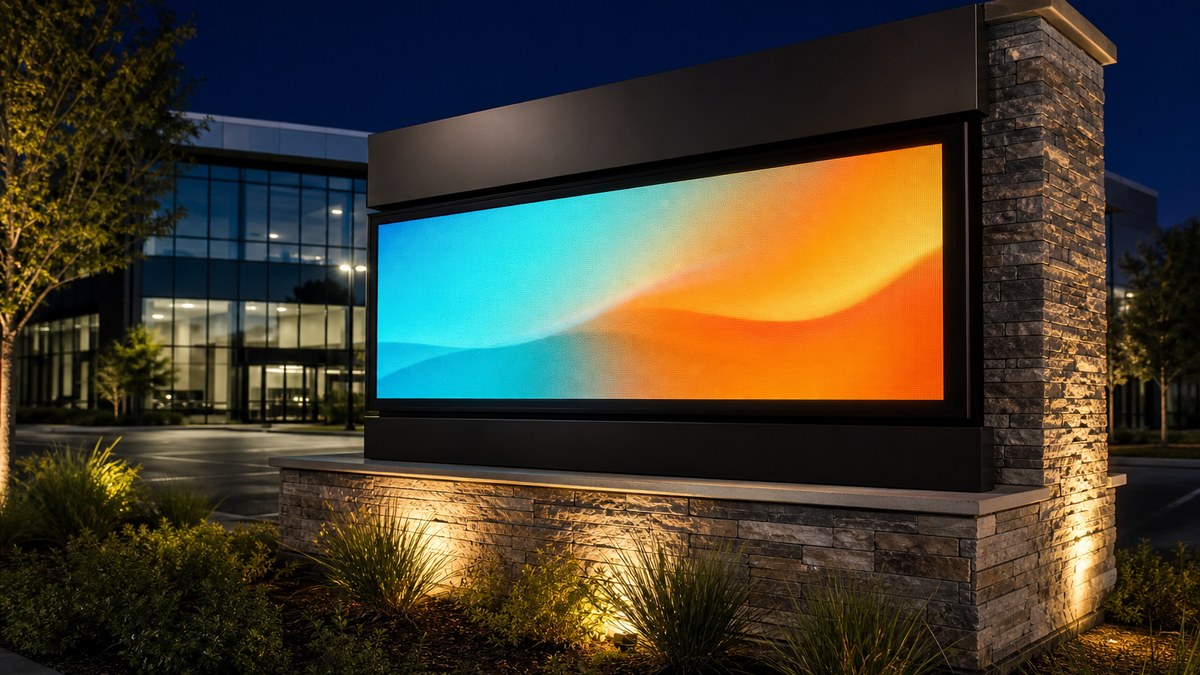
Monument signs sit low, close to drivers entering the property, so they often use a finer pitch like 8mm to 10mm. They are a strong fit for schools, churches, office parks, medical centers, and shopping centers on slower streets.
On a building wall
Wall-mounted displays work where there is no room for a freestanding sign. They need proper anchoring, weather sealing, and service access. Front-serviceable cabinets, which open from the face, are the best choice here because rear access is often impossible.
Single-face vs. double-face
A single-face display points one way. A double-face display has two screens back to back, reaching traffic in both directions. On a two-way road, double-face almost always makes sense. V-shaped layouts can aim each face at the approaching lanes on corner lots.
Build quality: what separates good displays from bad
Two displays with the same pitch and size can perform very differently. These are the build details to ask about.
- UL listing: The complete sign should be listed to UL 48, the standard for electric signs, and installed per NEC Article 600. Most inspectors require it.
- Weather rating: Outdoor modules should carry an IP65 or better rating against dust and water.
- LED quality: Premium diodes hold color and brightness longer and match each other better.
- Refresh rate: Higher refresh rates prevent flicker on phone cameras and video.
- Thermal design: Heat shortens LED and power supply life. Good cabinets manage heat with ventilation or cooling built for your climate.
- Serviceability: Front-service modules and standard parts mean faster repairs.
- Warranty and support: Look for multi-year warranties and a real support process, not just a parts policy.
Ask for the full spec sheet and compare line by line: pitch, pixel matrix, nits, viewing angle, refresh rate, IP rating, UL listing, and warranty terms. Two quotes that look similar can hide very different displays.
How long do programmable LED signs last?
Quality LEDs are commonly rated around 100,000 hours to half brightness. A sign running around the clock logs about 8,760 hours a year, so the diodes themselves can last a decade or more with dimming and good cooling. In practice, power supplies, controllers, and communication hardware usually need attention before the LEDs do.
Heat, moisture, power surges, and constant full brightness are the biggest enemies. Auto-dimming, surge protection, and routine inspections all add years. When a display does age, many problems can be fixed by replacing modules or power supplies rather than the whole sign. Our repair vs. replace guide explains how to decide.
What drives the cost of a programmable LED sign?
Pricing for programmable LED signs changes often and depends on your exact site, so we do not publish prices. Instead, here are the factors that move a project up or down. Knowing them helps you compare quotes fairly.
- Display area: More square feet means more modules, power supplies, and structure.
- Pixel pitch: Finer pitch uses many more LEDs per square foot.
- Color type: Full-color RGB costs more than monochrome.
- Single or double face: Two faces nearly doubles the display hardware.
- Structure: New pylon or monument vs. adding to an existing sign, plus engineering and foundations.
- Electrical and data: New circuits, trenching, and communication links.
- Permits and engineering: Sealed drawings and EMC permit reviews vary by city.
- Software and support: Content platforms, monitoring, and service plans.
For a deeper look at lifetime costs like energy, maintenance, and replacement timing, read our true cost of LED sign ownership guide. If you manage several locations, our multi-location rollout guide covers how to standardize displays across sites.
Content tips that make your sign pay off
The best hardware still fails with bad content. These simple rules keep your programmable LED sign working hard.
- One message per frame. Drivers glance. Give them one idea at a time.
- Six to eight words max. Short beats clever.
- High contrast. Light text on a dark background reads best, especially at night.
- Big, simple fonts. Avoid thin scripts and all-caps paragraphs.
- Match the hold time. Build messages that make sense in 8 seconds or whatever your code requires.
- Schedule by daypart. Breakfast in the morning, dinner at night, events on weekends.
- Refresh often. Regular passers-by tune out a loop that never changes.
Programmable LED signs across the US
We plan and install programmable LED signs nationwide, from dealership pylons in Houston and Dallas to monument displays in Denver and storefront screens in New York. Each market has its own sign code, climate, and permit process. Browse our service locations or see finished projects in our gallery.
The bottom line
A programmable LED sign is a long-term marketing asset. Get the fundamentals right: pick a pixel pitch that matches your closest important viewer, size the display for your traffic speed, confirm your city's brightness and hold-time rules, and choose UL-listed hardware with auto-dimming, remote monitoring, and multi-year warranties.
Do that, and your sign will stay sharp, legal, and effective for many years. Skip it, and you may end up with a display that is hard to read, a permit that stalls, or a sign that has to be dimmed so far it loses its impact.
Ready for a programmable LED sign?
Tell us your address and goals. We will review sightlines, traffic, and local EMC rules, then send a clear recommendation and a free quote for your site.
Frequently Asked Questions
What is a programmable LED sign?
A programmable LED sign, also called an electronic message center or digital sign, is a display made of LEDs that you control with software. You can change text, graphics, photos, and video remotely from a computer or phone, and schedule different messages by time of day. Businesses usually mount them on pylon signs, monument signs, or building walls.
What pixel pitch do I need for an outdoor LED sign?
Most outdoor on-premise signs use a pixel pitch between 8mm and 20mm. Use 8mm to 10mm for monument signs and slower streets where viewers are close. Use 12mm to 16mm for pylon signs on busy roads. Use 16mm to 20mm for tall highway signs. A simple rule: the minimum viewing distance in feet is about three times the pitch in millimeters.
How bright should an outdoor programmable LED sign be?
Outdoor full-color LED signs commonly reach 5,000 to 8,000 nits or more so they stay readable in direct sun. At night they must dim automatically. Many sign codes follow the International Sign Association recommendation of no more than 0.3 footcandles above ambient light, measured at a distance based on sign size.
Do I need a permit for a programmable LED sign?
Yes, in nearly every city and county. You will typically need a sign permit and an electrical permit, and many jurisdictions also review EMC rules like brightness, hold time, animation, and distance from homes. Pylon signs usually also need engineer-sealed structural drawings. Your sign company should handle the permit package for you.
How long must a message stay on an LED sign?
It depends on your local code. Many cities require each message to stay static for at least 8 seconds, and some require longer. Some codes ban scrolling, flashing, and animation entirely. Off-premise digital billboards follow state and federal guidance, which commonly lands in the 4 to 10 second range.
How long do programmable LED signs last?
Quality LEDs are commonly rated around 100,000 hours to half brightness, which can mean a decade or more of use with automatic dimming and good cooling. Power supplies and controllers usually need service sooner than the LEDs. Regular maintenance, surge protection, and heat management extend the life of the whole display.
Is a full-color LED sign better than a monochrome sign?
Full-color signs can show logos in brand colors, photos, and video, so they are the standard choice for most retail, restaurant, church, and dealership signs. Monochrome signs are simpler and very readable for text-only messages like fuel pricing or school notices. The right choice depends on what you want to show and your local code.
Can I add an LED message center to my existing pylon sign?
Often, yes. Adding a display to an existing pylon is common, but the new cabinet adds weight and wind area. A structural review must confirm the pole and foundation can carry the added load, and the upgrade still needs permits. If the structure is not adequate, it may need reinforcement or replacement.
How do I update the messages on a programmable LED sign?
Most modern signs use cloud-based software. You log in from a browser or phone, build messages from templates or upload graphics, and schedule them. The sign receives content through a cellular modem, Wi-Fi, or a wired network connection. Good platforms also offer remote monitoring and user permissions.
What affects the cost of a programmable LED sign?
The main cost drivers are display size, pixel pitch, full-color versus monochrome, single or double face, the structure it mounts on, electrical and data work, engineering, permits, and software or service plans. Because pricing depends on your exact site, the best step is to request a free quote from American LED Signage at (702) 738-2218.
American LED Signage is part of a network of commercial lighting and signage specialists serving businesses across the US. For projects beyond signage, see our partner sites: Dallas commercial LED, Fort Worth LED lighting, Arlington LED specialists, Plano commercial LED, Irving LED installations, statewide Texas LED lighting, wholesale LED components, American Starlight Ceilings for premium interior fiber optic ceilings, fiber optic lighting systems, modular building solutions, and modular structures in Dallas.