Commercial LED Signs in Arkansas: Little Rock & Bentonville Permits, Sign Codes & Build Guide
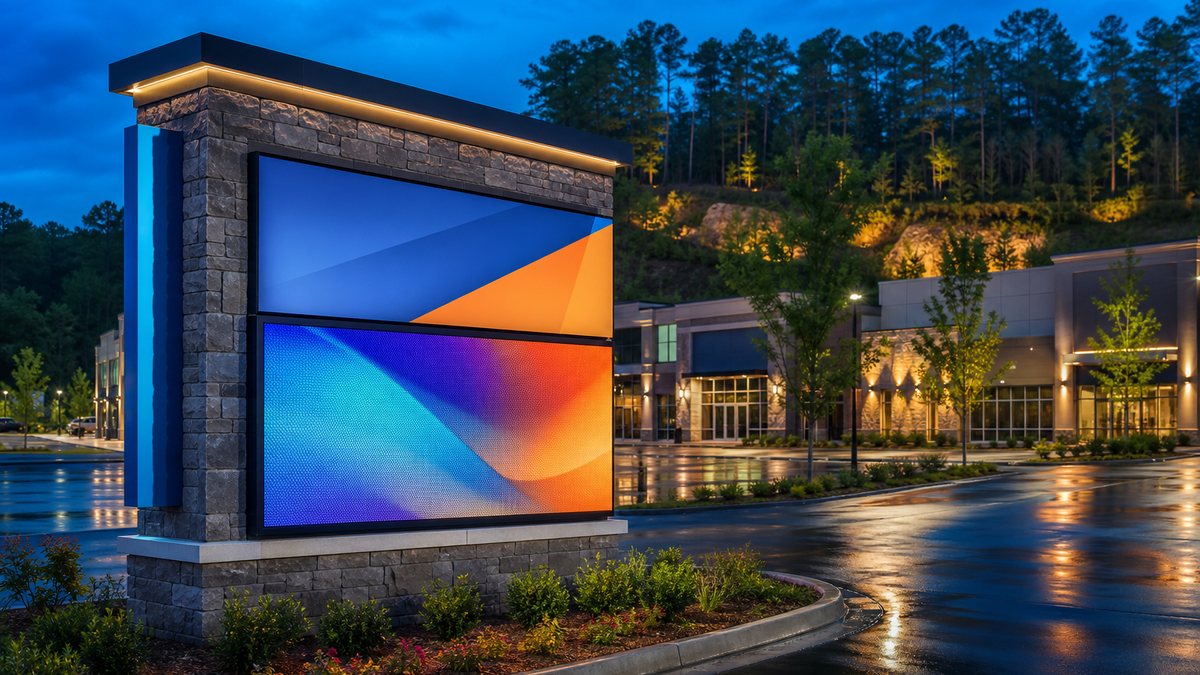
Planning commercial LED signs in Arkansas means working with two very different sign codes. Little Rock still allows tall freestanding signs on commercial frontage. Bentonville, one of the fastest-growing cities in the country, bans pole signs outright and asks for monument signs instead. If you get that difference wrong, you can lose weeks to redesign. You may also order a pylon sign the city will never approve.
This guide covers what Arkansas business owners, developers, and brand managers need to know before ordering channel letters, a monument sign, or a programmable LED message center. We cover the state codes that apply everywhere and Little Rock's sign rules zone by zone. You'll also find Bentonville's monument-only approach, the electronic message center rules that differ city to city, and the build specs that hold up to Arkansas storms, heat, and ice. We serve Central Arkansas and Northwest Arkansas from our Little Rock and Rogers city pages, and we coordinate projects in all 50 states.
Most permanent commercial signs in Arkansas need a city sign permit, an electrical permit for illuminated signs, and engineered drawings for freestanding structures. The rules change sharply from city to city:
- State codes: 2021 Arkansas Fire Prevention Code (building volume based on the 2021 IBC) + 2020 NEC with Arkansas amendments (in effect since Aug 1, 2022)
- Little Rock commercial zones: freestanding sign up to 36 ft tall and 2 sq ft per foot of frontage (160 sq ft max); wall signs up to 10% of the facade
- Bentonville: pole signs prohibited; freestanding signs must be monument style (8–12 ft max for most single- and multi-tenant sites)
- EMC rules: no flashing or animation in Little Rock; Bentonville requires a 5-second minimum hold, auto-dimming, and 0.3 footcandles above ambient
- Highway digital billboards: ArDOT rules require 8-second holds and 1,500 ft spacing on Interstates
- Build for the weather: severe wind and hail, ice storms, summer heat and humidity, and expansive clay soils
Who regulates signs in Arkansas
Arkansas has no single statewide sign code for on-premises business signs. Instead, every sign passes through three layers. The state sets the building and electrical codes. Your city sets the sign code: where, how big, how tall, and how bright. If your sign sits along an Interstate or state highway and advertises something off-site, the Arkansas Department of Transportation (ArDOT) regulates it as outdoor advertising.
Layer 1: State building and electrical codes
Arkansas adopts its building code through the Arkansas Fire Prevention Code. The 2021 edition is the current version. Volume I is based on the 2021 International Fire Code, and Volume II on the 2021 International Building Code. Cities such as Fort Smith and Little Rock enforce these volumes locally. For a sign, the building code matters most for structural design: wind load, foundations, and attachment to the building.
For electrical work, Arkansas enforces the 2020 National Electrical Code with state amendments, effective August 1, 2022. The state has proposed moving to the 2023 NEC. For signs, the key part is Article 600 (electric signs and outline lighting). It covers listed sign components, disconnects, branch circuits, and grounding. Electrical work is licensed through the Arkansas Board of Electrical Examiners, which licenses master and journeyman electricians. Plan on a licensed electrician making the final connection on any illuminated sign.
Layer 2: Your city's sign code
The city sign ordinance is where most projects succeed or stall. Little Rock, North Little Rock, Bentonville, Rogers, Springdale, Fayetteville, Fort Smith, Conway, and Jonesboro all write their own rules. A sign that is routine in one city may be prohibited ten miles away. That is why we check the local code at the design stage, before fabrication drawings are final.
Layer 3: ArDOT and highway frontage
Off-premises signs and billboards along Interstates and state highways need ArDOT outdoor advertising permits in addition to city approval. ArDOT also has specific rules for electronic message devices on billboards, covered below. On-premises business signs on your own property are usually handled by the city, but highway frontage can still bring extra review, especially near interchanges.
Unincorporated parcels follow county rules, not city rules. Some Northwest Arkansas sites sit just outside Bentonville, Rogers, or Lowell city limits. Before you design, confirm which jurisdiction controls your parcel. It changes the permit office, the sign code, and often the allowed sign type.
Little Rock sign code: what's allowed by zone
Little Rock regulates signs in Chapter 36, Article X of its code. Sign permits are handled by the Department of Planning and Development on West Markham Street. The code is fairly friendly to freestanding signs on commercial corridors, but it is strict about motion, flashing, and brightness, especially near homes.
Freestanding and wall sign limits
Sign area in Little Rock is tied to your main street frontage. In commercial zones, the code text we reviewed allows a freestanding sign of 2 square feet per linear foot of frontage, up to 160 square feet, and up to 36 feet tall. Wall and mansard signs combined can cover up to 10% of the occupancy's facade. Office zones are far tighter. They allow a low freestanding sign up to 6 feet tall and 64 square feet. A wall sign up to 10% of the facade, or a small projecting sign, can be used instead.
| Little Rock Zone | Freestanding Sign | Wall Signs | Max Illumination |
|---|---|---|---|
| Commercial | 36 ft · 160 sq ft | Up to 10% of facade | 300 footlamberts |
| Industrial | Per zone table | Per zone table | 300 footlamberts |
| Institutional & office | 6 ft · 64 sq ft | Up to 10% of facade (alternative) | 200 footlamberts |
| Multifamily | Limited identification | Limited | 100 footlamberts |
| One- and two-family residential | Very limited | Very limited | 50 footlamberts |
Sign area is calculated from 2 square feet per foot of frontage, so a lot with 80 feet of frontage reaches the 160-square-foot cap. Corner and multi-frontage lots can often add signs on the second frontage. Next to an expressway or freeway, height for ground-mounted signs may be measured from the centerline of the adjacent traffic lanes instead of from grade. That matters when the highway sits on an elevated section, as many Little Rock interchanges do.
Placement and clearance rules
- Setback: freestanding and projecting signs sit at least 5 feet from property lines and vehicular rights-of-way
- Clearance: at least 13 feet over vehicle areas and 9 feet over pedestrian areas
- Address numbers: freestanding signs show the street number in characters at least 6 inches tall, on each face
- Easements: any sign in an easement needs written approval from the easement holder
- Utilities: at least 24 inches of clearance from conductors and utility guy wires
What the permit application asks for
Little Rock's on-premises sign application asks for one application per sign. Each one needs a rendering or photo with dimensions, the zoning district, the exact sign wording, and the wall area facing the street. Freestanding signs also need a to-scale site plan on a certified boundary survey and a foundation or footing drawing sealed by a professional engineer where appropriate. The city also requires sign contractors to be licensed locally and to file a bond or liability insurance with the city before the license is issued. Repeated code violations can cost a contractor that license, which is one more reason to hire an established installer.
Lighting, motion, and construction rules
Illuminated signs are allowed in Little Rock, but the code prohibits flashing, oscillating, or rotating lights, kinetic or illusory motion, and preprogrammed sequences that simulate chasing or blinking. Changeable copy, including electronic copy, is allowed as long as it doesn't create the illusion of movement. Every electrical sign needs a recognized testing label such as UL. The disconnect switch must be within 25 feet of the sign, readily accessible, and labeled. Freestanding signs need self-supporting structures on concrete foundations or approved pilings.
Overlay districts and historic review
Several Little Rock design overlay districts carry their own sign rules, including the River Market, Presidential Park, Granite Mountain Corridor, and John Barrow Corridor districts. Historic districts need design approval through the city's historic district review process before a permit is issued. In historic areas, halo-lit channel letters and modest externally lit signs tend to get approved more easily than internally lit cabinets. Across the river, North Little Rock has its own sign ordinance, plus a Main Street Sign Overlay District added in 2025.
Bentonville sign rules: monument signs, not pole signs
Bentonville's sign ordinance (Article 801 for private property) takes a very different approach from Little Rock's. The most important rule for anyone searching for a Bentonville pole sign or pylon sign company: pole signs are prohibited. Nonresidential freestanding signs must be monument style. The only notable exception in the code text we reviewed is for certain travel-oriented uses within 500 feet of I-49. There, a freestanding sign can reach up to 70 feet and 100 square feet.
| Bentonville Freestanding Sign | Number Allowed | Max Height | Max Area per Face |
|---|---|---|---|
| Non-residential (general) | 1 per street frontage | 6 ft | 32 sq ft |
| Single tenant | 1 per street frontage | 8 ft | 60 sq ft |
| Multiple tenant | 1 per street frontage | 12 ft | 100 sq ft |
| Travel-oriented near I-49 | Per code | Up to 70 ft | 100 sq ft |
Monument signs must be set back 5 feet from the property line if 32 square feet or smaller, 10 feet if larger, and 25 feet from residential property. Which column applies depends on your zoning district, so confirm the district before design. Wall signs on nonresidential buildings have no fixed count, but their total area cannot exceed 15% of the building or suite wall, with a small minimum allowance. Awning, projecting, and roof signs count toward that wall-sign total.
Electronic message centers in Bentonville
Bentonville allows electronic message centers on permitted signs, with clear limits:
- Size: changeable copy covers no more than 50% of the sign area (80% for public assembly uses such as theaters and churches)
- Hold time: each message is static and stays up at least 5 seconds
- Brightness: no more than 0.3 footcandles above ambient light, measured off-to-solid-message
- Dimming: automatic light sensors dim the display for ambient conditions
- No animation: fluctuating or animated illumination is prohibited, as are rotating signs and portable message signs
For a typical Bentonville retail pad, this usually means a stone or masonry monument with routed or push-through lettering, an LED message center in the lower half, and channel letters on the building. Digital billboards are a separate conditional use with 8-second holds, 1-second transitions, and strict separation and zoning rules. Permits lapse if the sign isn't installed within six months, so line up fabrication before you file.
Bentonville's 0.3-footcandle limit matches the brightness standard recommended across much of the sign industry. A properly specified message center with an ambient light sensor meets it automatically. A unit running at full daytime brightness after dark does not. Ask for the dimming curve in writing. Our programmable LED sign buyer's guide explains nits, dimming, and pixel pitch.
Rogers, Springdale, Fayetteville & Fort Smith
Northwest Arkansas is one connected metro, but each city writes its own sign rules. Do not assume a sign approved in Bentonville is allowed in Rogers, or the other way around.
Rogers
Rogers handles signs through its development code and its online permitting portal. Retail along the I-49 corridor and Pinnacle Hills often falls under shopping-center sign plans. Those plans control letter heights, colors, and illumination style for every tenant. Get the landlord's sign criteria first; they are often stricter than the city code. Our Rogers LED signs page covers local service.
Springdale and Fayetteville
Springdale and Fayetteville each enforce their own sign regulations and electronic message rules. Fayetteville also writes its own rules for digital displays and for signs near downtown and the University of Arkansas campus. Expect design attention on materials and lighting in both cities, and check hold-time and brightness rules before you choose a message center size.
Fort Smith
Fort Smith enforces the 2021 Arkansas Fire Prevention Code volumes, the 2020 NEC with city electrical amendments, and its own Unified Development Code. It is a strong market for highway-facing pylon and monument signs along I-540 and Rogers Avenue. See our Fort Smith LED signs page and the Bentonville LED signs page for local details.
Electronic message center rules compared
Search data shows strong interest in programmable LED signs and electronic message centers in Arkansas, so here is how the main rule sets compare. Your city's current code always controls, and many cities add residential-distance limits or nighttime dimming on top of these.
| Rule | Little Rock | Bentonville | ArDOT (highway EMDs) |
|---|---|---|---|
| Minimum message hold | Static copy; no motion or animation | 5 seconds | 8 seconds |
| Transitions | No chasing, flashing, or blinking | Static copy only | 2 seconds or less; no visible dissolves or fades |
| Brightness | Footlambert cap by zone (50–300) | 0.3 fc above ambient + auto-dimming | Reduce within 24 hrs if glare reported |
| Size limit | Counts toward sign area | 50% of sign area (80% public assembly) | One EMD per facing |
| Malfunction | Maintain per code | May be shut off in emergencies | Freeze in one position or go dark |
ArDOT's electronic message device rules also require spacing of at least 1,500 feet between EMDs on Interstates and 1,000 feet on other state highways, measured in the same direction of travel. Converting an existing billboard structure to digital requires department approval. If you're looking at a highway-scale display, see our digital billboards service.
Choosing the right sign type for your Arkansas site
The best sign for your business depends on the city, the zoning district, and how customers approach the site. Here's how the common options fit Arkansas markets.
Pylon and pole signs
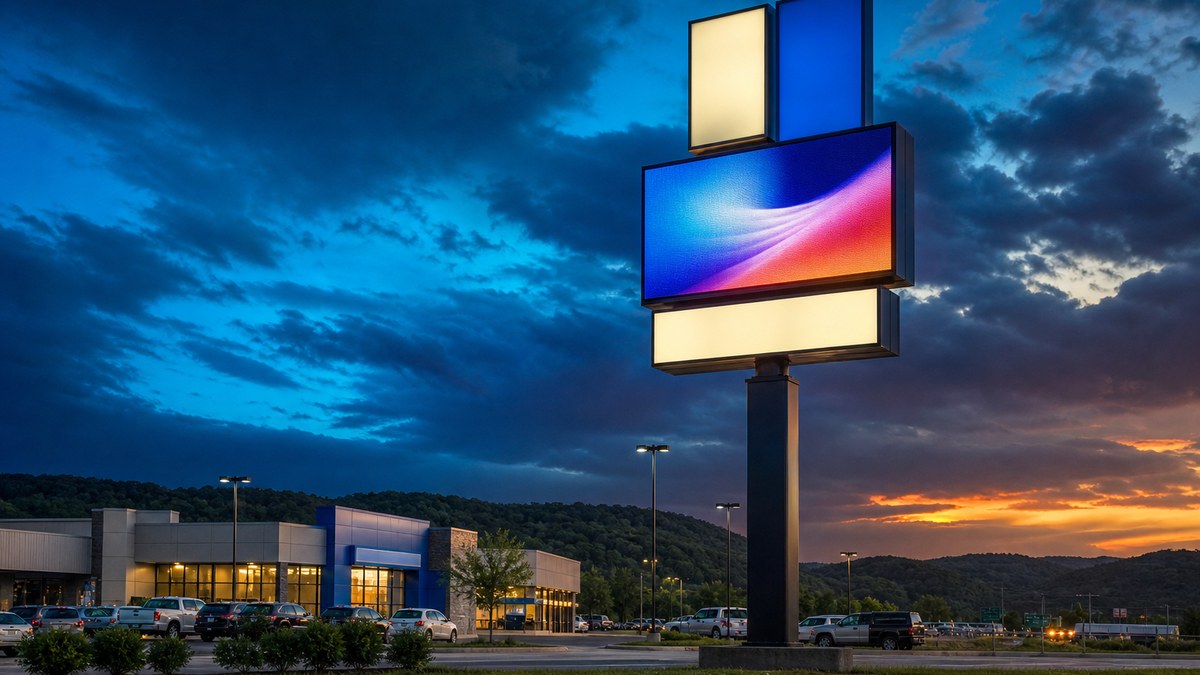
Tall freestanding signs make sense where they're allowed and where traffic moves fast: Little Rock commercial frontage along I-630, I-430, and University Avenue, and highway sites in Fort Smith, Conway, and Jonesboro. They need engineer-sealed structural drawings and a drilled pier foundation sized for local wind and soil. Our pylon sign foundation engineering guide covers the details. In Bentonville, plan for a monument instead unless your use qualifies for the I-49 exception.
Monument signs
Monument signs work everywhere in Arkansas and are required in Bentonville. They suit medical offices, banks, churches, schools, and multi-tenant centers. Popular in the state are masonry bases that match the building, aluminum cabinets with push-through acrylic letters, and an integrated message center. Little Rock office zones cap freestanding signs at 6 feet, which is monument height anyway.
Channel letters
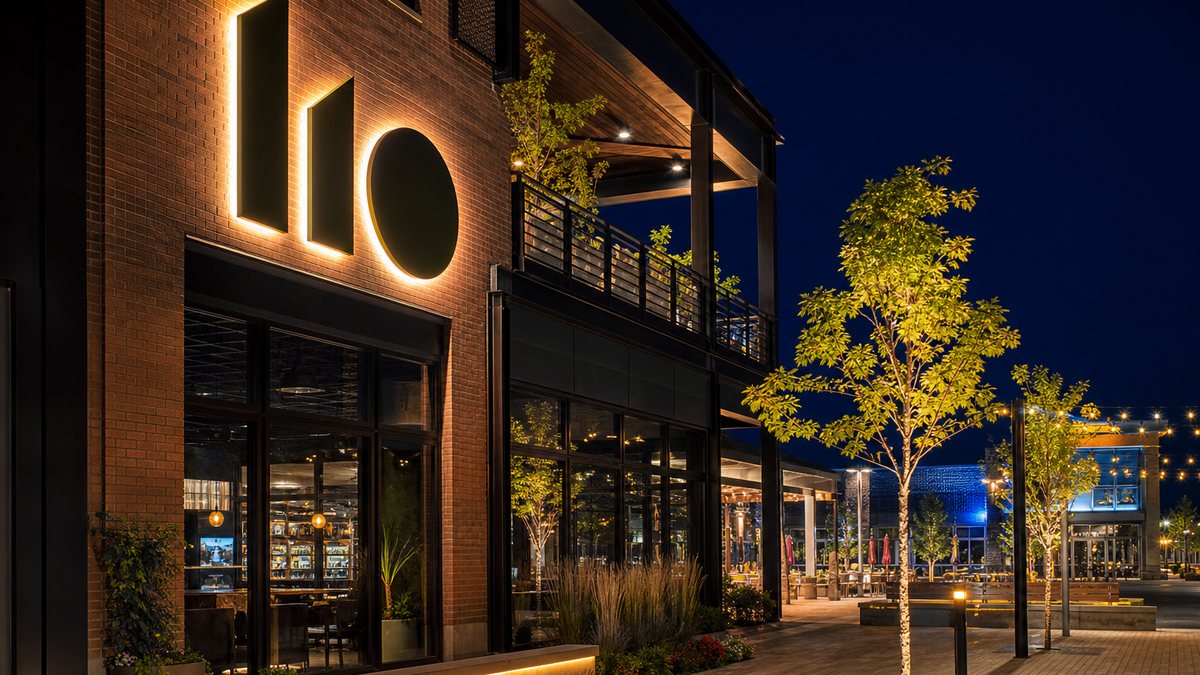
Channel letter signs are the standard storefront sign across Arkansas. Front-lit letters read best from parking lots and highways. Halo-lit letters suit brick downtown buildings in Little Rock, Bentonville, and Fayetteville. Raceway-mounted letters reduce wall penetrations on multi-tenant centers. Our channel letters vs box signs comparison explains when a lighted box sign is the better fit.
LED message centers
A programmable LED message center lets you change copy from your phone or laptop. Size it to your city's area limit and your viewing distance, specify an ambient light sensor, and set default hold times to the strictest rule that applies. For a site on a 45 mph arterial, legibility and hold time matter more than ultra-fine pixel pitch.
Build specs for Arkansas weather
Arkansas signs face severe spring storms, hail, occasional ice storms, long hot and humid summers, and frequent lightning. The engineering behind your sign should be designed for those conditions, not just the code minimum.
Wind, tornadoes, and hail
Arkansas sits in a busy severe-weather corridor. Little Rock's published structural design criteria have listed a 115 mph design wind speed for standard (Risk Category II) structures. The current code edition, risk category, and exposure category at your exact site set the final number, and your engineer confirms it. Open highway frontage usually falls in Exposure C, which raises loads on tall signs. For hail, specify impact-modified acrylic or polycarbonate faces. Consider guards or recessed mounting for message centers on low monuments.
Ice storms and freeze-thaw
Northern and western Arkansas see ice storms that coat sign faces and add load to cabinets and poles. Seal cabinet seams, keep weep holes clear, and use drip loops at wire entries so meltwater can't track into power supplies. Little Rock's design criteria list a 12-inch frost depth. Footings in the Ozarks of Northwest Arkansas often need to go deeper. Confirm the local requirement with the building department.
Heat, humidity, and lightning
Summer heat shortens the life of LED power supplies when they're packed into unventilated cabinets. Use UL-listed drivers rated for the temperature, mount them where a technician can reach them, and leave room for airflow. Humidity drives corrosion at splices, so use sealed connectors and stainless or coated hardware. Lightning is a top cause of dead or scrambled message centers. Surge protection on the sign circuit and the data line is cheap insurance. Our LED sign maintenance guide covers the full checklist.
Clay soils and seismic zones
Much of Central Arkansas has expansive clay that swells when wet and shrinks in drought, while the Ozarks often have shallow rock. Both affect foundation design, which is why a geotechnical report is worth it for any tall pylon. Northeast Arkansas, including Jonesboro and the Delta, sits near the New Madrid seismic zone. Freestanding signs there may need seismic detailing in the foundation and the pole connection.
Permit-ready designs for Little Rock to Bentonville
We check your city's sign code at the design stage and provide engineer-sealed drawings when they're required. Your sign is built with UL-listed components and multi-year warranties, then installed by licensed crews. Request a free quote for your Arkansas location.
A realistic project timeline
Arkansas permit offices are generally faster than those in large coastal cities. Overlay districts, historic review, landlord approvals, and engineering can still add time. These ranges are typical, not guaranteed.
| Phase | Typical Duration | What Happens |
|---|---|---|
| Site survey & design | 1–2 weeks | Measurements, zoning check, landlord criteria, renderings |
| Engineering | 1–2 weeks | Sealed structural and foundation drawings for freestanding signs |
| City permits | 1–4 weeks | Sign, building, and electrical review; longer with overlays or historic review |
| Fabrication | 3–5 weeks | Runs in parallel with permitting once the design is approved |
| Foundation (pylons/monuments) | 2–4 weeks | Drilling, rebar, pour, and cure before the sign is set |
| Install & inspection | 1–3 days | Set, wire, final electrical connection, inspection |
The biggest delays we see come from incomplete applications, such as a missing boundary survey or an unsealed footing drawing. Wrong-sign-type submittals cause delays too, like a pole sign filed in Bentonville. Our sign permit timelines guide compares Arkansas with other states.
What drives the cost of an Arkansas sign project
Every Arkansas sign is quoted to its site, because the same sign can vary widely in scope from one city to the next. These are the main cost drivers:
- Size and sign type: sign area, height, single- or double-faced, and cabinet versus individual letters
- Illumination: front-lit, halo-lit, or combination letters, and whether a full-color or monochrome message center is included
- Engineering: wind and exposure category, soil conditions, and seismic detailing in Northeast Arkansas
- Foundation: pier depth and diameter, rock or clay conditions, and equipment access
- Electrical: new circuit versus existing, trenching distance, disconnect location, and surge protection
- Permits and reviews: overlay districts, historic review, landlord criteria, and ArDOT coordination
- Materials: masonry monument bases, impact-resistant faces, and stainless hardware
Over the life of the sign, energy use and maintenance matter as much as the upfront build. Our true cost of LED sign ownership article explains why quality components pay off. For a quote on your project, request a free quote.
Serving Arkansas and the surrounding region
We handle sign projects across Central Arkansas (Little Rock, North Little Rock, Conway, Benton, and Bryant) and Northwest Arkansas (Bentonville, Rogers, Springdale, Fayetteville, and Lowell). We also cover Fort Smith, Jonesboro, Hot Springs, and Texarkana. For multi-state brands, we coordinate rollouts that include Arkansas along with nearby markets such as Tulsa, Oklahoma City, Memphis, and Dallas. See our multi-location brand rollout guide for how we schedule permits across cities. Browse all our locations or view recent work in the gallery.
The bottom line
Commercial LED signs in Arkansas are not one-size-fits-all. Little Rock rewards frontage with generous freestanding signs, but it bans motion and caps brightness by zone. Bentonville wants monument signs, limits message centers to half the sign area, and requires auto-dimming. Every other city in between has its own twist. Underneath it all are the 2021 Arkansas Fire Prevention Code, the 2020 NEC, and weather that tests every seam and power supply.
The right approach is simple. Confirm the jurisdiction and zoning district first. Design to the strictest rule that applies. Have freestanding signs engineered for the real wind and soil at your site. Build with sealed, UL-listed components. If you have an older sign that is failing, our sign repair and maintenance team can tell you whether a repair, an LED retrofit, or a replacement makes the most sense.
Frequently Asked Questions
Do I need a permit for a business sign in Arkansas?
Yes, in almost every case. Most Arkansas cities require a sign permit for permanent exterior business signs, plus an electrical permit and a licensed electrician for illuminated signs. Freestanding signs usually also need a site plan and a foundation or footing drawing, sealed by an engineer where required. Permits come from your city, or from the county if your parcel is unincorporated. Off-premises signs along Interstates and state highways also need ArDOT outdoor advertising permits.
Can I install a pole sign or pylon sign in Bentonville?
Generally no. Bentonville's sign ordinance prohibits pole signs and requires nonresidential freestanding signs to be monument style. Most single-tenant sites are limited to an 8-foot, 60-square-foot monument and multi-tenant sites to a 12-foot, 100-square-foot monument per street frontage. The code text we reviewed allows taller signs only for certain travel-oriented uses within 500 feet of I-49. Confirm your zoning district with the city before you design.
How tall can a freestanding sign be in Little Rock?
In Little Rock commercial zones, the sign code text we reviewed allows a freestanding sign up to 36 feet tall. Its area can be 2 square feet per linear foot of main street frontage, up to 160 square feet. Office zones are limited to 6 feet and 64 square feet. Next to an expressway, height may be measured from the centerline of the highway lanes. Freestanding signs also need a 5-foot setback and a street address number at least 6 inches tall.
Are LED message centers allowed in Little Rock?
Yes. Little Rock allows electrically activated changeable copy. The code prohibits flashing, oscillating, or rotating lights, kinetic or illusory motion, and sequences that simulate chasing or blinking. Brightness is capped by zone, from 50 footlamberts in single-family residential areas up to 300 footlamberts in commercial and industrial zones. A message center with static messages and automatic dimming is the safest approach.
What are Bentonville's electronic message center rules?
Bentonville limits changeable copy to 50 percent of the sign area, or 80 percent for public assembly uses such as theaters and churches. Messages must be static and display for at least 5 seconds. Brightness cannot exceed 0.3 footcandles above ambient light, and the sign must have sensors that dim it automatically. Animated or fluctuating illumination, rotating signs, and portable message signs are prohibited.
What are ArDOT's rules for digital billboards in Arkansas?
ArDOT's electronic message device rules for outdoor advertising require each message to stay static for at least 8 seconds, with changes taking 2 seconds or less and no visible dissolves or fades. Digital displays must be at least 1,500 feet apart on Interstates and 1,000 feet apart on other state highways in the same direction of travel. Each structure can have only one display per facing. Displays must freeze or go dark if they malfunction. Owners must reduce brightness within 24 hours if the department finds glare.
Which building and electrical codes apply to signs in Arkansas?
Arkansas uses the 2021 Arkansas Fire Prevention Code, whose building volume is based on the 2021 International Building Code, for structural design. For electrical work, the state enforces the 2020 National Electrical Code with Arkansas amendments, effective August 1, 2022. Article 600 covers electric signs. Electricians are licensed by the Arkansas Board of Electrical Examiners. Cities may add local amendments, so confirm the editions with your building department.
How long does it take to get a commercial sign installed in Arkansas?
Most Arkansas projects take roughly 6 to 10 weeks from site survey to lights-on. Design and engineering take 2 to 4 weeks, city permits typically 1 to 4 weeks, and fabrication 3 to 5 weeks in parallel with permitting. Pylon and monument signs add 2 to 4 weeks for foundation work and concrete cure. Historic review, overlay districts, and landlord approvals can add time. These are typical ranges, not guarantees.
How should signs be built for Arkansas weather?
Build for severe wind, hail, ice, heat, humidity, and lightning. Have freestanding signs engineered for the design wind speed and exposure at your site. Use impact-resistant faces and UL-listed power supplies rated for heat, mounted where they can be serviced. Seal seams and wire entries, keep weep holes clear, use stainless or coated hardware, and add surge protection for message centers. In Northeast Arkansas, check whether seismic detailing is required for freestanding signs.
What affects the cost of a commercial LED sign in Arkansas?
Cost depends on sign size and type, the illumination style, and whether a message center is included. Engineering and foundation requirements, soil conditions, electrical work, and permit or review requirements in your city also play a part. Monument bases with masonry, impact-resistant faces, and full-color message centers add scope. Every site is different, so request a free quote for a project-specific estimate.
Get an Arkansas LED sign quote
Tell us your address and what you want to build. We'll check the local sign code, recommend the sign type that fits, and send a detailed quote for design, engineering, permits, fabrication, and installation.
American LED Signage is part of a network of commercial lighting and signage specialists. Explore all our sign services, including wall signs, marquee signs, and digital billboards. For projects beyond signage, see our partner sites: Dallas commercial LED, Fort Worth LED lighting, Arlington LED specialists, Plano commercial LED, Irving LED installations, statewide Texas LED lighting, wholesale LED components, American Starlight Ceilings for premium interior fiber optic ceilings, fiber optic lighting systems, modular building solutions, and modular structures in Dallas.