Channel Letter Sign Installation in Los Angeles: LADBS Permits, Sign Code & Title 24 Guide
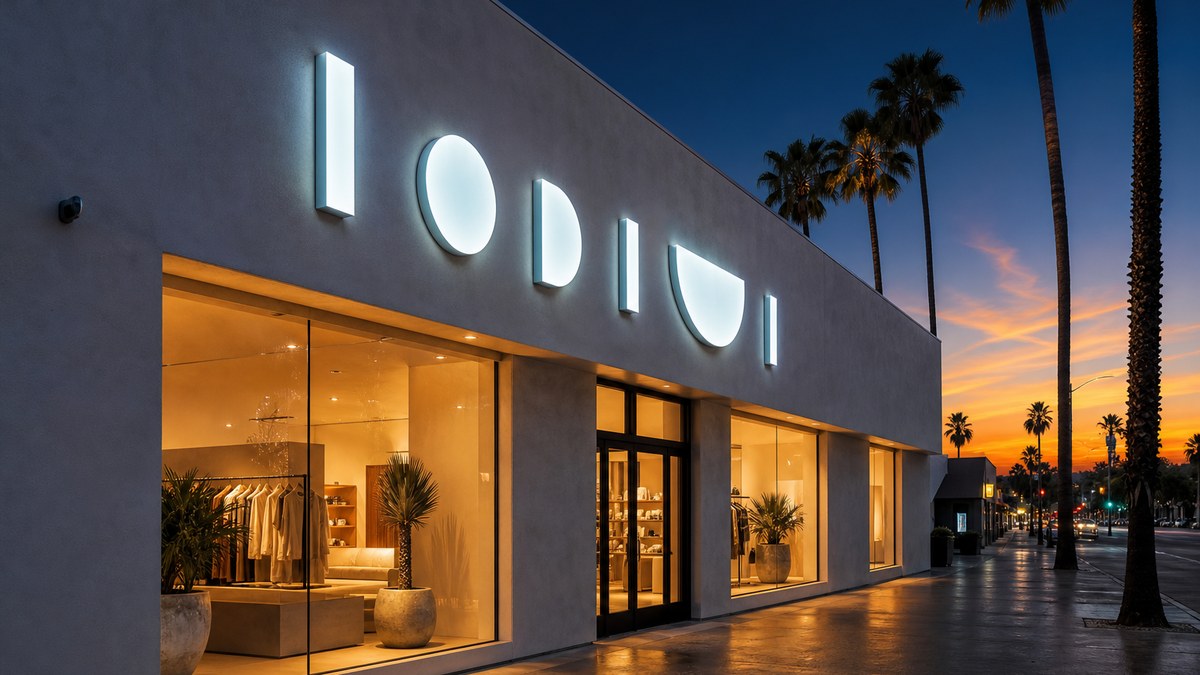
Channel letter sign installation in Los Angeles follows a stricter path than most US cities. Before a single letter goes on your wall, the City of Los Angeles Department of Building and Safety (LADBS) wants a dimensioned plot plan, sign elevations, a licensed electrical sign contractor on the application, and — depending on where your building sits — a freeway pre-inspection, a historic review, or a specific plan sign-off. On top of that, California's Title 24 energy code sets its own rules for how your LED channel letters turn on, turn off, and dim.
None of this is a reason to avoid an illuminated storefront sign. Channel letters are still the most common building sign in the LA Basin, from Downtown and Hollywood to the Westside, the San Fernando Valley, and the beach cities. The businesses that get lit on schedule are the ones that design to the code from day one. This guide walks through the Los Angeles sign rules that matter most for wall-mounted channel letters, the permit steps in order, the build specs that hold up to LA's sun, marine air, and seismic code, and a realistic timeline. For our local service overview, see our Los Angeles channel letter installation page.
Channel letter sign installation in Los Angeles requires an LADBS sign permit, a code-compliant sign size, and a California-licensed contractor for any illuminated sign:
- Permit: LADBS "B" building permit application plus plot plan and elevations for every new, altered, or removed sign
- Who can pull it: Illuminated sign permits go only to a licensed C-10 electrical or C-45 sign contractor
- Wall sign area: 2 sq ft per foot of street frontage + 1 sq ft per foot of building frontage (LAMC 14.4.10)
- Channel letter bonus: Up to 20% more area when the background color does not change
- Projection: 24 inches maximum from the wall face; never above the top of the wall
- Engineering: Stamped structural calcs required for wall signs 100 sq ft and larger
- Title 24: Outdoor signs need a photocontrol plus a time switch; day-and-night signs must dim at least 65% at night
Who regulates signs in Los Angeles
"Los Angeles" means different things on a permit. The City of Los Angeles covers Downtown, Hollywood, the Westside neighborhoods inside city limits, the San Fernando Valley, San Pedro, and more. Inside the city, LADBS issues sign permits and enforces the sign regulations in the Los Angeles Municipal Code (LAMC), mainly Section 14.4 and the sign chapter of the Los Angeles Building Code. The Department of City Planning controls zoning overlays, specific plans, sign districts, and Historic Preservation Overlay Zones (HPOZs).
Many of the places people call "LA" are separate cities with their own sign codes: Santa Monica, Beverly Hills, West Hollywood, Culver City, Pasadena, Glendale, Burbank, Inglewood, and Long Beach, among others. Unincorporated areas fall under Los Angeles County. Before you design anything, confirm which agency controls your parcel. Inside the City of LA, the city's ZIMAS parcel tool shows your zone and every overlay that applies.
The three layers every sign passes through
- Zoning and sign code: How big, how many, where on the wall, and whether it can be lit (LAMC 14.4, plus your zone and any overlay)
- Building and structural: Materials, anchorage, seismic and wind loads, and plan review by LADBS
- Electrical and energy: California Electrical Code (Article 600 for signs), listed sign components, and Title 24 Part 6 lighting controls
Pull your parcel's zoning before you pick a letter size. A C2 storefront, a C1 neighborhood strip, an RAS mixed-use building, and an HPOZ address can have completely different sign allowances on the same street.
How big can your channel letters be?
For most commercial buildings in C2 and less restrictive zones, LAMC 14.4.10 controls wall sign area. The math is based on your lot's street frontage and your building frontage, so a corner lot or a long building gets more sign than a narrow infill storefront.
| Rule | Los Angeles Limit | What It Means |
|---|---|---|
| Base wall sign area | 2 + 1 sq ft | 2 sq ft per foot of street frontage plus 1 sq ft per foot of building frontage |
| Multi-story buildings | +10% per story | Added for each story above the first, capped at a 50% increase |
| Channel letter bonus | +20% | Extra area when the wall's background color does not change behind the letters |
| Tenant alternative | 3 sq ft per ft | Per foot of exterior tenant frontage, in lieu of a full lot sign inventory |
| All sign types combined | 4 sq ft per ft | Per foot of street frontage, across wall, canopy, roof, and other signs |
| Projection | 24 in max | From the face of the building; letters can't extend above the top of the wall |
| High-rise signs | Over 100 ft | Identification signs only, up to 80% of building width and 5% of wall area |
The 20% channel letter bonus is one of the best reasons to choose individual letters over a lighted cabinet sign in Los Angeles. Because the wall itself is the background, you get more allowable sign area for the same frontage. Our channel letter vs box sign comparison covers the other trade-offs.
Placement rules that catch people
- Rear walls near homes: A wall sign facing the rear lot line within 30 feet of an R3 or more restrictive zone cannot be illuminated
- Interior lot lines: No wall sign on a wall that faces and sits within 5 feet of an interior lot line
- Parallel to the wall: The sign face must be approximately parallel to the wall plane; messages on the letter returns are treated as projecting signs
- Power lines: Signs need at least 6 feet horizontal and 12 feet vertical clearance from overhead conductors
- Alleys and curbs: No projection into a public alley and nothing within 2 feet of a curb or roadway edge
Zones with tighter rules
Some zones override the general formula. In C1 and C1.5, signs must be attached to the building and project no more than 2 feet. In CR, signs must be parallel to the front lot line and project no more than 12 inches. In the RAS3 and RAS4 mixed-use zones, each tenant gets one wall sign up to 20 sq ft that is not internally illuminated — which usually rules out standard front-lit channel letters and points you toward externally lit or non-illuminated letters. In the HI zone, it's two signs per ground-floor business, 1 sq ft per linear foot of frontage, and no single sign over 40 sq ft.
The LADBS sign permit, step by step
Every new sign, sign alteration, and sign removal inside the City of Los Angeles needs a permit. The main exception is a non-structural face change where the existing cabinet stays in place. For channel letters, expect this sequence.
1. Site survey and zoning check
Measure street frontage, building frontage, wall height, and existing signs. Pull zoning and overlays. Note distance to the nearest freeway, nearby residential zones, overhead power lines, and where the electrical feed will come from. This survey drives every number on the drawings.
2. Drawings and the permit package
LADBS wants fully dimensioned plans: a plot plan showing lot dimensions, building locations, existing signs, and the new sign's size, location, and type, plus sign elevations showing height and size. The application is the LADBS "B" building permit application. Wall signs of 100 sq ft or more also need structural plans and calculations stamped by a licensed civil or structural engineer or architect, covering materials and the attachment method.
3. Sign Pre-Inspection near freeways
A Sign Pre-Inspection (SPI) is required for signs within 2,000 feet of a freeway, with exemptions for many non-digital wall signs. A non-digital wall sign is exempt if it is an identification sign of 50 sq ft or less (or 5% of the freeway-facing wall, whichever is greater), or if total wall sign area is 100 sq ft or less with no single sign over 50 sq ft. Signs visible from and within 500 feet of a freeway also need a Los Angeles Department of Transportation hazard review before the permit issues.
4. Licensed contractor on the application
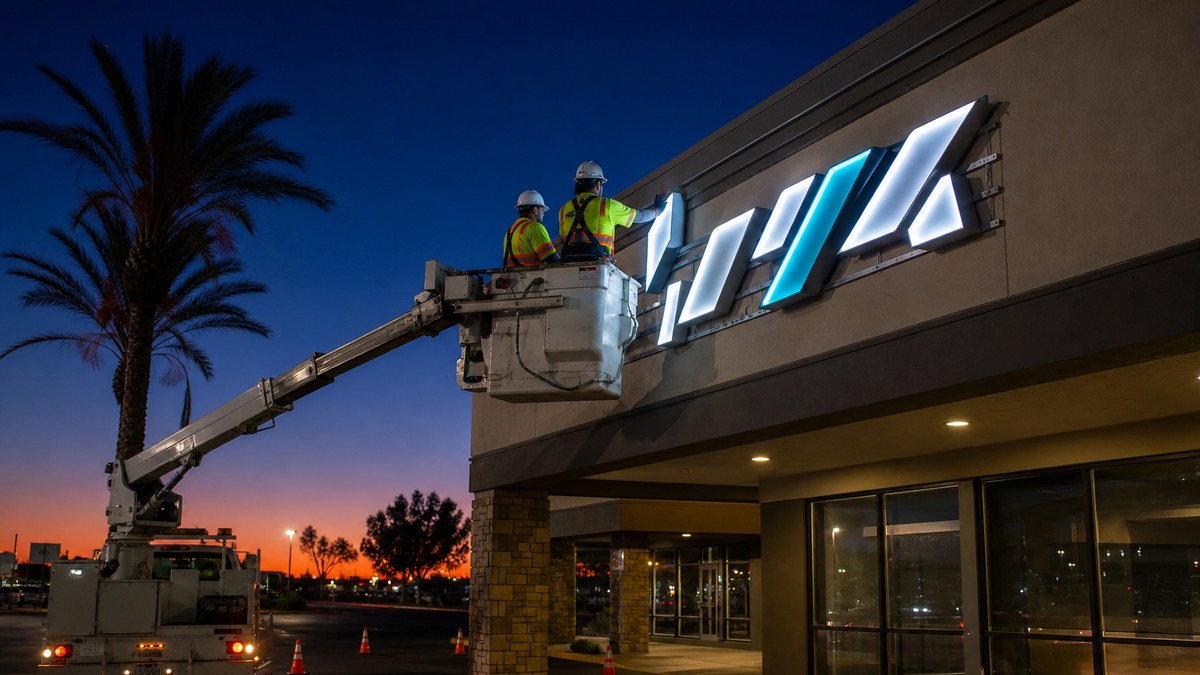
LADBS issues illuminated sign permits only to a licensed C-10 electrical contractor or C-45 sign contractor. California's Contractors State License Board defines the C-45 as a contractor that fabricates, installs, and erects electrical signs, including the wiring. A handyman or general contractor cannot pull this permit for you.
5. Plan check, corrections, and approval
Plan check reviews zoning compliance, area, projection, materials, and structure. Common corrections include missing frontage dimensions, area calculations that leave out existing signs, missing anchorage details, and wall signs over 40 sq ft drawn in materials that aren't metal or another approved noncombustible material. Final plans may need stamps from other departments, such as City Planning or Fire, depending on the project.
6. Installation and inspection
After the permit issues, letters are installed and wired, and LADBS inspects the work. Any structural welding must be done by welders certified by LADBS. Once the sign passes, it can be energized for regular use.
Replacing letters on an old sign can trigger full code compliance. In Los Angeles, alterations over 50% of the sign's replacement cost — or any change in area, height, location, or orientation — must meet current code. Smaller alterations get more flexibility.
HPOZs, sign districts & specific plans
The general sign code is only the starting point. Large parts of Los Angeles sit under an overlay that adds its own sign rules, and these are the biggest source of surprise delays.
Historic Preservation Overlay Zones
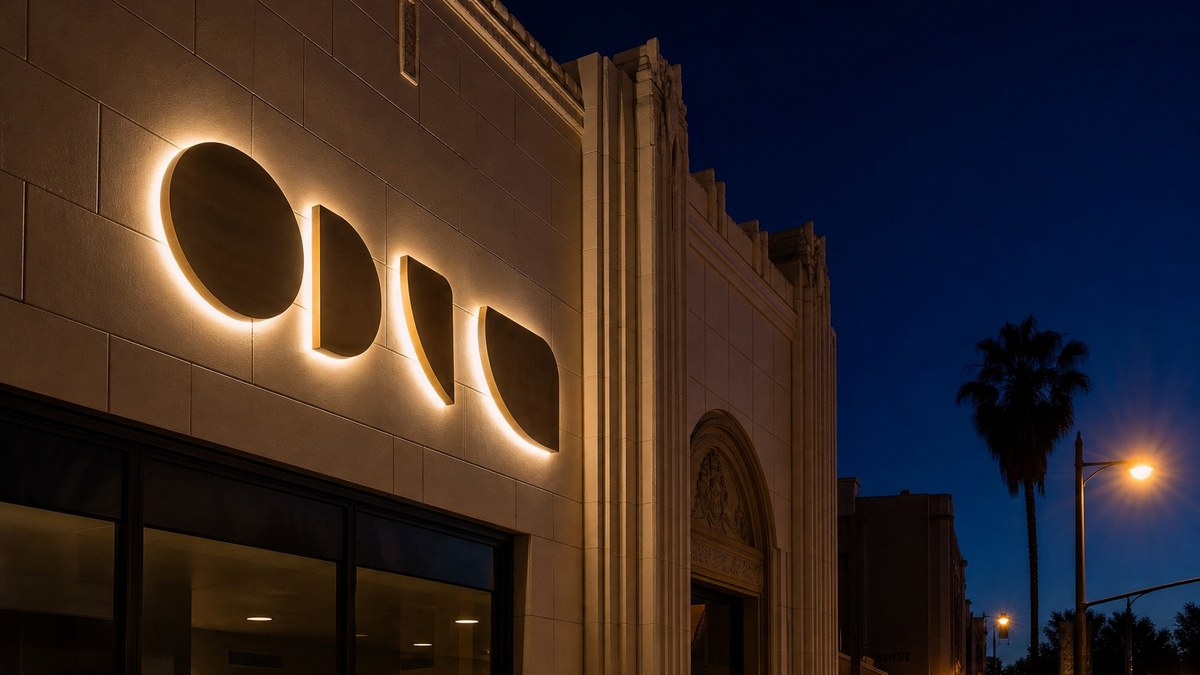
Los Angeles has dozens of HPOZs, and the city's rule of thumb is that all exterior alterations in an HPOZ need HPOZ approval. A new storefront sign is an exterior alteration. Each HPOZ has a volunteer board that reviews projects, and the Department of City Planning approves most exterior changes. Boards meet twice a month; minor items can move quickly, while more significant changes may take up to 75 days. Historic boards often favor smaller, slimmer letters, mortar-joint mounting on masonry, hidden wiring, and halo-lit or externally lit letters. Our halo-lit vs front-lit guide explains the look of each.
Sign districts and supplemental use districts
Sign districts and supplemental use districts — such as the Hollywood Signage Supplemental Use District and the downtown sports and entertainment area sign district — can allow sign types that are prohibited elsewhere or add stricter design standards. If your building sits inside one, the district's ordinance governs alongside LAMC 14.4.
Specific plans and design overlays
Many corridors have specific plans or community design overlays with sign standards: letter heights, materials, lighting style, and limits on cabinet signs. Supergraphics and inflatable signs are prohibited unless a specific plan, supplemental use district, or approved development agreement allows them. Your designer should check the specific plan text, not just the base zone.
Electrical code and Title 24 sign lighting controls
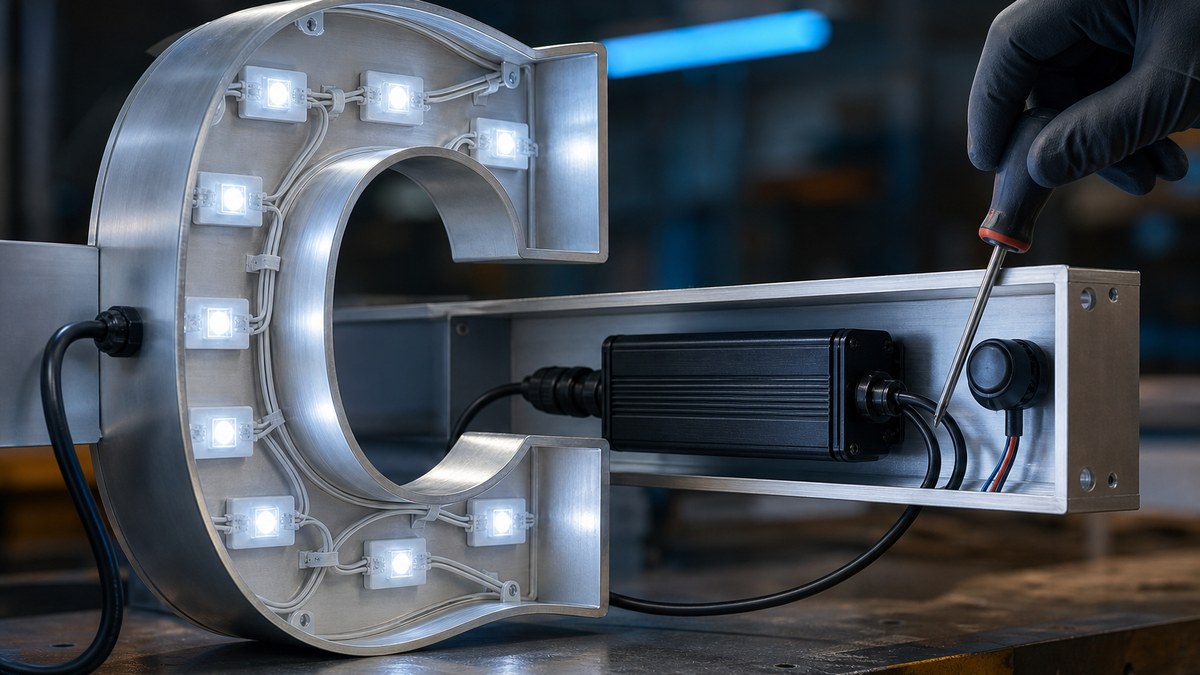
California adopted its 2025 building standards on January 1, 2026, including the 2025 California Electrical Code, which is based on the 2023 National Electrical Code. Article 600 of the electrical code covers electric signs. In practice, that means listed sign assemblies (UL 48 for electric signs), a disconnect for each sign circuit within sight of the sign, proper bonding, and sealed, weather-rated wiring entries. We build every illuminated sign with UL-listed components.
Title 24 Part 6, California's energy code, adds sign lighting controls that most other states don't require. Section 130.3 sets the rules for nonresidential buildings:
| Sign Type | Required Control | Notes |
|---|---|---|
| Outdoor sign lighting | Photocontrol + time switch | Automatic or astronomical time-switch control turns the sign off on schedule |
| Signs lit day and night | Dim 65%+ at night | Applies to signs lit at night and for more than 1 hour of daylight |
| Indoor signs | Time switch | Automatic or astronomical time switch (exit signs excepted) |
| Electronic message centers | Section 110.12 | Demand-responsive control requirements for larger EMCs |
For standard channel letters that switch on at dusk, a photocell paired with a programmable or astronomical time clock covers the requirement. If you plan to add an LED message center to a monument or pylon, the dimming and demand-response rules matter more; our programmable LED sign buyer's guide covers brightness and dimming in detail. Los Angeles also prohibits flashing, strobe, and mechanical lighting effects that conflict with city code, and on-site digital signs require a recorded maintenance affidavit signed by the property owner.
Put the photocell where it sees open sky, not where your own sign or a parking lot pole light will hit it. A photocell washed by nearby light can keep letters dark at dusk or leave them on all night.
Build specs for LA's climate and seismic code
Los Angeles doesn't have Gulf Coast hurricanes or Denver hail, but it is hard on signs in its own way. Seismic design governs much of the structural work, and the region's design wind speed is typically 95 mph. Here's what we specify for LA Basin installations.
Seismic-ready attachment
The LA region sits in Seismic Design Category D, and plan check asks for calculations that show the sign's structure resists seismic and wind loads on larger signs. On masonry, concrete, or stone walls, the city's minimum is 3/8-inch anchors with at least 5 inches of embedment. Raceways and backer panels get continuous, engineered anchorage rather than a few spot fasteners. On stucco over wood framing — common in strip centers across the Valley — anchors must reach the framing or blocking behind the stucco.
UV and heat
Southern California sun fades cheap paint and yellows low-grade acrylic. We use UV-stable acrylic or polycarbonate faces, automotive-grade paint on returns, and quality trim cap. Inland areas like the San Fernando Valley and the Riverside area run hotter, so LED power supplies go in ventilated, shaded locations with the correct temperature rating. Heat is the top cause of early power supply failure.
Marine air near the coast
From Santa Monica to Torrance and San Pedro, salty marine air corrodes steel hardware and wire connections. Coastal installs get stainless or coated fasteners, sealed connectors, drip loops, and clear weep holes so condensation drains out of the letters. A twice-a-year check catches corrosion before letters start to flicker; see our commercial LED sign maintenance guide.
Santa Ana winds
Fall Santa Ana winds can gust well above everyday levels in canyons and passes. Engineered calcs, tight letter attachment, and secured raceways keep letters on the wall. After a strong wind event, a quick visual check for loose letters or cracked faces is cheap insurance.
LADBS-ready drawings, Title 24 controls included
We handle the site survey, sign area math, stamped engineering when required, permit filing through a licensed sign contractor, fabrication with UL-listed components, and installation across the LA Basin. Request a free quote for your storefront.
A realistic installation timeline
Los Angeles is one of the slower permit markets in the country, so the permit usually drives the schedule. Fabrication runs in parallel once the design is locked. These ranges are typical, not guaranteed; each project depends on the agency, overlays, and plan check corrections.
| Phase | Typical Time | What Happens |
|---|---|---|
| Survey & design | 1–2 weeks | Site measure, zoning check, sign area math, proofs, landlord approval |
| Engineering | 1–2 weeks | Stamped calcs for signs 100 sq ft and up; anchorage details |
| LADBS permit | 6–10 weeks | Plan check, corrections, SPI or LADOT review where required |
| HPOZ / overlay review | +2–10 weeks | Board meetings twice a month; significant changes up to 75 days |
| Fabrication | 3–5 weeks | Runs during permitting once drawings are approved by you |
| Install & inspection | 1–3 days | Mount, wire, test controls, schedule city inspection |
Suburban cities in the region are often faster than the City of LA, while historic districts and special overlays are slower. For a national comparison, see our sign permit timelines by state. The full fabrication-to-lights-on process is covered in our channel letter installation guide.
What drives the cost of a Los Angeles project
We don't publish prices because material, labor, and permit costs change constantly and every wall is different. These are the factors that move a Los Angeles channel letter quote up or down:
- Letter size and count: Taller letters and longer names mean more aluminum, faces, and LEDs
- Illumination style: Front-lit, halo-lit, or combination letters, plus face material and color
- Mounting method: Raceway, flush mount, or backer panel, and the wall type behind it
- Engineering: Whether the sign crosses 100 sq ft and needs stamped calcs
- Permits and overlays: SPI, LADOT review, HPOZ or specific plan review
- Electrical: Distance to power, new circuits, and Title 24 photocell and time switch
- Access: Wall height, lift or crane needs, sidewalk protection, and night work
For the long-term view — energy, maintenance, and lifespan — read our true cost of LED sign ownership guide, then request a free quote for your building.
Across the LA Basin and Southern California
Brands rolling out signs across Southern California deal with a different code in nearly every city. A tenant opening in Downtown LA, Long Beach, Anaheim, and Irvine may face four different area formulas and review processes. Our multi-location rollout guide shows how we sequence permits so the fastest markets light first. Heading north? See our San Francisco and San Jose pages, or browse all locations and our project gallery.
The bottom line
Channel letters are one of the best-value signs you can put on a Los Angeles building, and the city's 20% channel letter bonus rewards them. The key is to start with the parcel's zoning and overlays, size the letters to the LAMC formula, use a licensed C-10 or C-45 contractor, plan for stamped engineering on larger signs, and build in Title 24 controls from the start. Do that, and the permit becomes a schedule item instead of a surprise.
Frequently Asked Questions
Do I need a permit to install channel letters in Los Angeles?
Yes. Inside the City of Los Angeles, LADBS requires a permit for every new sign, sign alteration, and sign removal. The main exception is a non-structural face change where the existing sign cabinet stays in place. Illuminated channel letters also need a licensed C-10 electrical contractor or C-45 sign contractor on the application.
How big can a wall sign be in Los Angeles?
Under LAMC 14.4.10, the base wall sign area is 2 square feet per foot of street frontage plus 1 square foot per foot of building frontage. Multi-story buildings get 10% more per added story, capped at 50%. Channel letters get up to 20% more area when the background color does not change. A tenant can instead use 3 square feet per foot of exterior tenant frontage. Some zones, overlays, and specific plans set lower limits.
How far can channel letters project from the wall in Los Angeles?
Wall signs in Los Angeles can project no more than 24 inches from the face of the building and cannot extend above the top of the wall. In C1 and C1.5 zones the limit is 2 feet, and in the CR zone signs can project no more than 12 inches. Projection over the public way needs separate approval.
Who can pull a sign permit for illuminated signs in Los Angeles?
LADBS issues permits for illuminated or electrical signs only to a California-licensed C-10 electrical contractor or C-45 sign contractor. The C-45 classification covers fabricating, installing, and erecting electrical signs, including their wiring. Property owners and general contractors cannot pull an illuminated sign permit on their own.
Do Los Angeles channel letters need engineered drawings?
Wall signs of 100 square feet or more need structural plans and calculations signed by a licensed civil or structural engineer or architect, showing the sign resists seismic and wind loads. Smaller wall signs are exempt from calculations but still need dimensioned plans and proper anchorage, such as minimum 3/8-inch anchors with 5 inches of embedment in masonry or concrete.
What does Title 24 require for LED signs in California?
Title 24 Part 6, Section 130.3, requires outdoor sign lighting to have a photocontrol plus an automatic or astronomical time-switch control. Outdoor signs that are on both day and night must have dimming that automatically cuts lighting power by at least 65 percent at night. Indoor signs need a time switch, and electronic message centers have separate demand-response rules in Section 110.12.
How long does channel letter installation take in Los Angeles?
Most City of Los Angeles projects take about 10 to 16 weeks from design to lights-on. The LADBS permit typically takes 6 to 10 weeks, HPOZ or overlay review can add several weeks, and fabrication runs in parallel over 3 to 5 weeks. The physical install usually takes 1 to 3 days. Nearby cities with their own sign codes are often faster.
Can I put illuminated signs on a building in an HPOZ?
Often yes, but you need HPOZ approval first because all exterior alterations in a Historic Preservation Overlay Zone are reviewed. HPOZ boards meet twice a month, and significant changes can take up to 75 days. Historic reviewers usually prefer smaller letters, mortar-joint mounting, hidden wiring, and halo-lit or externally lit letters over internally lit cabinets.
Do I need a sign permit near a Los Angeles freeway?
Yes, and freeway proximity adds steps. Signs within 2,000 feet of a freeway need a Sign Pre-Inspection unless they are non-digital wall signs that meet the size exemptions. Signs visible from and within 500 feet of a freeway also need a Los Angeles Department of Transportation hazard review before the permit is issued.
What affects the cost of channel letters in Los Angeles?
Cost depends on letter height and count, front-lit or halo-lit illumination, face materials, mounting method, wall type, whether stamped engineering is required, permit and overlay reviews, electrical work including Title 24 controls, and lift or crane access. Because these factors vary by building, the best way to get an accurate number is a free site-specific quote.
Get a Los Angeles channel letter quote
Send us your address and storefront photos. We'll check zoning and overlays, run the sign area math, and quote fabrication, permitting, and installation with multi-year warranties.
American LED Signage is part of a network of commercial lighting and signage specialists. Explore all our sign services, including wall signs, marquee signs, and digital billboards. For projects beyond signage, see our partner sites: Dallas commercial LED, Fort Worth LED lighting, Arlington LED specialists, Plano commercial LED, Irving LED installations, statewide Texas LED lighting, wholesale LED components, American Starlight Ceilings for premium interior fiber optic ceilings, fiber optic lighting systems, modular building solutions, and modular structures in Dallas.