Custom LED Signs in Washington DC: Permits, Historic Review & Sign Code Guide
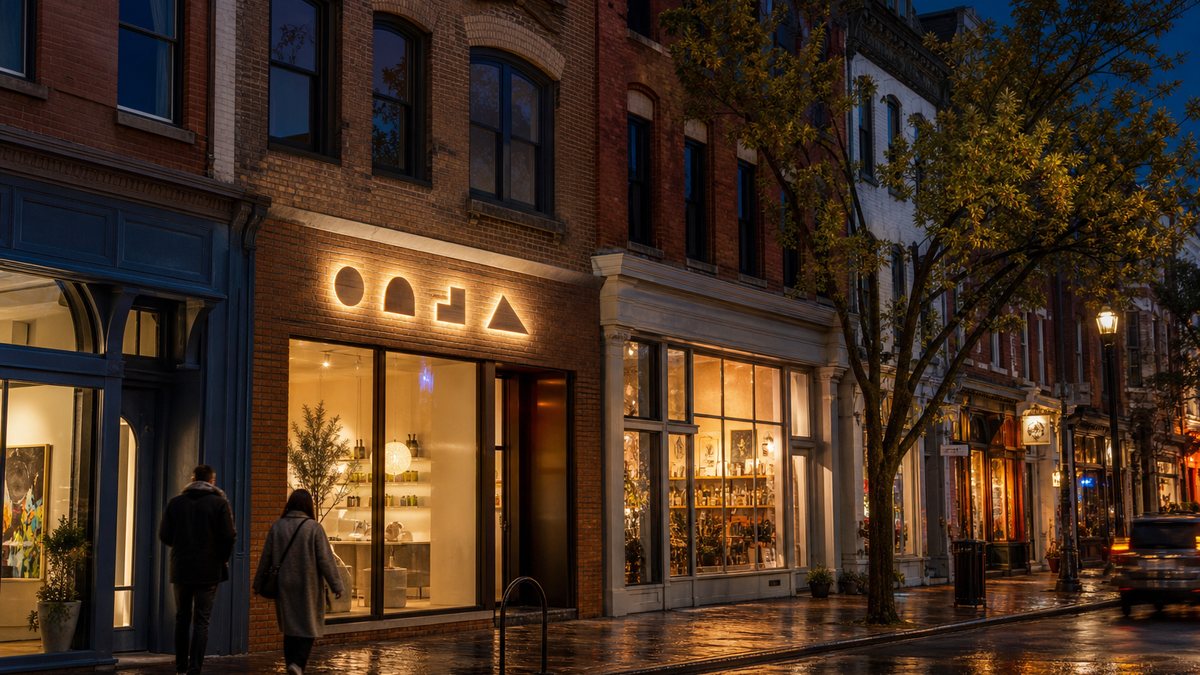
Ordering custom LED signs in Washington DC is not like ordering a sign anywhere else in the country. The District stacks several layers of review on top of a normal building permit: the Department of Buildings, the Historic Preservation Office, the U.S. Commission of Fine Arts for properties near federal land, the Old Georgetown Board in Georgetown, and DDOT for anything that hangs over the sidewalk. A sign that would sail through in a suburb can stall for months in DC if it is designed without those rules in mind.
The good news: DC is very predictable once you know which rulebook applies to your address. Halo-lit and internally lit channel letter signs, rigid blade signs, low monument signs and carefully dimmed LED message centers can all be approved when they are drawn to fit the building and the district. This guide walks through every approval layer, the illumination rules that trip up most applicants, and a realistic timeline. For local service details, see our Washington DC LED signs page.
Most exterior business signs in Washington DC need a Department of Buildings (DOB) sign permit, and many also need design review because of where the building sits:
- DOB sign permit: Scaled plans with dimensions and elevations, the Certificate of Occupancy for the business, and a surveyor's plat for ground signs
- Historic districts: Permits for signs over 1 sq ft; projection max 42 in; at least 8 ft clearance; letters generally 18 in or less
- Georgetown: Old Georgetown Board review; no internal illumination or lit box signs; halo or reverse-channel lighting may be considered; letters 12 in or less
- Federal core: Shipstead-Luce Act review by the Commission of Fine Arts for property fronting or abutting federal land, much of the Potomac waterfront and Rock Creek Park
- Public space: DDOT and its Public Space Committee regulate anything in or over the sidewalk
- Illumination: Steady light only on historic properties; flashing, pulsing and video monitors are not appropriate there
- Codes: DC Construction Codes from the 2017 cycle (electrical based on the 2014 NEC), with an update to 2024 model codes in rulemaking
Why sign projects in DC work differently
Washington is a federal city, a historic city and a dense urban downtown all at once. That mix creates overlapping authority. The District government controls building permits, zoning and public space. Federal commissions protect the views and settings around the National Mall, federal buildings, parks and Georgetown. And a large share of the city's commercial corridors sit inside designated historic districts.
For a business owner, that means the same set of wall signs could face three different outcomes on three different blocks. A storefront on a modern office podium in NoMa may only need a standard DOB permit. The same sign on a rowhouse on 14th Street or Capitol Hill goes through historic preservation staff. On M Street in Georgetown it goes to the Old Georgetown Board, which has stricter lighting guidelines than the rest of the city.
The fix is simple: identify every review layer for your exact address before design starts. That one step decides your letter style, your lighting method, your mounting details and your schedule.
| Review Layer | When It Applies | What It Controls | Who Reviews |
|---|---|---|---|
| Sign permit | Almost every exterior business sign | Size, location, structure | DC Department of Buildings (DOB) |
| Electrical permit | Any illuminated sign | Wiring, disconnects, listing | DOB, filed by a DC-licensed electrician |
| Historic review | Historic districts and landmarks | Design, lighting, mounting | Historic Preservation Office / HPRB |
| Old Georgetown Act | Private property in Georgetown | Type, size, material, lighting | Old Georgetown Board (CFA) |
| Shipstead-Luce Act | Property near federal buildings and parks | Exterior changes incl. signs | U.S. Commission of Fine Arts |
| Public space | Signs over or on the sidewalk | Projection, clearance, placement | DDOT Public Space Committee |
Step 1: The DOB sign permit
Since October 2022, permitting in the District has been handled by the Department of Buildings (DOB), which took over the construction and permitting work formerly done by DCRA. A permit is required to erect or replace an exterior sign, including any sign that advertises a business. Applications are filed online under the "Sign Permit" permit type.
What DOB asks for
- Architectural plans for new or replacement signs, showing sign dimensions and building elevations
- A Certificate of Occupancy confirming the use of the space and the business named on the sign
- A surveyor's plat for ground signs such as monuments and pylons, showing exactly where the sign sits
- Sign details entered in the application: materials, dimensions and location on the building
The building code's sign provisions sit in the DC Building Code (12A DCMR, Section 3107), which controls sign area, projection, construction and special sign categories. Zoning and public space rules add their own limits. In practice, a clean permit package includes a dimensioned elevation of the whole facade, a section through the sign showing the mounting, an electrical sheet and, for anything freestanding, structural calculations.
Electrical permits and licensing
Every illuminated sign also needs an electrical permit pulled by a DC-licensed electrician. DC's current electrical code is based on the 2014 National Electrical Code, so installation follows NEC Article 600 for electric signs: UL-listed sign components (UL 48), a disconnecting means for each sign circuit, proper grounding and protected wiring. Signs built from listed components inspect faster and qualify for multi-year warranties.
Get the Certificate of Occupancy squared away first. DOB checks that the business on the sign matches the approved use of the space. A tenant still waiting on its CO is the most common reason a finished sign sits in a warehouse instead of on the wall.
Step 2: Historic district sign standards
A big share of DC's retail corridors are historic: Capitol Hill, Dupont Circle, Logan Circle, U Street, Shaw, Mount Vernon Square, the Downtown Historic District and many more. For properties in these districts and for individual landmarks, the Historic Preservation Review Board has adopted formal standards for signs, awnings, canopies and marquees in Chapter 25 of DC's historic preservation regulations. Most routine storefront signs are reviewed by Historic Preservation Office staff rather than a full board hearing.
The core numbers
- Permit threshold: Signs over 1 square foot on a historic property need a permit
- Projection: No more than 42 inches from the building line
- Clearance: Projecting, hanging and blade signs need at least 8 feet above grade
- Letter height: Generally 18 inches or less unless the building and placement justify more
- Window signs: No more than 20% of the storefront or show window surface
- Secondary info: Signs listing goods, services, websites or phone numbers are limited to 3 square feet
Where the sign can go
Historic standards favor the sign band, fascia or other area the building was designed to carry signage. Without a sign band, a flat wall area free of windows and detailing works best. Signs must not cover cornices, pilasters, window surrounds or transoms, and must stay on the part of the building the business actually occupies. Channel letters set above a show window can be acceptable if they do not substantially cover the transom.
How it must be mounted
On masonry, fasteners go through mortar joints rather than brick or stone whenever possible, so the sign can be removed later without permanent damage. Conduit and transformers must be concealed, and raceways should be compact and finished to blend with the wall. Boxy, bulky or out-of-scale raceways are specifically called out as inappropriate, which is why flush-mounted letters with remote power supplies are common on DC rowhouses.
Illumination rules: what lights up and what doesn't
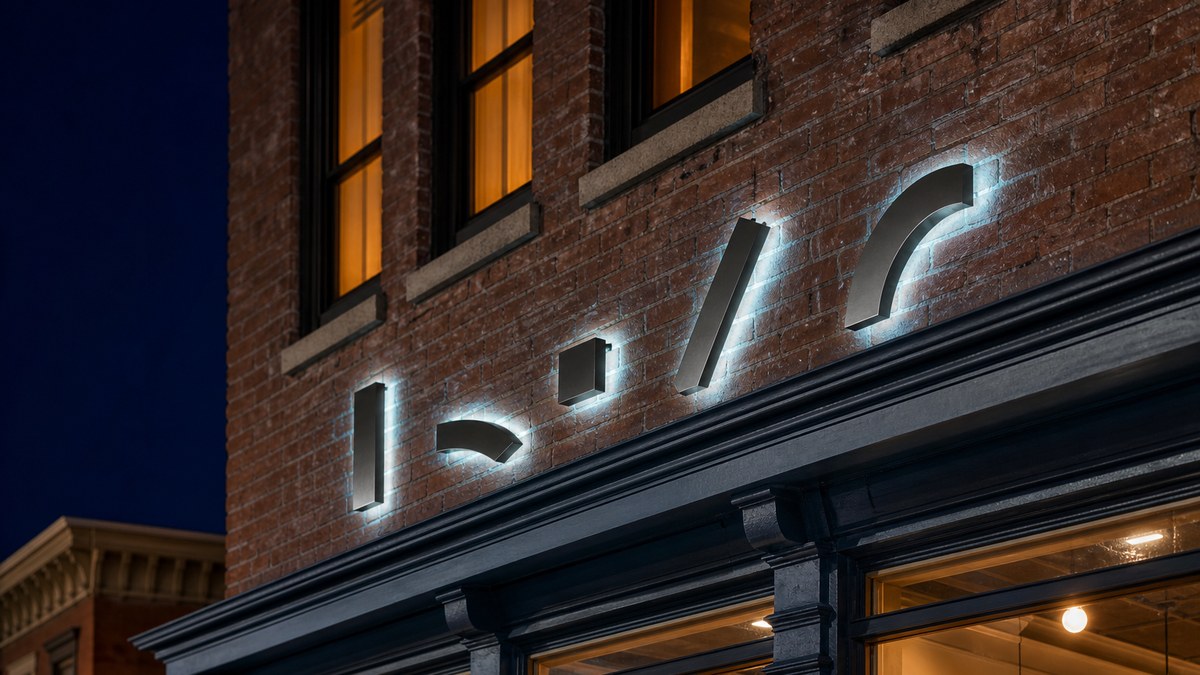
Lighting is where most DC sign designs succeed or fail. The citywide building code allows a wide range of illuminated signs, but historic properties and federal-review areas narrow the choices sharply. Here is how the main options stack up on historic buildings.
| Lighting Method | Historic Districts | Georgetown (OGB) | Notes |
|---|---|---|---|
| Halo-lit (reverse channel) | Encouraged | May be considered | Soft glow on the wall; our first choice for brick |
| Front-lit channel letters | Preferred over boxes | Not allowed | Internal illumination is out in Georgetown |
| Internally lit box/cabinet | Typically not appropriate | Not allowed | Large glowing plastic faces read as out of character |
| Shielded external lights | Acceptable | Small, few fixtures | Must aim onto the sign with no glare |
| Exposed neon / LED outlining | Trim/outlining not permitted | New neon not allowed | Exception for trim in Chinatown area of Downtown HD |
| Video / animated displays | Not appropriate | Not allowed | TVs and video monitors as signs are prohibited |
Two rules apply everywhere on historic property: illumination must be steady (no pulsing, blinking or flashing), and low-level lighting is encouraged because intense lighting can make an otherwise compatible sign inappropriate. Sodium vapor, mercury vapor and metal halide sources are not permitted. Modern LED letters with dimmable drivers handle all of this easily. See our halo-lit vs front-lit channel letters comparison for how each style looks on a facade.
Why halo-lit letters win in DC
Halo-lit letters have opaque metal faces and LEDs that wash light onto the wall behind them. The result reads as a crisp silhouette with a soft glow rather than a bright plastic face. That fits the "diffused source" language in the historic standards and is one of the few illuminated options the Old Georgetown Board will even consider. If you are choosing between letters and a cabinet, our channel letter vs box sign guide explains why lighted box signs rarely work on DC's historic blocks.
Historic standards also discourage "overpowering branding or color branding." National brands rolling out across DC often need a toned-down version of their standard sign package, such as halo-lit letters in a single brand color instead of a full-color lit cabinet. Plan that variant early in a multi-location rollout.
Georgetown and the Old Georgetown Board
Under the Old Georgetown Act, exterior changes to private property in Georgetown, including new signs, are reviewed by the Old Georgetown Board, which works under the U.S. Commission of Fine Arts. Its sign guidelines are the strictest in the city, and its recommendations can be stricter than DC's own regulations.
- Non-illuminated signs are preferred because street lighting in the district is already high
- Not allowed: internal illumination (including lit box signs), uplighting, new neon, and visible raceways, conduits or junction boxes
- May be considered: halo or reverse-channel lighting; small, minimal external fixtures
- One principal sign per street facade per business
- Letters and logos 12 inches tall or less; no more than two colors including black or white
- Blade signs must be rigid (no swinging), with at least 8 feet of clearance
- Mounting through mortar joints or with non-staining removable epoxy or structural silicone; pin-mounted letters may sit on a panel to reduce wall penetrations
Submissions need a map or aerial of the property, scaled front, side and section drawings with dimensions and mounting details, illumination details with the power source, and photos including the full facade. The Board meets monthly with filing deadlines several weeks ahead of each meeting, so build at least one meeting cycle into the schedule. Temporary signs in place under 60 days are handled by the DC Historic Preservation Office instead.
Near federal land: the Shipstead-Luce Act
The Shipstead-Luce Act gives the U.S. Commission of Fine Arts review over private projects on property within, fronting or abutting its jurisdiction. That covers the monumental and governmental core of the city, much of the Potomac waterfront and Rock Creek Park. Adding a sign is an exterior modification, so it is reviewed.
In practice this affects storefronts and office buildings facing the National Mall area, Pennsylvania Avenue, federal office buildings, the waterfront and parkland edges. The Commission meets monthly, with filing deadlines about two weeks before each meeting. Expect a preference for restrained, well-proportioned signs: individual letters, discreet lighting and nothing that competes with the federal setting. Large special signs are prohibited in Shipstead-Luce and Old Georgetown areas altogether.
Designed to pass DOB, HPO and CFA review
We check every review layer for your address before design starts, then build custom LED signs with UL-listed components and multi-year warranties. Tell us about your DC location for a free quote.
Projecting and blade signs over public space
DC's sidewalks, tree boxes and much of the space in front of many rowhouses are public space controlled by the District Department of Transportation (DDOT). Signs that sit in or hang over that space need DDOT approval in addition to the DOB permit, and DDOT's Public Space Committee handles the review. Applications for public space permits go through DDOT's online permitting system (TOPS).
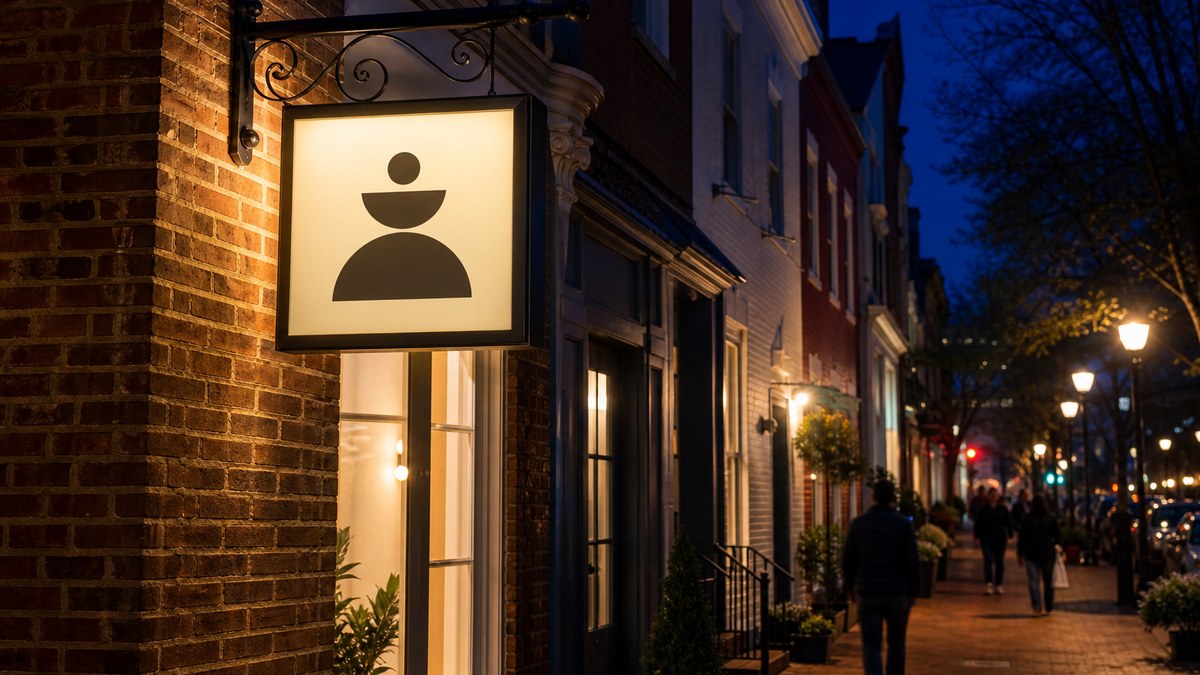
- Blade signs: Popular on DC corridors and ideal for upper-floor or side-street businesses; on historic properties they are limited to 42 inches of projection and 8 feet of clearance
- Sidewalk A-frames: One per business, up to 6 square feet, within 3 feet of the building wall during business hours, and they need a public space permit
- Light poles: Signs or posters on public street light poles may not relate to the sale of goods or services
- Awnings and canopies: Also projections over public space; on historic properties awnings may project no more than 60 inches and valance lettering is generally limited to 12 inches
A lit blade sign is a strong tool in DC because so many storefronts are narrow and set among identical rowhouse facades. Pedestrians see it down the block, which a flat wall sign cannot match. Pair it with a modest halo-lit wall sign and you have a complete, approvable package.
Digital signs, LED message centers and billboards in DC
Searches for "digital signs in Washington DC" are common, so it helps to be direct: DC is one of the most restrictive places in the country for animated and video signage.
Billboards
New billboards are banned in the District. Only a handful of grandfathered billboards remain, so digital billboards are not a realistic option for a business inside DC. Projects in nearby Maryland and Virginia follow their own local rules, which is one reason our Baltimore and Richmond clients see very different digital sign options.
Special sign and entertainment areas
DC's building code has created special categories for large signs. "Special signs" are capped in number and limited mainly to the central business district and the New York Avenue corridor, and they are prohibited in Old Georgetown, Shipstead-Luce and waterfront areas and on historic properties. The Gallery Place / Chinatown area has its own sign rules that allow animated signs, video screens and illuminated projecting signs inside a designated area. These categories are heavily regulated and change with downtown redevelopment, so confirm current rules for the exact address.
Message centers for schools, churches and campuses
Outside those areas, a programmable LED message center is usually best treated as a static-change display: messages hold steady, change without animation, and dim automatically at night. On historic properties, electronic and moving-text signs are typically not appropriate, and televisions or video monitors used as signs are prohibited. For buyers outside historic areas, our programmable LED signs buyer's guide covers pixel pitch, brightness and photocell dimming in detail.
Ask for a dimming schedule and photocell on any lit sign in DC, even a simple channel letter set. Low-level, steady light is exactly what reviewers want to see, and it cuts energy use and extends LED life at the same time.
Freestanding signs: monuments, pylons and wind
Most DC businesses use wall and blade signs, but office campuses, medical buildings, schools, churches and outer-ward retail centers often need ground signs. DOB requires a surveyor's plat showing the sign location, and historic properties treat pole-mounted signs over 10 feet tall as typically not appropriate. That makes the low monument sign the standard freestanding choice in the District, with true pylon signs limited mostly to auto-oriented corridors.
Structural design follows the building code's wind provisions based on ASCE 7. Basic design wind speeds for typical commercial structures in the DC area are in the range of about 115 mph, and footings must extend below the local frost depth (about 30 inches in the District). Engineers size the footing from wind load, sign area, height and soil conditions. Our pylon sign foundation engineering guide explains how those factors drive the design.
High-rise building signs and office towers
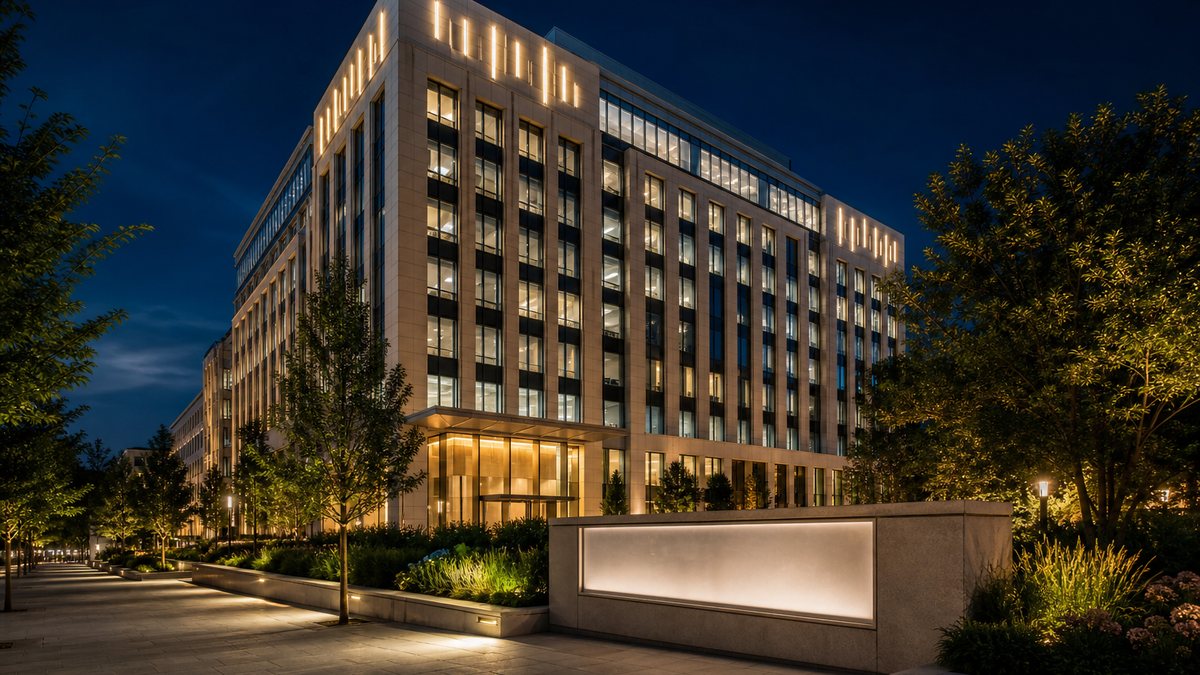
DC's skyline is low by big-city standards because of the federal Height of Buildings Act, but office buildings downtown, in NoMa, Navy Yard, the Southwest Waterfront and Capitol Riverfront still carry large illuminated building letters. These projects add a few extra steps: structural review of the parapet or facade attachment, landlord and building engineer approval, coordinated electrical work at height, and often lift or swing-stage access that must be scheduled with building management.
Roof signs are prohibited on historic properties (with narrow exceptions for vintage and replica signs), and properties facing federal land go through Shipstead-Luce review. Individual halo-lit or front-lit letters mounted to the facade near the top floor are the usual solution. Office lobbies and tenant entrances typically add a monument or directory sign at street level.
Codes and standards to build to
DC's current construction codes are the 2017 DC Construction Codes, and the District has begun moving to the 2024 model codes, with final rules expected in late 2027. A well-built sign meets both today's rules and tomorrow's. Here is what we build into every DC project:
- UL 48 listed signs and UL-listed LED modules and power supplies
- NEC Article 600 wiring with a disconnect for each sign circuit and concealed conduit
- Remote power supplies where historic rules call for slim profiles and no visible raceways
- Non-staining stainless hardware set in mortar joints on masonry
- Dimmable drivers and photocells for steady, low-level night lighting
- Engineered footings for ground signs, below frost depth, with sealed calculations when required
- Weep holes and sealed seams for DC's humid summers, winter freeze-thaw cycles and road salt
Realistic DC sign timeline
Timelines depend on how many review layers your address triggers. The table below shows typical ranges once a complete package is ready. Our sign permit timelines by state guide compares DC to other markets.
| Project Type | Review Layers | Typical Approval Window | Biggest Risk |
|---|---|---|---|
| Non-historic wall sign | DOB sign + electrical | 2–6 weeks | Missing CO or plans |
| Historic district storefront | HPO + DOB + electrical | 4–10 weeks | Lit cabinet or bulky raceway |
| Georgetown storefront | OGB + DOB + electrical | 6–12 weeks | Internal illumination |
| Near federal land | CFA + DOB + electrical | 6–12 weeks | Missed filing deadline |
| Blade sign or awning | Above + DDOT public space | Add 2–6 weeks | Clearance or projection |
| Monument or pylon | DOB + plat + engineering | 6–12 weeks | Survey and footing design |
Fabrication runs in parallel with review, so the sign is usually ready when the permit is. Installation of a typical storefront set takes a day or two once approvals are in hand.
What drives the cost of a DC sign project
We quote every DC project individually because the review path changes the scope. The main cost drivers are:
- Size and letter count, including whether the design fits within an 18-inch or 12-inch letter limit
- Illumination type: halo-lit, front-lit, external lighting or non-lit
- Mounting: remote power supplies and mortar-joint attachment on historic masonry take more labor than a raceway
- Review layers: drawings, photos and submissions for HPO, OGB, CFA or DDOT
- Access: lifts, street-closure permits and after-hours work on busy corridors
- Structure: footings, surveys and engineering for ground signs and building letters at height
The fastest way to get a firm number is to request a free quote with your address, a facade photo and your brand files.
The bottom line
Custom LED signs in Washington DC are very achievable when you design for the right rulebook from day one. Check whether your address is historic, in Georgetown, near federal land or projecting over public space. Choose halo-lit or channel letters over lit cabinets on older buildings. Keep lighting steady and soft. Conceal conduit and mount through mortar joints. Then file a complete package with DOB and every review body at once.
We handle that process for businesses across the District and the wider region, from our Philadelphia and New York markets to the rest of our nationwide locations. Browse finished work in our sign gallery, explore all sign services, or keep an existing sign in top shape with sign repair and maintenance and our LED sign maintenance guide. Theaters and venues can also ask about custom marquee signs where the district allows them.
Get a custom LED sign approved and installed in DC
Send us your address and a photo of your building. We'll identify every review layer, recommend a sign that fits, and send a detailed quote. UL-listed components and multi-year warranties on every sign.
Frequently Asked Questions
Do I need a permit for a business sign in Washington DC?
Yes. A Department of Buildings (DOB) sign permit is required to erect or replace an exterior business sign in DC. The application needs architectural plans with sign dimensions and elevations, the Certificate of Occupancy for the business, and a surveyor's plat for ground signs. Illuminated signs also need an electrical permit filed by a DC-licensed electrician. On historic properties, any sign over 1 square foot needs a permit.
Can I have an illuminated sign in a DC historic district?
Usually yes, if the lighting is designed for the building. DC's historic sign standards encourage halo-lit and other diffused-source signs, prefer internally illuminated channel letters over large lit box signs, and allow shielded external lights. Illumination must be steady with no flashing or pulsing, and low-level lighting is encouraged. Internally lit plastic cabinet signs and video monitors are typically not appropriate on historic buildings.
What are the sign rules in Georgetown?
Signs on private property in Georgetown are reviewed by the Old Georgetown Board under the Commission of Fine Arts. Its guidelines prefer non-illuminated signs and do not allow internal illumination, lit box signs, uplighting, new neon or visible raceways. Halo or reverse-channel lighting and small external fixtures may be considered. Letters are limited to 12 inches, signs to two colors, and one principal sign per street facade per business. Blade signs must be rigid with 8 feet of clearance.
What is Shipstead-Luce Act review for signs?
The Shipstead-Luce Act lets the U.S. Commission of Fine Arts review exterior changes, including new signs, on private property within, fronting or abutting its jurisdiction. That includes the monumental and governmental core of Washington, much of the Potomac waterfront and Rock Creek Park. The Commission meets monthly with filing deadlines ahead of each meeting, so allow at least one meeting cycle in your schedule.
How far can a projecting or blade sign stick out in DC?
On historic properties, signs may project no more than 42 inches from the building line, and projecting, hanging and blade signs need at least 8 feet of clearance above grade. Signs that hang over the sidewalk or other public space also need approval from DDOT and its Public Space Committee in addition to the DOB sign permit.
Are digital LED signs and billboards allowed in Washington DC?
DC is very restrictive. New billboards are banned, and only a few grandfathered billboards remain. Animated and video signs are mainly limited to specially designated areas such as Gallery Place and Chinatown and to a capped number of special signs downtown. On historic properties, electronic and moving-text signs are typically not appropriate and video monitors used as signs are prohibited. Outside those areas, LED message centers work best with static messages and automatic night dimming.
How long does it take to get a sign approved in DC?
A non-historic wall sign with a complete package often clears DOB in about 2 to 6 weeks. Historic district signs typically take 4 to 10 weeks, and Georgetown or Shipstead-Luce projects often take 6 to 12 weeks because of monthly meeting cycles. Signs over public space can add 2 to 6 weeks for DDOT review. Fabrication runs in parallel, and storefront installation usually takes a day or two.
What building and electrical codes apply to signs in DC?
DC currently uses the 2017 DC Construction Codes, with the electrical code based on the 2014 National Electrical Code. Sign provisions sit in Section 3107 of the DC Building Code (12A DCMR). Illuminated signs follow NEC Article 600 and should use UL 48 listed components. The District is working toward adopting the 2024 model codes, with final rules expected in late 2027.
How much does a custom LED sign cost in Washington DC?
Every DC sign is quoted individually because cost depends on size, letter count, illumination type, mounting method, review layers (HPO, Old Georgetown Board, Commission of Fine Arts or DDOT), access at the site and any structural work for ground signs. Send your address, a facade photo and brand files to American LED Signage at (702) 738-2218 or through our contact page for a free, detailed quote.
What is the best sign type for a DC rowhouse storefront?
For most DC rowhouse storefronts, halo-lit or front-lit individual channel letters in the sign band, paired with a rigid blade sign, is the best combination. The letters fit historic standards, the blade sign is visible down the block, and remote power supplies keep the installation slim. Mounting through mortar joints and concealing conduit helps the design pass historic review.
American LED Signage is part of a network of commercial lighting and signage specialists serving businesses across all US markets. For projects beyond signage, see our partner sites: Dallas commercial LED, Fort Worth LED lighting, Arlington LED specialists, Plano commercial LED, Irving LED installations, statewide Texas LED lighting, wholesale LED components, American Starlight Ceilings for premium interior fiber optic ceilings, fiber optic lighting systems, modular building solutions, and modular structures in Dallas.