Commercial LED Sign Installation in Houston: Permits, Wind Codes & Timeline Guide
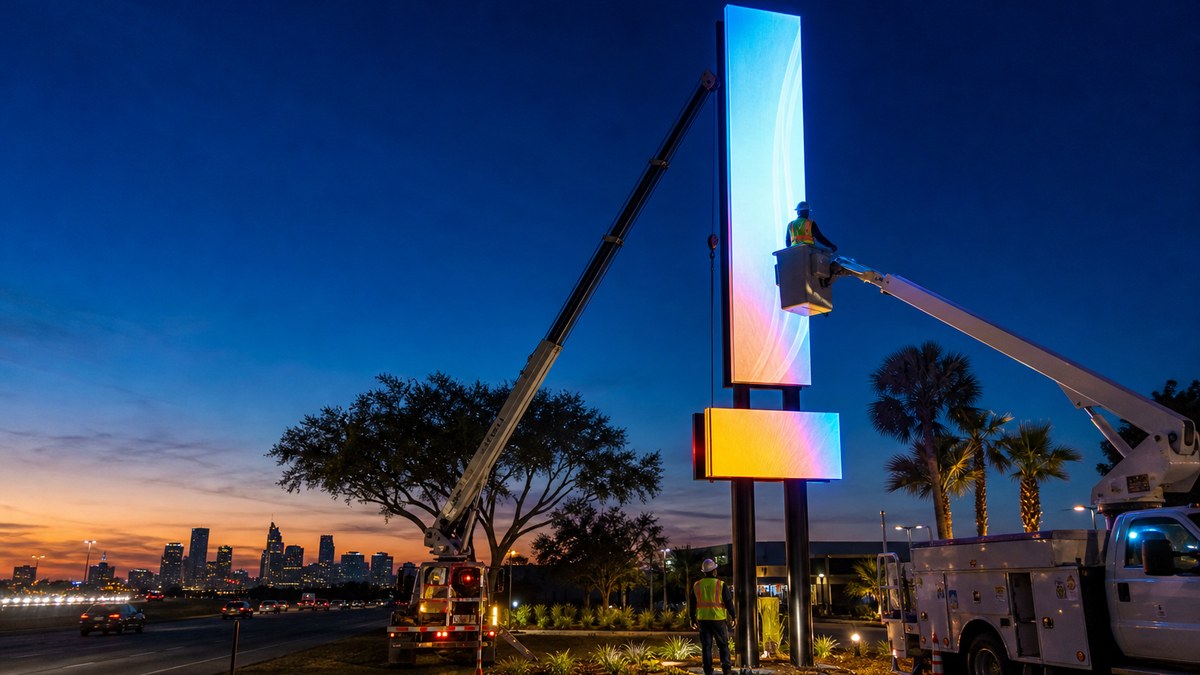
Commercial LED sign installation in Houston, TX follows its own playbook. The city has no traditional zoning, yet it enforces one of the strictest sign codes in Texas. It sits on soft, expansive clay. It takes direct hits from Gulf hurricanes and summer derechos. And it is one of the very few big US cities where you cannot put up a new billboard at all. If you are planning LED signs in Houston, those local details shape your design, your permit, your foundation and your schedule.
This guide walks through the full process the way a Houston project actually runs: which rules apply to your address, what the City of Houston Sign Code (Chapter 46) expects, how wind and soil drive engineering, how electronic message centers are regulated, and how long each phase takes. It covers channel letters, pylons, monuments and digital displays for retail, restaurants, medical offices, churches, schools and industrial sites across Greater Houston.
We keep this guide quote-only on purpose. Sign pricing in Houston swings with size, illumination, engineering, foundation conditions and permit scope, so instead of stale numbers you will find the cost drivers that matter and a clear path to a free, site-specific quote.
Installing a commercial LED sign in Houston means a licensed sign contractor, a Houston Permitting Center sign permit, a separate electrical permit, and wind-rated engineering for larger signs:
- Who files: A licensed sign contractor files the permit; owners can self-permit only small signs they install themselves
- Permit review: About 4–11 business days for a complete application
- Sealed drawings: Required for wall signs over 8 ft tall or 60 sq ft, ground signs over 19 ft, and every projecting or marquee sign
- Wind design: Site-specific ASCE 7-22 wind speed under the 2021 IBC; Exposure B is the city default
- Electronic signs: Auto-dimming required, max 6,500 nits by day and 1,250 nits at night
- Billboards: No new off-premise signs since 1980 — on-premise only
- Typical schedule: 4–8 weeks for channel letters, 8–14 weeks for pylons with foundations
Step one: which rules apply to your address?
“Houston” covers a huge, patchwork region. Before any design work, confirm which authority controls your site. The answer changes the sign code, the permit office and sometimes the allowed sign type.
Inside Houston city limits
Most commercial corridors — Westheimer, Richmond, the Galleria and Uptown, Midtown, the Heights, the Energy Corridor, Gulfton, Greenspoint and much of the Beltway 8 ring — fall under the City of Houston Sign Code (Chapter 46 of the Houston Construction Code). Permits run through the Sign Administration section of the Houston Permitting Center.
Suburban cities with their own codes
Sugar Land, Pearland, Pasadena, Katy, Missouri City, League City, Baytown, Friendswood, Bellaire, West University Place and the Memorial Villages each write their own sign ordinances. Many are stricter than Houston on height, sign area, materials and electronic displays. Some suburbs limit or prohibit digital message centers in certain districts entirely.
Unincorporated Harris, Fort Bend and Montgomery counties
Large parts of Cypress, Spring, Humble, Atascocita and the Katy-area prairie are unincorporated. Sign rules here can be lighter, but state highway rules, utility easements, deed restrictions, MUD and HOA covenants, and planned-community standards (The Woodlands is the best-known example) often control the design more than any county rule does.
Houston has no zoning, but it does have deed restrictions, management districts and historic districts. A shopping-center landlord’s sign criteria can be tighter than the city code. Get the landlord or property-owner sign criteria first, then design to the stricter of the two.
The Houston Sign Code (Chapter 46) in plain English
Chapter 46 regulates on-premise signs — signs that advertise the business on the same property. Here are the parts that most often shape a commercial LED sign project.
On-premise only: the 1980 billboard ban
Houston amended its sign code in 1980 to stop new off-premise billboards. The city once had somewhere between 10,000 and 15,000 billboards; attrition has cut that to roughly 1,500. Houston still does not permit new digital billboards for off-premise advertising. If you were picturing a digital billboard along a Houston freeway, the realistic path is an on-premise LED display on your own property, or a site outside the city’s jurisdiction.
Sign count and sign types
The city sets an operating limit of five on-premise signs per business. Typical caps are one ground or projecting sign per street frontage (with exceptions on very long frontages), up to four wall signs, and up to three marquee signs. Allowed height and area for ground signs depend on the street category your property fronts, listed in the code’s sign table — a major thoroughfare allows more than a local street.
Historic and special districts
Properties in a designated historic district need a Certificate of Appropriateness before the sign permit can be filed. Certain corridors also carry scenic-district or management-district design standards that affect materials, lighting and height.
| Houston Requirement | What It Means | Applies To |
|---|---|---|
| Licensed sign contractor | Contractor files | Nearly all commercial installs |
| Sign permit review | 4–11 business days | Complete applications |
| Sealed engineered drawings | Wall > 8 ft or 60 sq ft | Wall signs and channel letters |
| Sealed engineered drawings | Ground > 19 ft | Pylons, uprights, anchor-bolt foundations |
| Electrical permit | Separate permit | Every illuminated sign |
| Electronic sign brightness | 6,500 / 1,250 nits | Day / night, with auto-dimming |
| Operating limit | 5 signs | Per business |
| Construction permit validity | 180 days | From site inspection |
Houston sign permits: who files and what goes in the package
In Houston, permits are issued to a licensed sign contractor who acts as the official applicant. A business owner may pull a permit only for limited work they perform themselves — for example a ground sign no larger than 60 square feet and no taller than 8 feet. The city specifically does not allow an owner to pull the permit and then hand the job to a third party.
Statewide, electrical sign work in Texas falls under Texas Department of Licensing and Regulation (TDLR) electrician licensing, which includes sign-specific license types. Ask any installer for both their sign contractor standing in Houston and their TDLR electrical credentials.
What a complete permit package includes
- Notarized on-premise sign application plus the city’s prerequisite checklist
- Plot plan with north arrow, business street and nearest cross street, building footprints, and every existing, proposed and to-be-removed sign
- Ground sign dimensions measured from the curb line and a second reference point
- Building elevations for wall, projecting and marquee signs showing maximum height
- Sealed structural drawings when the size thresholds above are met, including foundation details, rebar and anchor bolts
- Electrical load stated in amps or kVA, with a separate electrical permit application
- Electronic sign affidavits for changeable message signs, including the owner acknowledgment and contractor affidavit
Incomplete packages are the number-one reason Houston permits slip past the 4–11 business-day window. Our sign permit timelines guide compares Houston with other major markets if you are rolling out multiple locations.
Wind, hurricanes and Houston’s soil
Houston’s weather is the biggest engineering variable for any exterior sign. The May 2024 derecho that blew out downtown windows and Hurricane Beryl in July 2024 both damaged signs across the region. Signs that were engineered, anchored and maintained correctly generally came through; signs with corroded fasteners, under-sized foundations or loose faces did not.
Design wind speed
Houston enforces the 2021 International Building Code with wind speeds taken site-specifically from ASCE 7-22. The city’s design criteria list Exposure Category B as the default, but open sites — freeway frontage, large parking fields, the coastal side of the metro toward Clear Lake, Baytown and Galveston Bay — may justify a more conservative exposure. Your engineer pulls the exact wind speed for the address, then sizes the pole, cabinet framing and foundation to match.
Expansive clay and high groundwater
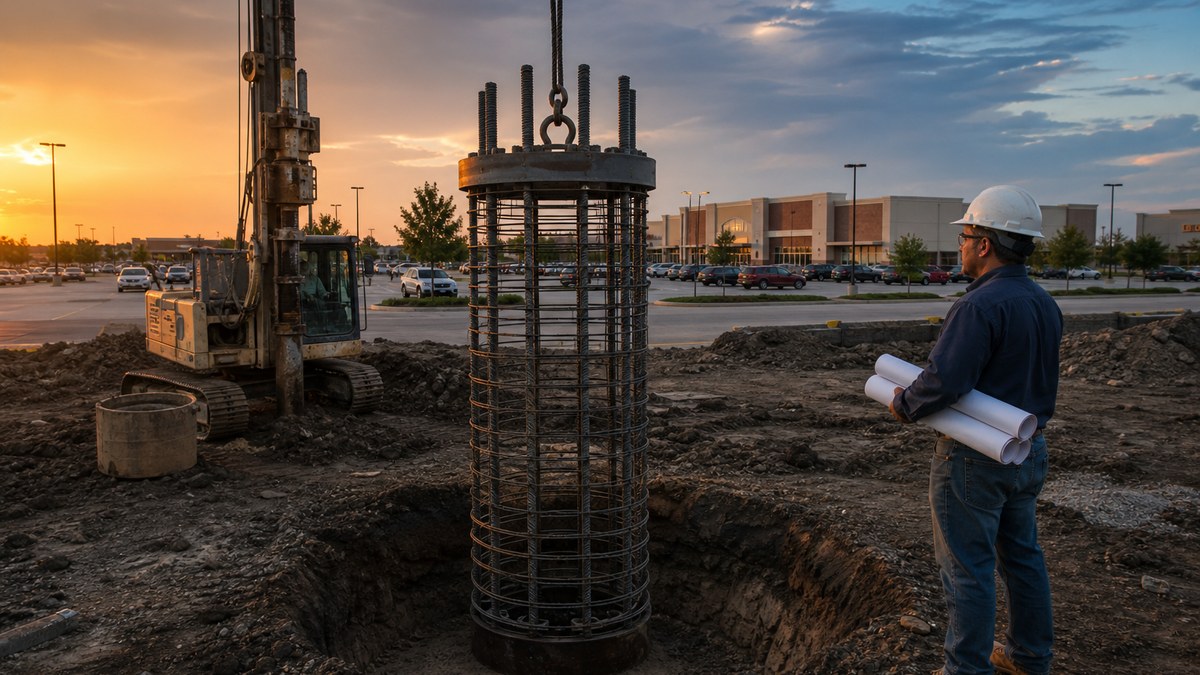
Much of Houston sits on expansive clays that swell when wet and shrink in drought, plus a shallow water table in many areas. That affects pylon signs and monument signs most. Drilled piers are the usual answer, sometimes deeper or wider than in drier Texas markets, and drilling may need casing or dewatering when water shows up in the hole. Frost is not a concern here — the city lists a 6-inch frost depth — so depth is driven by wind overturning and soil strength, not freezing.
Flooding and electrical placement
In flood-prone areas, keep power supplies, disconnects and controllers above expected high water where possible, use sealed enclosures, and plan conduit routes that will not wick water into the sign. This matters for low monument signs near drainage ditches and bayous.
Houston is Seismic Design Category A, so earthquake detailing rarely drives the design. Wind and soil do. Our pylon sign foundation engineering guide explains drilled piers, spread footings and wind-load math in more depth.
Electronic message centers in Houston
Programmable displays are allowed on-premise in Houston, but they are tightly regulated. If you are planning an LED message center on a pylon or monument, design around these rules from day one.
- Brightness: A light-sensing device must automatically adjust brightness, with maximums of 6,500 nits between sunrise and sunset and 1,250 nits between sunset and sunrise.
- Motion and effects: Blinking, flashing, chasing, rotating, scintillating and strobe effects are prohibited. Plan for static messages with clean transitions.
- Message timing: The code sets a minimum hold time between message changes and a short transition. Older versions of the code used long hold times; confirm the current requirement with your permit reviewer, because it decides how you program your content.
- Display area: The electronic display area on an on-premise sign is capped, and the cap counts toward your total allowed sign area.
- Converting an existing sign: Changing a static cabinet to an electronic or changeable message sign requires a permit — it is not treated as a simple face change.
Pixel pitch, cabinet size and viewing distance still matter more than anything for readability. Our programmable LED signs buyer’s guide covers pitch selection and brightness in detail.
Choosing the right sign type for a Houston property
The best sign for a Houston business depends on the frontage, the speed of passing traffic, landlord criteria and whether you need changeable content.
| Sign Type | Best Houston Use | Typical Lead Time | Engineering Load |
|---|---|---|---|
| Channel letters | Strip centers, Galleria-area retail, restaurants | 4–8 weeks | Sealed drawings above size threshold |
| Lighted box / cabinet sign | Multi-tenant panels, budget-friendly storefronts | 3–6 weeks | Low to moderate |
| Monument sign | Medical, office parks, churches, schools | 6–10 weeks | Footing plus soil considerations |
| Pylon sign | Freeway feeder roads, big-box pads, fuel stations | 8–14 weeks | High — wind, drilled pier, sealed set |
| LED message center | Add-on to pylon or monument for daily messaging | 6–12 weeks | Electrical plus electronic sign rules |
Channel letters
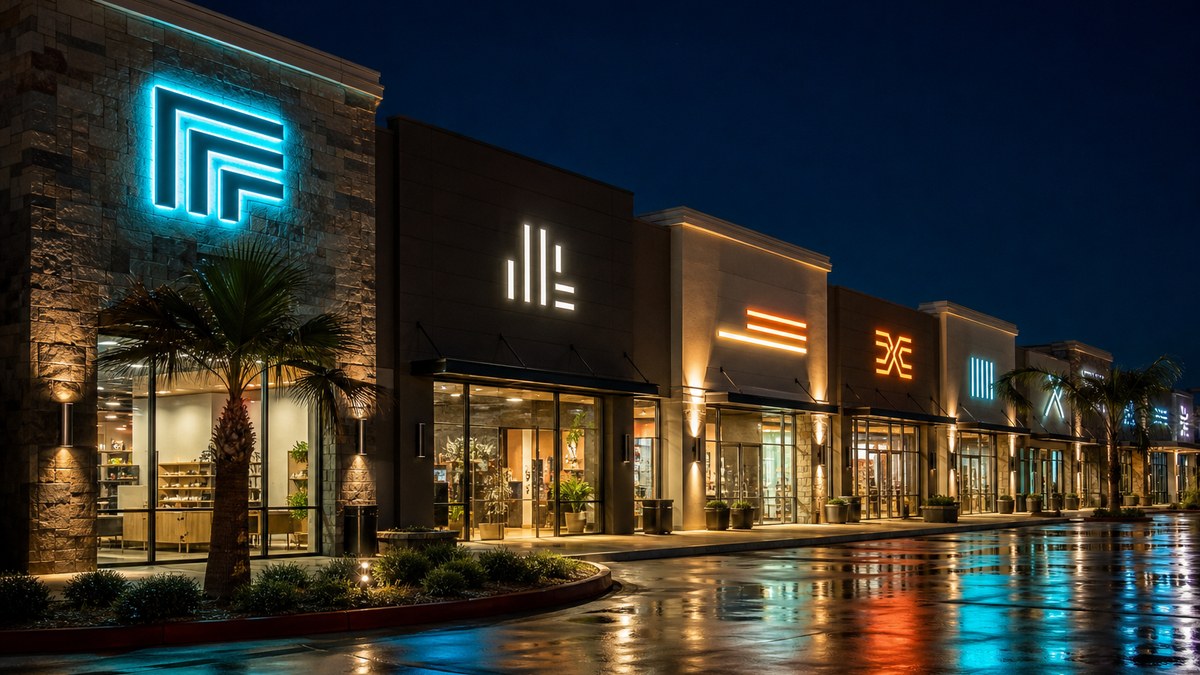
Channel letter signs are the default storefront sign in Houston’s strip centers. Front-lit letters read best from fast feeder roads; halo-lit letters suit upscale Heights, Montrose and River Oaks storefronts. See our halo-lit vs front-lit comparison and the channel letter installation guide for mounting details.
Cabinet signs and wall signs
Lighted box signs and flat wall signs work well on multi-tenant buildings and industrial sites. Our channel letter vs box signs guide breaks down the trade-offs.
Pylons and monuments
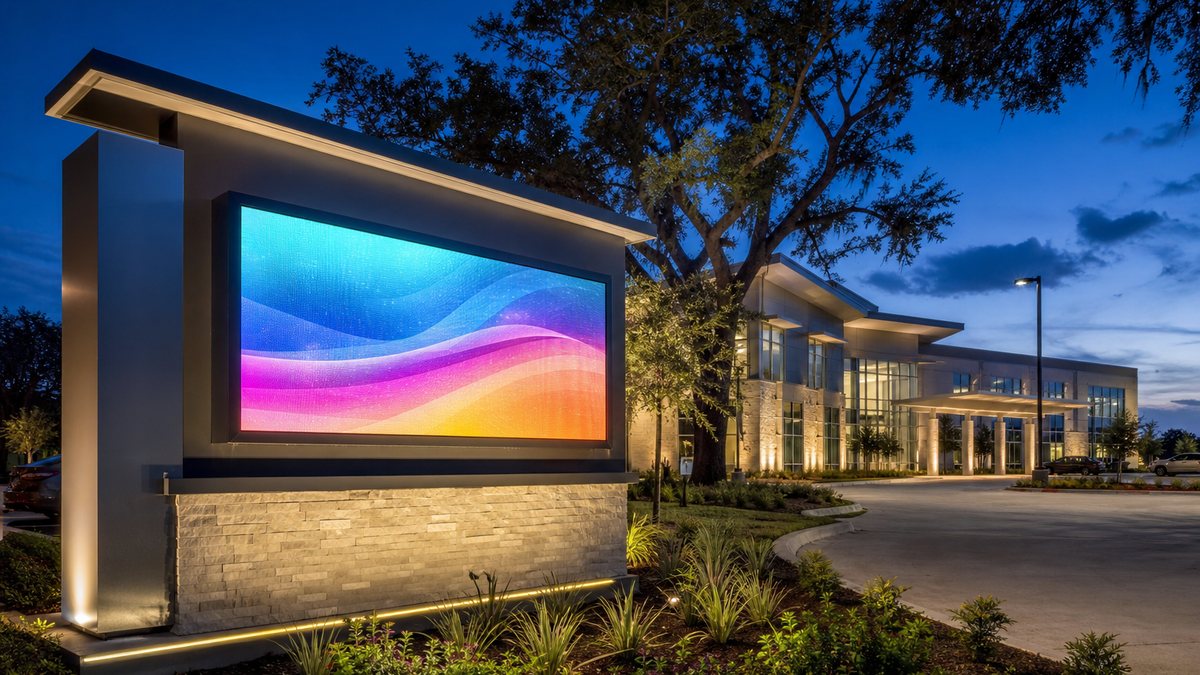
Houston’s freeway feeder roads reward height, but height brings sealed drawings, drilled piers and longer schedules. Monuments are lower, easier to permit, and fit medical and office settings — and they can carry an LED message center at eye level.
Plan your Houston LED sign the right way, the first time
Site survey, landlord criteria review, Chapter 46 code check, sealed engineering, permit filing, fabrication with UL-listed components, and installation — one team, one schedule. Tell us about your site for a free, no-obligation quote.
The Houston installation timeline, phase by phase
Here is how a typical commercial LED sign project runs in Houston. Wall signs move faster; pylons with foundations take longest.
Phase 1: Site survey and criteria review (week 1)
Measure the frontage and wall, photograph the site at day and night, check sight lines from the main approach, locate overhead and underground utilities, and collect the landlord’s sign criteria. Confirm jurisdiction — city, suburb or unincorporated.
Phase 2: Design and code check (weeks 1–2)
Size the letters or cabinet for viewing distance, pick illumination, and check every dimension against the code table and landlord criteria. A common rule of thumb is about 1 inch of letter height per 10 feet of viewing distance.
Phase 3: Engineering (weeks 2–3)
When thresholds are met, a Texas-licensed engineer seals the structural drawings using the site-specific ASCE 7-22 wind speed, with foundation design informed by soil data for pylons and larger monuments.
Phase 4: Permits (weeks 3–5)
The licensed contractor files the sign and electrical permits. A complete package typically clears review in 4–11 business days; historic districts add the Certificate of Appropriateness step up front.
Phase 5: Fabrication (weeks 3–7, in parallel)
Fabrication can start once drawings are approved, with UL-listed LED modules and power supplies built to UL 48 and installed per NEC Article 600. Foundation drilling and cure for pylons happen at the same time.
Phase 6: Foundation work (pylons and monuments)
Drill, set the rebar cage and anchor bolts, pour, and cure to the engineer’s strength spec before loading. Wet weather and groundwater are the usual schedule risks in Houston.
Phase 7: Installation and inspection (1–3 days on site)
Set the sign, make the electrical connection, test, and schedule city inspections. Many Houston installs happen early morning to avoid heat, traffic and afternoon storms.
Avoid scheduling pylon foundations and crane lifts in the peak of hurricane season (June 1 to November 30) without a weather buffer. Build two to three flex days into any summer install, and never leave a half-installed cabinet or open face overnight when storms are forecast.
What drives the cost of a Houston LED sign
Every Houston sign is quoted individually. These are the factors that move the number most:
- Size and sign type: Letter height, cabinet area and overall height are the biggest drivers.
- Illumination: Front-lit, halo-lit, combination lighting, or a full-color LED message center.
- Engineering: Sealed drawings, site-specific wind design and soil investigation for tall signs.
- Foundation conditions: Expansive clay, groundwater and access for drilling rigs.
- Electrical work: Distance to power, new circuits, disconnects, trenching and conduit.
- Permits and district reviews: Historic districts, management-district standards and landlord approvals.
- Site access: Lane closures on busy feeder roads, crane size and after-hours work.
- Removal: Taking down and disposing of an old sign or repairing the fascia behind it.
For the long-run picture — energy, maintenance and lifespan — read our true cost of LED sign ownership breakdown. Then request a free quote with your address and a photo of the site.
Keeping a Houston sign bright after install
Heat, humidity, salt air near the bay and storm season age signs faster than in drier climates. Quality LED modules are commonly rated for 50,000 to 100,000 hours, but power supplies, seals and fasteners are the weak points. A simple routine keeps signs code-compliant and storm-ready:
- Inspect faces, returns, fasteners and seals before each hurricane season
- Check power supplies and photocells or timers once a year
- Re-check pylon anchor bolts and pole bases every few years and after any vehicle strike
- Clean display faces so the auto-dimming sensor reads correctly
Our commercial LED sign maintenance guide lays out a full checklist, and the sign repair and maintenance team handles storm damage, dark letters and failed displays. If a sign is damaged, our repair vs replace guide helps you decide.
Houston vs other Texas sign markets
If you operate across Texas, expect each city to feel different. Dallas and North Texas suburbs like Plano, Frisco and McKinney use zoning districts that control sign types, while Houston relies on its sign code, deed restrictions and street categories. San Antonio has its own historic and corridor overlays. Coastal Houston shares more wind and flood concerns with Miami than with inland Texas. For brands opening several stores, our multi-location rollout guide explains how to standardize designs while meeting each city’s rules. You can also browse all service locations and our project gallery.
The bottom line
Commercial LED sign installation in Houston rewards preparation. Confirm the jurisdiction, design to the stricter of the city code and landlord criteria, engineer for Houston’s wind and clay, follow the electronic sign rules, and file a complete permit package through a licensed contractor. Do that, and most wall signs go from survey to lights-on in about 4 to 8 weeks, with pylons following in roughly 8 to 14 weeks.
American LED Signage handles the full process — survey, design, engineering coordination, permits, fabrication with UL-listed components and multi-year warranties, installation and service — across Houston and nationwide. Explore all of our sign services or talk with our team about your site.
Ready for a sign that stands up to Houston?
Send your address, frontage photos and landlord criteria. We will check the code, recommend the right sign type, and give you a clear, itemized quote — no obligation.
Frequently Asked Questions
Do I need a permit to install an LED sign in Houston?
How long does a Houston sign permit take?
When does a Houston sign need sealed engineered drawings?
Can I put up a digital billboard in Houston?
What are the brightness rules for LED message centers in Houston?
How many signs can a business have in Houston?
Do Sugar Land, Katy and other suburbs follow Houston's sign code?
How long does commercial LED sign installation in Houston take?
How are Houston signs engineered for hurricanes?
How much does a commercial LED sign cost in Houston?
American LED Signage is part of a network of commercial lighting and signage specialists serving Texas and all US markets. For projects beyond signage, see our partner sites: Dallas commercial LED, Fort Worth LED lighting, Arlington LED specialists, Plano commercial LED, Irving LED installations, statewide Texas LED lighting, wholesale LED components, American Starlight Ceilings for premium interior fiber optic ceilings, fiber optic lighting systems, modular building solutions, and modular structures in Dallas.