LED Channel Letter Signs in Massachusetts: Permits, Codes & Cold-Climate Install Guide
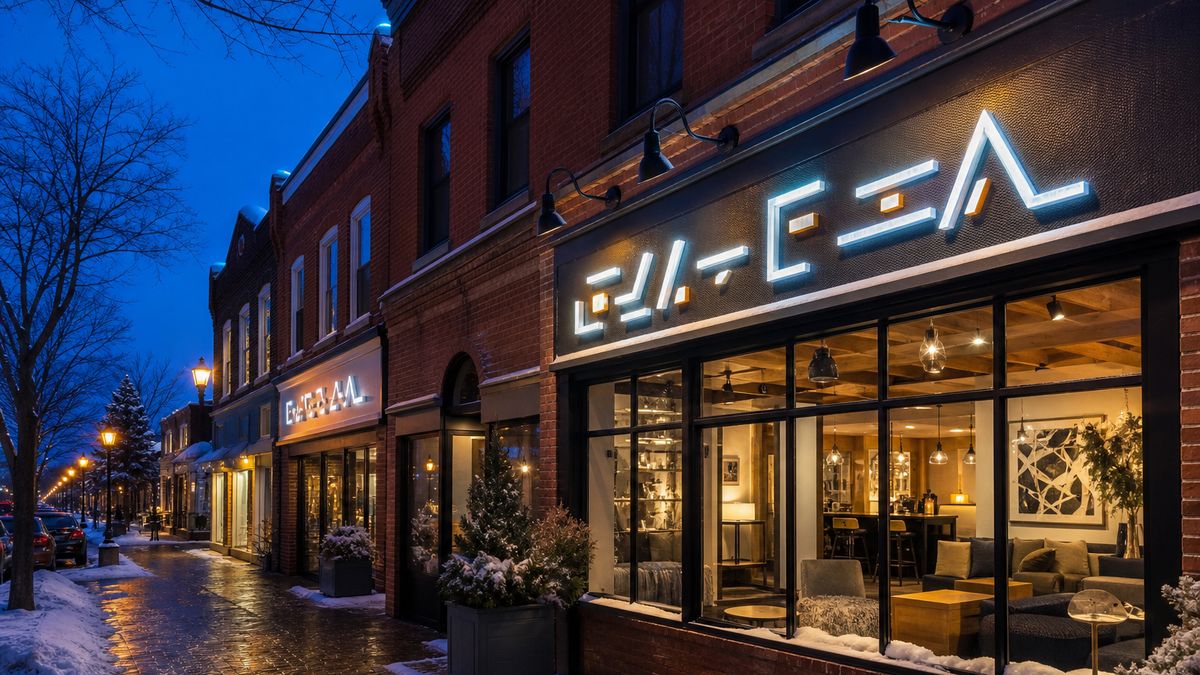
LED channel letter signs in Massachusetts have to clear a tougher path than almost anywhere else in the country. Your sign has to pass a local sign bylaw written by your city or town, the Massachusetts State Building Code, the Massachusetts Electrical Code, and in many neighborhoods a design or historic review board. Then it has to survive New England winters: ice, road salt, nor'easters, and freeze-thaw cycles that punish weak seams and cheap power supplies.
The good news is that well-built LED channel letter signs thrive here. Illuminated letter signs are the most common storefront sign type from Boston's Back Bay to strip centers in Worcester County and the Berkshires. This guide explains how the Massachusetts rules fit together, what changes from town to town, how to build letters that last through winter, and how to plan a realistic timeline from first sketch to lights-on.
Whether you run a single shop in Cambridge or are rolling out lighted signs across 20 locations in the Commonwealth, the same playbook applies: design to the local bylaw first, engineer for the climate, and submit a complete permit package the first time.
Installing LED channel letter signs in Massachusetts means meeting local zoning, state building and electrical codes, and often design review — and building for winter:
- Local sign bylaw rules first: Each of the 351 cities and towns writes its own sign rules (size, lighting, hours, placement)
- Building code: 780 CMR 10th Edition, based on the 2021 International Codes, the only code in force since July 1, 2025
- Electrical code: 527 CMR 12.00 adopts the 2026 NEC for permits granted after April 24, 2026 — Article 600 covers signs
- Boston: New signs need an ISD Long Form permit; replacement signs use a Short Form permit, plus design review in many districts
- Historic districts: Back Bay, Beacon Hill, South End and others have their own sign and lighting rules
- Winter-ready build: Cold-rated LED power supplies, sealed seams, drain holes and corrosion-resistant hardware
- Licensed electrician: Massachusetts requires a licensed electrician for the sign's electrical connection and permit
Why Massachusetts is different for illuminated letter signs
In many states, a county or a large city sets the sign rules for a wide area. Massachusetts works differently. The state has 351 cities and towns, and each one adopts its own zoning bylaw or ordinance under the state Zoning Act (Chapter 40A). Sign rules live inside those bylaws. That means the rules for illuminated letter signs can change when you cross a town line — sometimes on the same road.
One town may allow internally lit channel letters on any commercial building. The next town may allow only halo-lit or externally lit letters, cap the total sign area per storefront, or require lights off after business hours. A third may send every new sign to a design review board before the building department will even look at it.
On top of the local layer, two state codes apply everywhere: the Massachusetts State Building Code (780 CMR) for the structure and attachment, and the Massachusetts Electrical Code (527 CMR 12.00) for wiring and power. Get all three layers right and permits move. Miss one and you start over.
Before you approve a design, ask your sign partner to pull the actual sign section of your town's zoning bylaw and check it against the drawing. Most Massachusetts permit delays come from designs that break a local size or lighting rule, not from engineering problems.
The three layers of Massachusetts sign rules
Think of every Massachusetts sign permit as three checks that must all pass. The table below shows who controls each layer and what it covers.
| Layer | Who Controls It | What It Covers | Applies To |
|---|---|---|---|
| Local sign bylaw / ordinance | Your city or town (zoning) | Size, count, lighting, hours | Every business sign |
| Design or historic review | Local design board, historic or architectural commission | Look, materials, illumination style | Overlay and historic districts |
| State Building Code (780 CMR) | Local building official | Structure, wind, snow, attachment | Every permanent sign |
| Electrical Code (527 CMR 12.00) | Local wiring inspector | NEC Article 600, disconnects, circuits | Every illuminated sign |
| Outdoor advertising rules (700 CMR 3.00) | MassDOT Office of Outdoor Advertising | Billboards and off-premise signs | Off-premise and billboard displays |
| Landlord / property criteria | Property owner or management | Letter style, color, mounting | Leased storefronts and plazas |
Layer 1: local zoning and sign bylaws
This is where most of the rules that shape your design live. Local bylaws usually control total sign area (often tied to the width of your storefront), the number of signs per business, how high letters can sit on the wall, whether internal illumination is allowed, and whether signs must be turned off at night. Some towns also ban exposed neon-style effects, flashing, or animation. Your sign has to fit these limits before anything else matters.
Layer 2: design review and historic districts
Many Massachusetts downtowns and main streets add a design review step. Historic districts and architectural commissions go further: they often prefer individual letters with halo lighting, gooseneck lights, or carved and painted signs over internally lit cabinets. If your building sits in one of these districts, plan for an extra hearing and bring material and lighting samples.
Layer 3: state building and electrical codes
The building official checks that your sign is safely attached and designed for Massachusetts wind and snow loads. The wiring inspector checks that the sign is listed, properly grounded, has a correct disconnect, and is fed by the right circuit. These checks are the same in every town because the state codes apply statewide.
Boston sign permits: Long Form, Short Form and design review
Boston is the biggest market for LED channel letter signs in Massachusetts and has the most layered process. The city's Inspectional Services Department (ISD) issues sign permits. According to the city's storefront signage guidance, a new sign requires a Long Form permit from ISD, while replacing an existing sign uses a Short Form permit. Either one may also trigger design review by the city's planning staff.
Where your storefront sits changes who else reviews the sign:
- Main Streets districts: The local Main Streets organization reviews the sign design.
- Special zoning overlay districts: City planning, zoning and urban design staff review the sign or canopy.
- Historic districts: Areas such as Back Bay, Beacon Hill, the South End, Bay Village, St. Botolph and Fort Point Channel have their own rules for signs, awnings and storefronts.
- Downtown Crossing: Has its own signage guidelines and quick reference guide.
Boston is also working on a sign code modernization effort that will propose updates to the zoning sign rules and new citywide design guidelines. That is one more reason to confirm current rules at the start of every project instead of copying a design approved a few years ago. For a full look at how we handle projects in the city, see our Boston LED signs page.
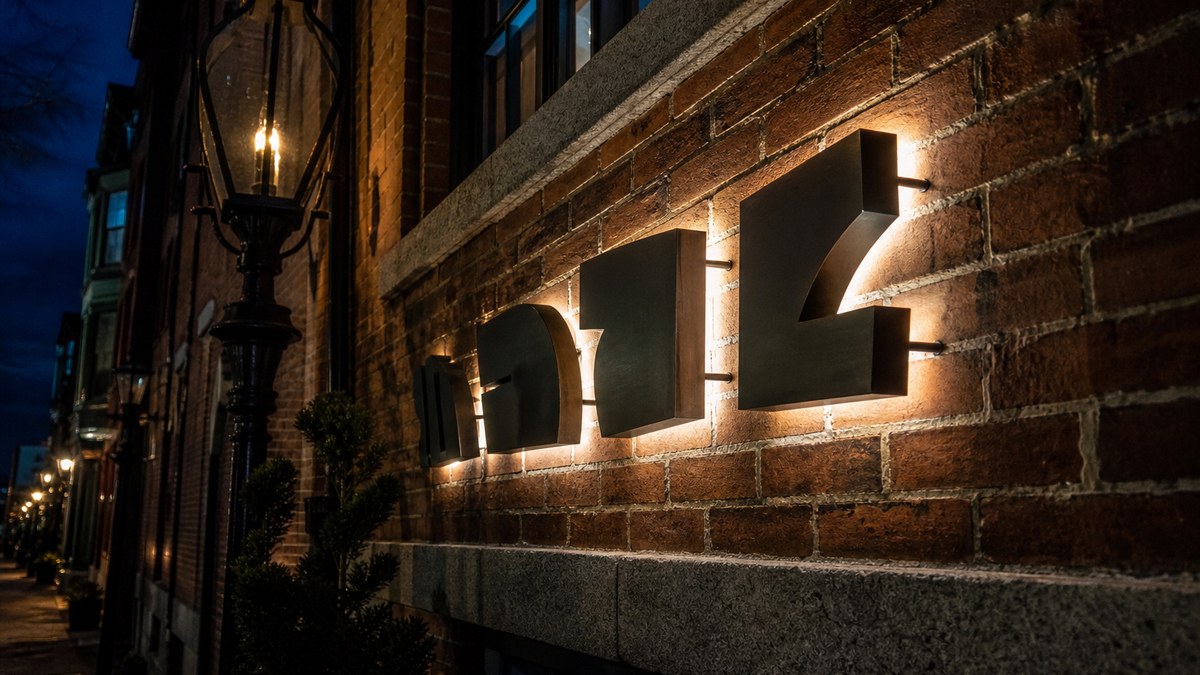
In Boston's historic districts, the board's question is not only "is the sign safe?" but "does it fit the building?" Halo-lit reverse channel letters mounted with stand-offs on brick are often an easier sell than bright internally lit faces. Our halo-lit vs front-lit guide explains the difference.
Cambridge, Worcester and other Massachusetts cities
Outside Boston, every city runs its own version of the process. A few examples show how different they can be.
Cambridge
In Cambridge, every sign needs a permit from the Inspectional Services Department before installation. The application includes a Community Development Department (CDD) sign certification cover sheet plus a separate form for each sign type — wall, projecting, freestanding or nonconforming. CDD certification is one step inside ISD's review. Signs that project 6 inches or more from the building face also need City Council approval. The detailed sign and illumination rules are in Article 7.000 of the Cambridge Zoning Ordinance.
Worcester, Springfield and Lowell
Larger cities in Central and Western Massachusetts and the Merrimack Valley handle sign permits through their building or inspectional services departments, with zoning review for size and placement. Downtown districts often add design guidelines. Expect the same three checks — zoning, building, electrical — with timelines that depend on how complete your package is.
Suburban towns
Suburban and small-town bylaws are often the strictest about illumination. It is common to see limits on internally illuminated signs, required shut-off times, caps on brightness, and preferences for halo, external, or "dark sky" friendly lighting. Some towns route every sign through a planning board or sign review committee. Never assume the rules from the town next door apply to yours.
Electrical code: the 2026 NEC and Article 600
Massachusetts writes its electrical code as 527 CMR 12.00, which adopts the National Electrical Code with state amendments. The current version adopts the 2026 NEC and applies to installations with a permit granted after April 24, 2026. NEC Article 600 is the section that covers electric signs, including LED channel letters.
What Article 600 means for your sign in practice:
- Listed sign: The sign and its parts should be listed (UL 48 is the standard for electric signs) and installed per that listing. We build with UL-listed components.
- Disconnecting means: Each sign needs a disconnect that is within sight of the sign or can be locked off, so a technician can service it safely.
- Branch circuit: Commercial storefronts generally need an outlet or circuit for sign lighting at each tenant entrance.
- Grounding and bonding: Metal letter cans and raceways must be bonded correctly.
- Labels: Signs carry markings for the manufacturer and electrical ratings that inspectors check.
Massachusetts also requires electrical work to be done by a licensed electrician who pulls the wiring permit. Plan for the electrician's permit and inspection as its own step, separate from the building or sign permit. Our channel letter installation guide walks through where the electrical rough-in fits in the sequence.
Confirm that power is already at the sign location before fabrication starts. On older Massachusetts buildings, finding a path for a new sign circuit through brick or granite is one of the most common causes of install-day delays.
Building code: wind, snow and attachment
The Massachusetts State Building Code, 780 CMR, is now in its 10th Edition. It is based on modified versions of the 2021 International Codes. It first took effect on October 11, 2024, and after the concurrency period ended on June 30, 2025, the 10th Edition became the only building code in effect.
For a wall-mounted channel letter sign, the building official mainly cares about three things:
1. Wind loads
Massachusetts design wind speeds rise as you move toward the coast, with Cape Cod, the Islands and exposed shoreline sites at the high end. Wind pressure pulls on letters and raceways, so fastener type, embedment and spacing matter. Coastal sites from the North Shore to the South Coast deserve extra attention.
2. Snow and ice
Ice and drifting snow add weight to raceways, projecting signs and the tops of letters. Projecting signs and blade signs are especially exposed. The design must account for snow and ice that sit on the sign, not just the sign's own weight.
3. The wall itself
Massachusetts has a huge stock of older buildings: brick, granite, stone veneer and old wood frame. Anchors that work in new concrete block may not hold in soft historic brick or mortar. Good installers anchor into solid masonry (not mortar joints where avoidable), use corrosion-resistant hardware, and in historic districts plan penetrations so they can be patched cleanly later.
Freestanding signs add one more item: foundations must reach below the local frost line — commonly about 4 feet in much of Massachusetts, though your building official sets the exact depth. Our pylon sign foundation guide covers this in detail for taller pylon signs, and the same frost rules apply to monument signs.
Building LED channel letters for New England winters
Code compliance gets you a permit. Cold-climate construction is what keeps your sign bright in February. Massachusetts signs face long freezing stretches, rapid freeze-thaw swings, road salt spray from plows, and coastal salt air. Here is how a winter-ready channel letter sign is built.
| Component | Winter Risk | What to Specify |
|---|---|---|
| LED power supplies | Slow or failed starts in deep cold | Cold-rated, UL-listed drivers |
| LED modules | Moisture entry, dim sections | Sealed, outdoor-rated modules |
| Letter returns and seams | Water entry, ice expansion | Fully sealed seams + drain holes |
| Faces (acrylic / polycarbonate) | Brittleness, cracking from ice | Impact-resistant face material |
| Fasteners and raceways | Salt corrosion, rust streaks | Stainless or coated hardware |
| Wire penetrations | Water tracking into the wall | Sealed, drip-looped entries |
Cold-rated power supplies
The power supply is the most common failure point in any LED sign, and cold makes it worse. Specify outdoor, UL-listed LED drivers rated well below the coldest temperatures your town sees, and mount them where they are protected from standing water and snow melt. Keep them accessible for service so a winter swap does not mean pulling letters off the wall.
Sealing and drainage
Water that gets into a letter and freezes expands and pries seams apart. Well-built letters have sealed seams, small drain (weep) holes at the low points so condensation can escape, and sealed wire entries. This is a small detail that separates a sign that lasts 10+ years from one that flickers after its second winter.
Corrosion protection
Road salt and coastal air attack bare steel. Use aluminum letter returns and backs, stainless or coated fasteners, and properly finished raceways. On the coast, ask for marine-grade finishes. Our LED sign maintenance guide lists the inspection steps that catch corrosion early.
Winter-ready channel letters, permit-ready drawings
We check your town's sign bylaw, prepare the permit package, and build UL-listed LED channel letters engineered for New England weather — backed by multi-year warranties.
Choosing the right lighted sign style for Massachusetts bylaws
Because local rules often limit illumination, the letter style you choose can decide whether your sign gets approved quickly. Here is how the common styles of lighted signs usually fare in Massachusetts reviews.
| Sign Style | Look | Typical Review Fit | Best For |
|---|---|---|---|
| Front-lit channel letters | Bright, colored faces | Commercial corridors | Strip centers, highway retail |
| Halo-lit (reverse) letters | Soft glow behind letters | Often favored in historic areas | Brick facades, upscale retail |
| Combination front + halo | Bright face with glow | Depends on bylaw | Restaurants, flagship stores |
| Non-lit letters + external light | Classic, lit by fixtures | Strongest in strict towns | Historic districts, village centers |
| Lighted box (cabinet) sign | Single lit panel | Increasingly limited | Multi-tenant panels, pylons |
| LED message center | Programmable display | Often restricted or prohibited | Where bylaw allows changeable copy |
If your town discourages internally lit cabinets, individual channel letters are usually the better path. Our channel letter vs box sign comparison breaks down the trade-offs. If you need a sign that changes messages, check the bylaw before you design a LED message center; many Massachusetts towns limit how often messages can change or ban electronic changeable signs in certain districts. Our programmable LED sign buyer's guide covers brightness and message-hold settings that help with approvals.
Billboards and off-premise signs
Off-premise advertising — a sign that advertises something not sold on the property, including digital billboards — falls under state control through the MassDOT Office of Outdoor Advertising and its regulation, 700 CMR 3.00, in addition to local zoning. On-premise business signs like your storefront channel letters are handled locally.
Massachusetts channel letter project timeline
Every project is different, but most Massachusetts channel letter projects move through the same phases. The biggest variable is local review, not fabrication.
| Phase | What Happens | Main Variable |
|---|---|---|
| 1. Site survey | Measure facade, check wall material and power | Building access |
| 2. Bylaw check + design | Size, lighting and placement matched to local rules | Landlord criteria |
| 3. Design / historic review | Hearing or staff review where required | Board meeting schedule |
| 4. Sign + electrical permits | Building, sign and wiring permits filed | Package completeness |
| 5. Fabrication | Letters built with LEDs and drivers | Letter count and finish |
| 6. Installation + inspection | Mounting, wiring, final inspection | Weather and lift access |
Design review boards often meet once or twice a month, so a missed submission deadline can push a project back by weeks. Our sign permit timelines by state guide shows how Massachusetts compares to other states. Fabrication can often run in parallel with permitting once the design is locked, which keeps the overall schedule tight.
Winter installs
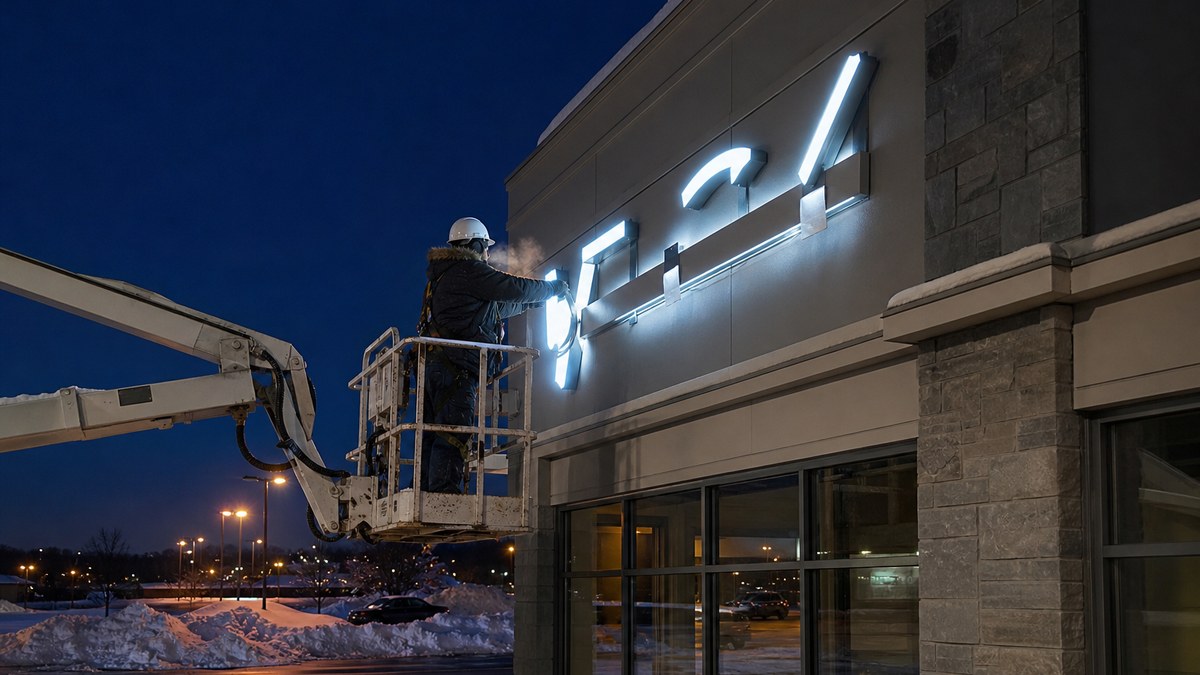
Signs can be installed in winter, but snow, ice on lifts, and short daylight slow crews down. Sealants and some finishes have minimum application temperatures. If you are opening in spring, aim to have permits approved by late fall so the install is not waiting on a thaw.
What drives the cost of channel letters in MA
We don't publish prices because materials, labor and permit requirements change constantly and every storefront is different. What we can tell you is what moves a quote up or down in Massachusetts:
- Letter size and count: Taller letters and longer names mean more material, more LEDs and more labor.
- Illumination style: Halo-lit, combination and specialty finishes take more fabrication time than standard front-lit letters.
- Mounting method: Raceway-mounted letters install faster; flush-mounted letters need more wall penetrations and careful sealing on masonry.
- Wall type: Historic brick, granite and stone need specialty anchors and more care.
- Permits and review: Design review hearings, historic commission submittals and sealed drawings add soft costs and time.
- Electrical work: A new sign circuit, timer or photocell, and the licensed electrician's permit.
- Access: Lift or crane needs, sidewalk permits and traffic control on busy streets.
- Cold-climate upgrades: Coastal finishes, stainless hardware and premium drivers.
For a long-term view, our true cost of LED sign ownership article explains why the cheapest sign up front often costs more over 10 years. For a project-specific number, request a free quote.
Rolling out lighted signs across multiple Massachusetts towns
Brands opening several locations in Massachusetts run into a unique problem: one approved sign package rarely works everywhere. A design approved in a Route 9 shopping center may be too large or too bright for a village center 10 miles away. The fix is a flexible brand standard with a few approved variations — front-lit, halo-lit and non-lit versions at a few sizes — so each location can pick the version its bylaw allows without a full redesign.
Our multi-location rollout guide covers how to build those packages, and our full sign services include survey, permitting, fabrication and install management across all 50 states. You can see completed work in our project gallery and the metro areas we serve on our locations page, including nearby hubs like New York and Philadelphia.
Keeping Massachusetts signs bright: maintenance and repair
A good LED channel letter sign can run for many years, but New England weather speeds up wear. Plan for a quick inspection every spring after the salt season and every fall before the first freeze. Look for dark letters or sections, flicker, rust streaks under raceways, cracked faces, and loose or missing fasteners.
Most dark letters are caused by a failed power supply, a loose connection or water entry — not by the LEDs themselves. When a sign starts failing, our sign repair and maintenance team can diagnose whether a targeted repair will do or whether replacement makes more sense; our repair vs replace guide explains how to decide. If you're also updating a box sign or a lighted cabinet sign, retrofitting it with LED modules can be a simple upgrade, and wall signs without lighting can often be paired with external fixtures where bylaws prefer it.
The bottom line
LED channel letter signs in Massachusetts are absolutely achievable — they just reward planning. Start with your town's sign bylaw and any design or historic review. Build the sign to the state's building and electrical codes. Then specify materials that stand up to ice, salt and freeze-thaw cycles. Do those three things and your illuminated letter sign will pass inspection, look right on the building, and stay bright for years.
Get LED channel letters approved and installed
Send us your address and storefront photo. We'll check the local sign rules, recommend the letter style most likely to be approved, and prepare a free quote.
Frequently Asked Questions
Do I need a permit for LED channel letter signs in Massachusetts?
Yes. Almost every city and town in Massachusetts requires a sign permit for a new illuminated sign, and the electrical connection needs a separate wiring permit pulled by a licensed electrician. Many communities also require zoning or design review before the building department issues the sign permit. Replacing an existing sign usually still needs a permit, though some cities such as Boston use a shorter form for replacements.
What is the difference between a Long Form and Short Form sign permit in Boston?
In Boston, a new sign requires a Long Form permit from the Inspectional Services Department, while replacing an existing sign uses a Short Form permit. Either type may also trigger design review by city planning staff, a Main Streets organization, or a historic district commission depending on where the storefront is located.
Are internally illuminated signs allowed in Massachusetts towns?
It depends on the town. Each of the 351 Massachusetts cities and towns writes its own sign rules in its zoning bylaw or ordinance. Many commercial corridors allow internally lit channel letters, while some village centers, historic districts and suburban towns limit internal illumination, require halo or external lighting, or set shut-off hours. Always check your local bylaw before designing the sign.
Which electrical code applies to illuminated signs in Massachusetts?
Massachusetts uses 527 CMR 12.00, the Massachusetts Electrical Code. The current version adopts the 2026 National Electrical Code for installations with a permit granted after April 24, 2026. NEC Article 600 covers electric signs, including listing, disconnecting means, branch circuits and grounding.
Which building code applies to signs in Massachusetts?
Signs fall under the Massachusetts State Building Code, 780 CMR 10th Edition, which is based on modified versions of the 2021 International Codes. It first took effect on October 11, 2024, and has been the only building code in effect since the concurrency period ended on June 30, 2025. It governs structural design, wind and snow loads, and how signs attach to buildings.
Can I put channel letters on a building in a historic district?
Often yes, but the design must be approved by the district's commission or review board first. Historic boards in areas like Boston's Back Bay, Beacon Hill and South End usually favor individual letters, halo lighting or external lighting over bright internally lit cabinets, and they care about how the sign attaches to historic masonry. Bring material and lighting samples to the hearing.
How do LED channel letters hold up in Massachusetts winters?
Well-built LED channel letters perform very well in cold weather. The keys are cold-rated, UL-listed power supplies, sealed seams with small drain holes so moisture can escape, impact-resistant faces, and stainless or coated hardware that resists road salt and coastal air. Most winter failures come from water entry or a failed power supply, not from the LEDs.
Does Cambridge have special sign requirements?
Yes. In Cambridge, every sign needs a permit from the Inspectional Services Department before installation, and the application includes a Community Development Department sign certification form for each sign type. Signs that project 6 inches or more from the building face also need City Council approval. Detailed sign and illumination rules are in Article 7.000 of the Cambridge Zoning Ordinance.
How long does a channel letter sign project take in Massachusetts?
Timelines vary most with local review. A project moves through site survey, design to the local bylaw, any design or historic review, building and electrical permits, fabrication, and installation with final inspection. Design review boards often meet only once or twice a month, so a complete permit package submitted on time is the biggest factor in keeping the schedule short.
How much do LED channel letter signs cost in Massachusetts?
Cost depends on letter size and count, illumination style, mounting method, wall type, permit and review requirements, electrical work, site access, and cold-climate upgrades such as stainless hardware and coastal finishes. Because these factors vary so much between storefronts and towns, the most accurate number comes from a site-specific quote. Call (702) 738-2218 or request a free quote online.
American LED Signage is part of a network of commercial lighting and signage specialists serving businesses across the US. For projects beyond signage, see our partner sites: Dallas commercial LED, Fort Worth LED lighting, Arlington LED specialists, Plano commercial LED, Irving LED installations, statewide Texas LED lighting, wholesale LED components, American Starlight Ceilings for premium interior fiber optic ceilings, fiber optic lighting systems, modular building solutions, and modular structures in Dallas.