Commercial Signage in Denver: Permits, Sign Codes & Mile-High Climate Guide
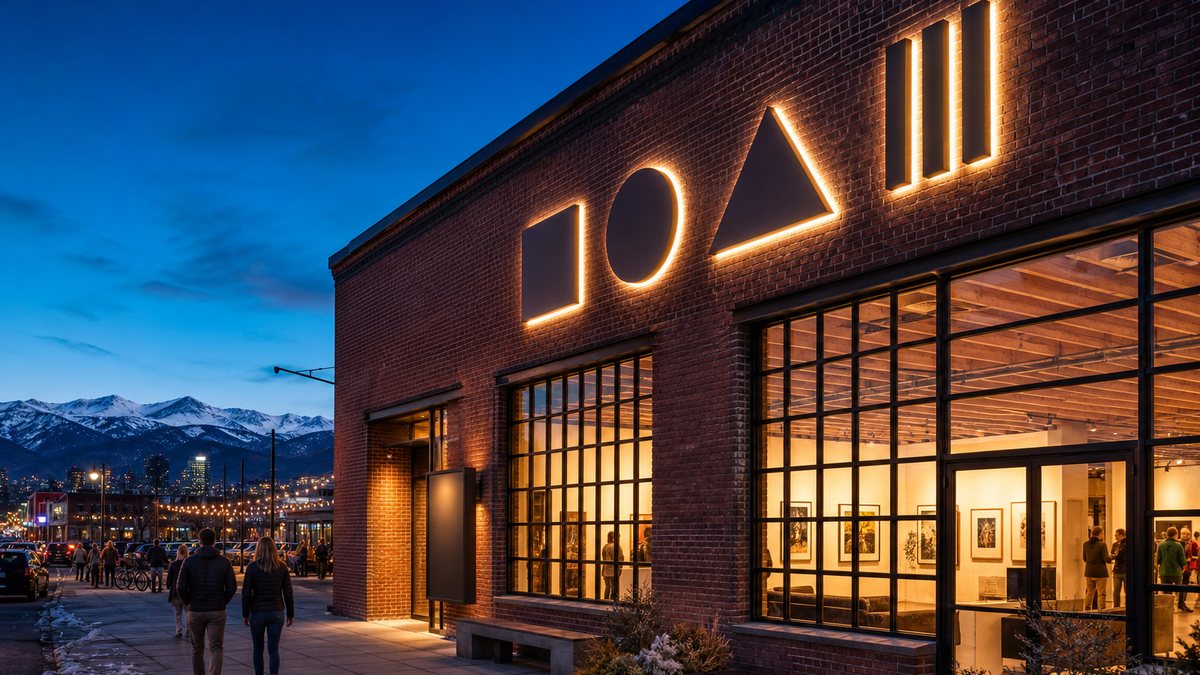
Planning commercial signage in Denver means working through two things at once: a city permit process that runs on the Denver Zoning Code and the Denver Building Code, and a climate that throws hail, heavy spring snow, big temperature swings and strong high-altitude sun at every sign you install. Get both right and your Denver business sign goes up on schedule and stays bright for years. Miss either one and you face rejected plans, cracked faces, or a dark sign by the second winter.
This guide is written for business owners, property managers and brand teams putting up full-service commercial signage in Denver, CO — storefront channel letters in RiNo, monument signs in the Denver Tech Center, pylons on I-25 or I-70, and LED message centers for schools, churches and dealerships. We cover how a Denver sign permit actually moves, which reviews you may trigger (Landmark Preservation, the Lower Downtown board, right-of-way), what the code says about lighting and animation, and how to spec a sign that survives the Front Range. We do not quote prices here — every site is different — but we show you exactly what drives the cost so your free quote comes back clean.
Most permanent commercial signs in Denver need a zoning sign permit from Community Planning and Development (CPD), plus a building permit and an electrical permit when the sign has structure or power:
- Governing code: Denver Zoning Code Article 10, Division 10.10 (signs) + Denver Building & Fire Code
- Where to apply: CPD's online e-permits system — "Zoning Permit" or "Building Log" for combined review
- Engineering: Structural plans stamped by a Colorado-registered professional engineer for the building permit
- 180-day rule: Pull the building permit within 180 days of zoning approval or the zoning permit expires
- Extra reviews: Landmark Preservation (landmarks/historic districts), DOTI (signs over the right-of-way), Theatre District coordinator
- Typical timeline: About 4–8 weeks for permits in Denver, often less in suburbs
- Climate specs: Hail-resistant faces, UV-stable materials, cold-rated UL-listed power supplies, footings below the ~3 ft frost line
How Denver regulates commercial signs
Denver regulates signs through two separate rulebooks that work together. The Denver Zoning Code (Article 10, Division 10.10) decides what you can put up: which sign types are allowed, how much sign area your frontage earns, maximum heights, placement, and illumination. The Denver Building and Fire Code, based on the International Building Code, decides how it is built: structure, anchorage, wind and snow loads, and electrical safety. Where the two overlap, the stricter rule wins.
Sign rules change by zone district. Residential districts are the most restrictive on size and lighting. Mixed-use commercial districts allow more, and Downtown sub-districts carry their own standards for projecting and wall signs. Special areas such as Cherry Creek North and the Denver Theatre District have tailored rules. That is why the first question on any Denver sign project is simple: what zone district is the property in? The answer drives every design decision that follows.
Signs that usually need a permit
Permanent wall signs, channel letter signs, lighted cabinet signs, projecting blade signs, monument signs, pylon signs and LED message centers all require a zoning sign permit. Most also need a building permit unless they are specifically exempt under the Denver Building and Fire Code, and any sign with wiring needs an electrical permit.
Signs that are often exempt from a zoning permit
Some small, non-illuminated, temporary or safety signs do not need a zoning sign permit, but they still have to meet size, placement and lighting limits. Be careful with the word "exempt": a sign can be exempt from zoning review and still need a building or electrical permit if it has structure or power. When in doubt, assume a lit sign needs permits.
Before you design anything, pull the zone district and the zone lot dimensions for the property. Denver sign allowances are tied to frontage and district, so a sign sized on a guess is the number-one reason plans come back for revisions.
The Denver sign permit process, step by step
Denver handles sign permits through Community Planning and Development using the city's online e-permits system. Here is how a typical commercial sign moves from idea to lights-on.
Step 1: Confirm zoning and any other reviews
Check the zone district, whether the building is a designated landmark or in a historic district, whether any part of the sign will hang over the sidewalk or street, and whether the property sits in the Denver Theatre District. Each of these adds a review. If the sign is for a new business, a zoning use permit may also be needed unless the business continues the previous use of the same space.
Step 2: Prepare the submittal package
Denver asks for a complete package before review starts. Expect to provide:
- Site plan: zone lot lines, structures, existing and proposed signs, north arrow, scale, sign distances from lot lines, adjacent streets and alleys, tenant locations on multi-tenant buildings, zone lot frontage and tenant frontage
- Sign elevations: fully dimensioned drawings or photo simulations showing existing signs, height from grade to the top of the sign, sign dimensions and copy; projecting signs also show top and bottom heights and projection from the wall
- Structural plans: framing, supports, connection and anchorage details, and manufacturer drawings — prepared, stamped and signed by a Colorado-registered professional structural engineer
- Sign permit application form when applying for zoning and building permits together
Step 3: Submit through e-permits
Choose "Zoning Permit" for zoning-only review, or "Building Log" to run zoning and building review at the same time. Staff check the package for completeness first; the review clock does not really start until everything is in. Requests for more information come by email.
Step 4: Zoning approval, then building permit within 180 days
Once zoning approves, you have 180 days to obtain the building permit. If you miss that window, the zoning permit expires and you start over. On multi-site rollouts this deadline is easy to lose track of, so build it into your schedule.
Step 5: Electrical permit, fabrication and installation
Illuminated signs need an electrical permit pulled by a properly licensed electrical contractor. Fabrication usually runs in parallel with permit review, so the sign is ready when approvals land. After installation, inspections confirm the sign matches the approved plans — mounting, dimensions and electrical safety — before the permit is closed.
| Review / Permit | When It Applies | Who Handles It |
|---|---|---|
| Zoning sign permit | Almost every permanent commercial sign | CPD zoning |
| Building permit | Signs with structure, anchorage or foundations | CPD building |
| Electrical permit | Any illuminated or powered sign | Licensed electrician |
| Certificate of Appropriateness | Landmarks and historic districts | Landmark Preservation |
| Right-of-way permit | Signs projecting over sidewalk or street | DOTI |
| Zoning use permit | New business that changes the use of the space | CPD zoning |
Historic districts, LoDo and Landmark Preservation review
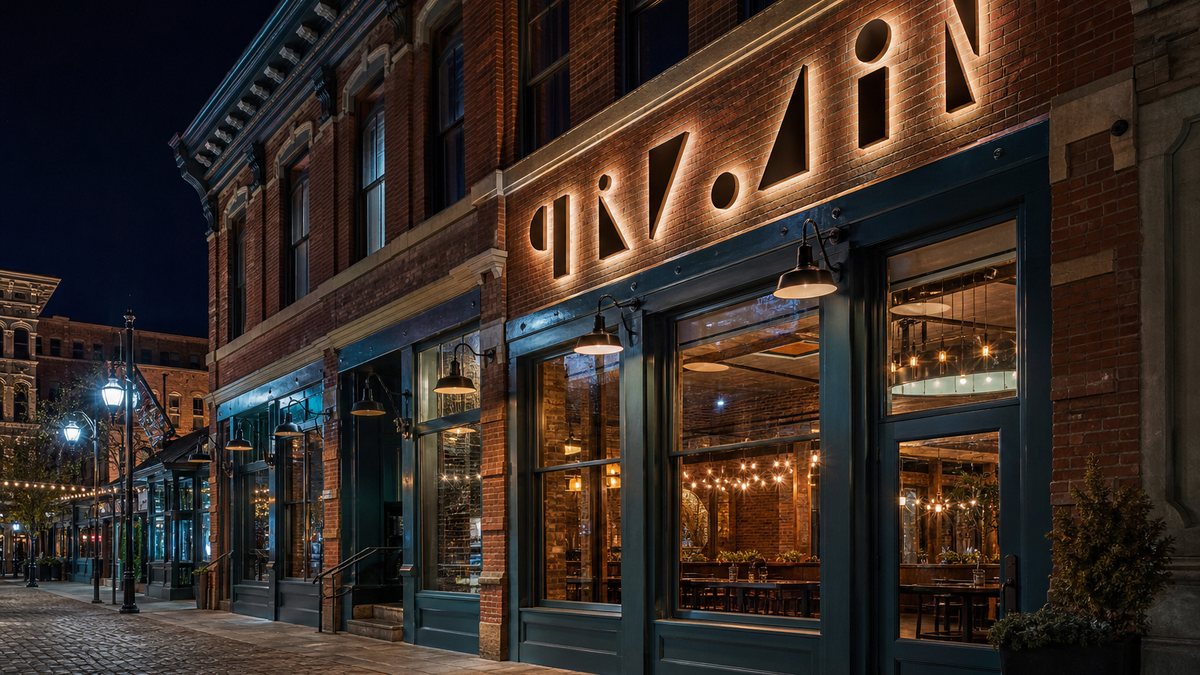
Denver has a large inventory of designated landmarks and historic districts, from Lower Downtown (LoDo) and Larimer Square to residential-commercial neighborhoods like Curtis Park. If your sign goes on a designated landmark or inside a historic district, Landmark Preservation must decide whether it can issue a Certificate of Appropriateness before your sign permit can move forward.
In Lower Downtown, comprehensive sign plans and projecting or upper-story wall signs go through the Lower Downtown design review process. Across Denver's historic areas, the design guidelines favor signs that fit the building rather than compete with it:
- Materials: metal, wood and stone that suit the era of the building
- Placement: signs that do not cover cornices, transoms, storefront piers or other character-defining features
- Mounting: anchors set into mortar joints, not brick faces, so the sign can be removed without damaging the masonry
- Lighting: internally lit cabinets are generally not considered appropriate on landmark buildings; external gooseneck or spot lighting and carefully detailed halo-lit letters are the usual path
The practical takeaway: on a LoDo or Larimer Square storefront, plan on halo-lit letters or external lighting rather than a lit box, and add review time to the schedule. Our channel letter vs box sign guide explains why letters almost always win in historic settings.
Landmark review happens before the sign permit is approved, not after. Submitting design drawings for preservation feedback early is the single best way to avoid a redesign late in the project.
Lighting, digital displays and the Denver Theatre District
Denver is cautious about moving light. Signs that flash, blink or fluctuate are broadly restricted, and legal nonconforming signs cannot be converted to flashing, animated or portable signs. If you are considering a digital display, treat lighting and animation as a design-stage zoning question, not something to sort out after the sign is built.
LED message centers outside downtown
Schools, churches, auto dealers and shopping centers across the metro use LED message centers for changing copy. In Denver, whether an electronic display is allowed — and how it may change — depends on the zone district and sign type. A safe design baseline is static messages, simple transitions with no motion or flashing, and automatic photocell dimming at night. Our programmable LED sign buyer's guide covers pixel pitch, brightness and size in more detail.
The Denver Theatre District exception
Large digital and media signs downtown are concentrated in the Denver Theatre District, which runs on its own sign plan layered on top of the zoning code. That plan allows sign types that are not permitted elsewhere downtown, in exchange for higher design standards, placement above the ground floor and protections for nearby residents. If your property is in the district, Denver asks you to contact your Development Services project coordinator before starting review.
Billboards
Off-premise billboards are tightly limited in Denver. New ones are only allowed in a few specific districts, and the city follows a no-net-increase approach that ties new billboards to removal of existing ones. For most businesses, the realistic options are on-premise signs and digital displays where zoning allows them.
Permit-ready signage for the Mile High City
Zoning review, Colorado-stamped structural drawings, Landmark Preservation submittals, UL-listed assemblies and hail-ready builds — handled from design to lights-on. Tell us about your site.
Building signs for Denver's climate
Denver sits at 5,280 feet on the edge of the Front Range, and that location is hard on outdoor signs. A sign that would last fifteen years in a mild coastal city can age much faster here unless it is specified for local conditions. These are the five forces we design around on every Denver project.
1. Hail
The Front Range is one of the most hail-prone regions in the country, and Denver-area storms regularly produce damaging hail from late spring through summer. Thin acrylic faces crack and shatter. For exposed faces we specify polycarbonate or impact-modified acrylic, metal-faced or halo-lit letters where the design allows, and protective guards for message centers in high-exposure spots. Hail damage is also why many Denver owners keep a repair and maintenance plan in place.
2. Strong sun and UV at altitude
UV exposure is stronger at high elevation, and it fades vinyl graphics, yellows lower-grade acrylic and chalks paint finishes faster than at sea level. Use UV-stable faces, premium cast vinyl or digitally printed films with UV laminate, and quality automotive-grade or powder-coated finishes on returns and cabinets. On digital displays, full brightness during the day matters for readability, and automatic dimming at night keeps you compliant and neighbor-friendly.
3. Snow, ice and freeze-thaw cycles
Denver averages close to five feet of snow a year, often in heavy, wet spring storms, and temperatures can swing dramatically in a single day when warm downslope winds arrive. That freeze-thaw cycling pushes water into every seam. Specify sealed seams, clear weep holes at the bottom of each letter, sealed wire penetrations with drip loops, and stainless or coated hardware. Freestanding signs need structural design for snow and ice load on the cabinet.
4. Wind
Denver's design wind speeds are moderate compared with hurricane coasts, but strong downslope wind events can still hit the metro. Every pylon and monument in Denver needs engineering for the code-required wind load, which your Colorado-registered engineer calculates from the sign's height, area and exposure. Our pylon foundation engineering guide explains how wind load drives the footing.
5. Expansive soils and frost depth
Much of the Front Range has expansive clay soils that swell when wet and shrink when dry, and the metro's frost line sits around three feet deep. Footings for freestanding signs must extend below frost depth and be designed for site soil conditions. On larger pylons, a geotechnical report is worth its time: it tells the engineer exactly what the soil can carry and prevents both over-built and under-built foundations.
| Denver Condition | What It Does to Signs | Spec That Prevents It |
|---|---|---|
| Hail | Cracked faces, dented returns, broken modules | Polycarbonate faces |
| High-altitude UV | Faded vinyl, yellowed acrylic, chalky paint | UV-stable finishes |
| Freeze-thaw | Water intrusion, corroded splices, flicker | Sealed seams + weep holes |
| Cold snaps | Hard starts and early power supply failure | Cold-rated UL drivers |
| Snow and ice load | Stress on cabinets and supports | Engineered structure |
| Expansive clay | Heaving or leaning freestanding signs | Footing below frost |
Choosing the right sign type for Denver properties
Full-service commercial signage in Denver covers a wide mix of property types. Here is how the main sign types usually fit, based on the setting.
Storefront and mixed-use corridors
In RiNo, the Highlands, South Broadway and Cherry Creek, LED channel letters and projecting blade signs are the workhorses. Raceway-mounted letters keep wall penetrations low on newer mixed-use buildings, while flush-mounted halo letters suit brick and stone. See our channel letter installation guide for mounting options and timelines.
Office parks and the Denver Tech Center
Corporate campuses in DTC and along I-25 typically pair a monument sign at the entry with building-top or high-rise wall signs for visibility from the highway. Tenant directory monuments help multi-tenant properties, and comprehensive sign plans can make sense for larger sites with many tenants.
Highway retail and auto dealers
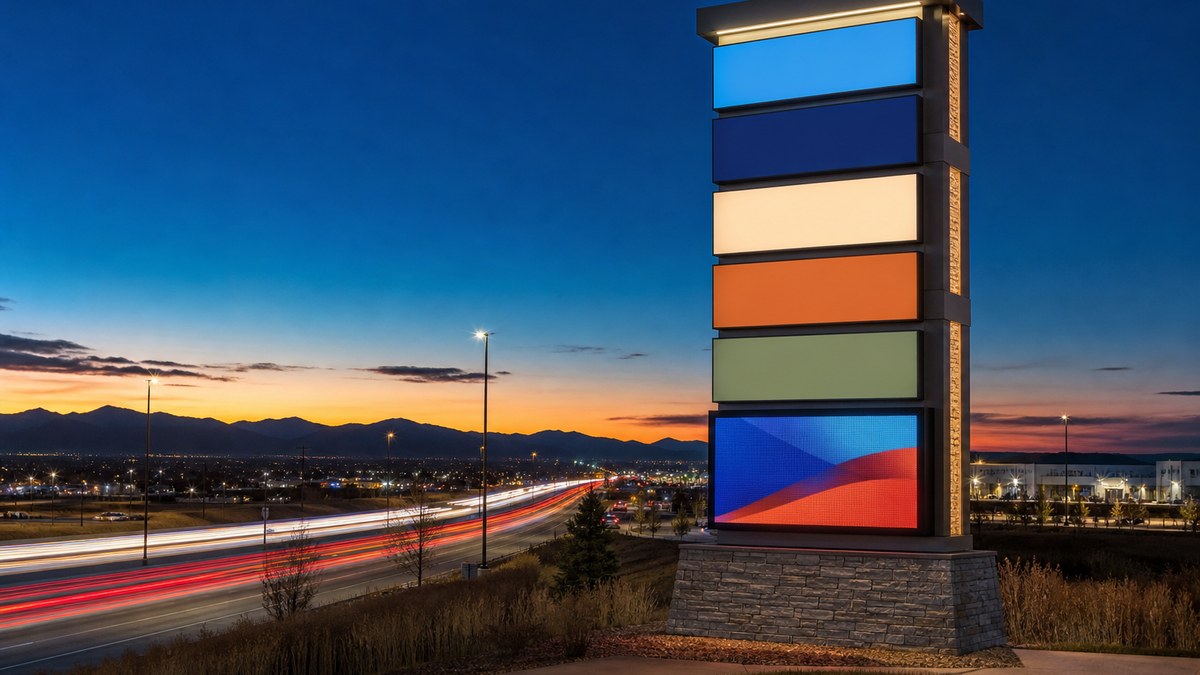
Along I-25, I-70, I-225, C-470 and US-36, pylon signs with an integrated message center are common for shopping centers, hotels and dealerships. These are the most engineering-heavy signs on any project — plan for stamped structural drawings, a soils report where required, and longer review than a wall sign.
Schools, churches and community buildings
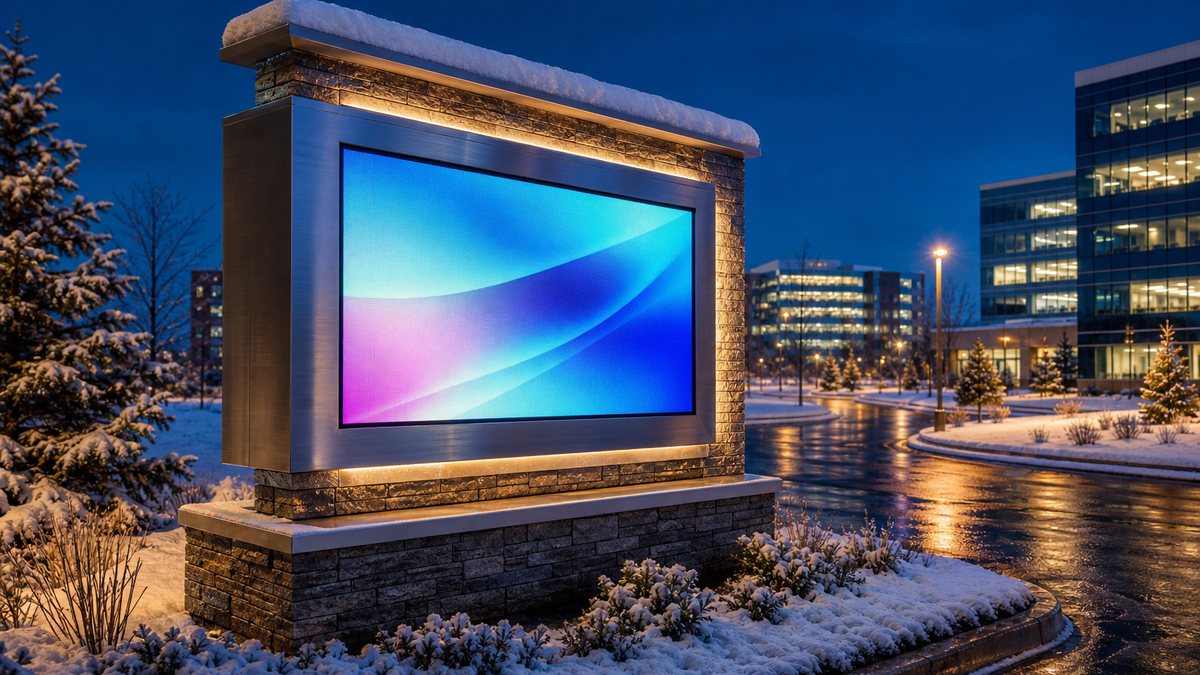
Monument signs with a compact LED message center let schools and churches post events without changing letters by hand. Confirm early that the zone district allows changeable electronic copy at that location, and plan for automatic dimming.
Denver suburbs such as Aurora, Arvada, Lakewood, Centennial and Englewood each run their own sign codes and permit desks. A multi-location brand in the metro may face five different rulebooks — our multi-location rollout guide shows how to phase permits so the fastest cities open first.
What drives the cost of commercial signage in Denver
We do not publish prices because materials, engineering and installation conditions change from site to site. What we can tell you is what moves the number, so you can compare quotes on an equal basis:
- Size and sign type: sign area, letter height, number of faces, and whether it is a wall sign, monument or pylon
- Illumination: non-lit, front-lit, halo-lit, combination or full-color LED message center
- Climate upgrades: polycarbonate faces, UV-stable finishes, cold-rated drivers and corrosion-resistant hardware
- Engineering: Colorado-stamped structural drawings, soils reports and footing design for freestanding signs
- Permits and reviews: zoning, building and electrical permits, plus Landmark Preservation or right-of-way review when triggered
- Electrical: distance to a power source, new circuits, trenching for monuments and pylons, and controller connections
- Site access: crane or bucket truck needs, traffic control, high-rise access and work-hour limits downtown
Long term, the cheapest sign is the one built right the first time. Our true cost of LED sign ownership breakdown shows how quality components and scheduled maintenance lower lifetime cost, and our repair vs replace guide helps if you are deciding what to do with an existing Denver sign.
Realistic Denver sign timelines
Timelines depend on sign type, completeness of the package and how many reviews you trigger. Here is a realistic view for planning purposes.
| Project Type | Permit Phase | What Adds Time |
|---|---|---|
| Storefront channel letters | ~4–6 weeks | Incomplete site plan, landlord approval |
| Historic district wall or blade sign | ~6–10+ weeks | Landmark or LoDo review, DOTI encroachment |
| Monument sign with message center | ~4–8 weeks | Zone district limits on electronic copy |
| Highway pylon | ~6–10 weeks | Stamped structural plans, soils, footing cure |
For comparison with other markets, see our sign permit timelines by state. Snow can also pause foundation pours and crane work in winter, so if you want a pylon live before spring, start the permit in the fall. Our cold-climate install guide covers winter installation practices that apply in Denver too.
Keeping Denver signs bright and code-compliant
Once your sign is up, a simple twice-a-year routine protects your investment. Inspect in spring after the last snow and again in fall before the first freeze. Check for hail damage on faces and modules, clear weep holes, look for water or rust inside letters and cabinets, test power supplies and photocells, and confirm that message center dimming still works. After any severe hailstorm, do a quick visual check the next day — small cracks let water in fast.
Repairs to existing signs can also require permits in Denver, especially if the work changes the structure, the electrical system or the sign's size. Legal nonconforming signs can keep their status, but they cannot become more nonconforming, and conversion to animated or flashing copy is not allowed. Our commercial LED sign maintenance guide has a full checklist, and the services page lists everything we handle.
Frequently Asked Questions
Do I need a permit for a business sign in Denver?
Yes, in most cases. Permanent commercial signs need a zoning sign permit from Denver Community Planning and Development. Signs with structure or anchorage usually also need a building permit, and any illuminated sign needs an electrical permit. Some small temporary, safety and non-illuminated signs are exempt from zoning review, but they still must follow size, placement and lighting rules.
Which code regulates signs in Denver?
The Denver Zoning Code, Article 10, Division 10.10, sets sign types, sign area, height, placement and illumination by zone district. The Denver Building and Fire Code governs structure, anchorage and safety. Where the two conflict, the stricter requirement applies. Nonconforming signs are covered in a separate division of the zoning code.
How do I apply for a sign permit in Denver?
Applications go through Denver's online e-permits system. Choose Zoning Permit for zoning-only review or Building Log to run zoning and building review together. You will need a site plan, dimensioned sign elevations, structural plans stamped by a Colorado-registered professional engineer for the building permit, and the sign permit application form. Review starts once the package is complete.
How long does a Denver sign permit take?
A straightforward commercial sign permit in Denver typically takes about 4 to 8 weeks, and suburban cities are often faster. Landmark Preservation review, right-of-way permits for projecting signs, and engineered pylons add time. After zoning approval you must obtain the building permit within 180 days or the zoning permit expires.
Can I put an illuminated sign on a historic building in Denver?
Often yes, but it needs a Certificate of Appropriateness from Landmark Preservation first. Denver's guidelines generally consider internally lit cabinet signs inappropriate on landmark buildings and favor external gooseneck or spot lighting, or carefully detailed halo-lit letters. Signs should use compatible materials, avoid covering architectural features and be anchored through mortar joints.
Are digital LED signs allowed in Denver?
It depends on the zone district and sign type. Denver broadly restricts signs that flash, blink or fluctuate, and large digital media signs downtown are concentrated in the Denver Theatre District under its own sign plan. For an LED message center elsewhere, confirm the zoning allowance at the design stage and plan for static messages, simple transitions and automatic night dimming.
How does hail affect commercial signs in Denver?
The Front Range is one of the most hail-prone areas in the United States, and hail can crack acrylic faces, dent returns and damage LED modules. Polycarbonate or impact-modified faces, metal-faced or halo-lit letters, and protective guards for exposed message centers reduce damage. Inspect signs the day after any severe hailstorm, because small cracks let water in quickly.
How deep does a sign foundation need to be in Denver?
Footings must extend below the frost line, which is about three feet deep in the Denver metro, and be designed by a Colorado-registered engineer for the sign's wind and snow loads and the site's soil. Many Front Range sites have expansive clay soils, so a geotechnical report is recommended for larger pylons. Taller pylons need much deeper drilled piers than small monuments.
Do Denver suburbs follow the same sign rules?
No. Aurora, Arvada, Lakewood, Centennial, Englewood, Westminster and other metro cities each have their own sign codes, permit processes and review times. Unincorporated areas follow county rules, and highway frontage can involve state transportation rules. A sign approved in Denver may need changes to meet a neighboring city's code.
What affects the cost of commercial signage in Denver?
Cost depends on sign type and size, illumination style, climate upgrades such as hail-resistant faces and cold-rated power supplies, Colorado-stamped engineering, permits and any historic or right-of-way reviews, electrical work and trenching, and site access such as cranes or traffic control. Because these vary by site, the most accurate number comes from a free site-specific quote.
Ready to light up your Denver location?
From a single storefront in RiNo to a highway pylon on I-25 or a rollout across the metro, we handle design, Colorado engineering, permits, fabrication and installation with UL-listed components and multi-year warranties.
Planning signs in other Colorado or Mountain West markets? See our Colorado Springs LED signs page, browse every market on our locations page, or view finished projects in the gallery.
American LED Signage is part of a network of commercial lighting and signage specialists. For projects beyond signage, see our partner sites: Dallas commercial LED, Fort Worth LED lighting, Arlington LED specialists, Plano commercial LED, Irving LED installations, statewide Texas LED lighting, wholesale LED components, American Starlight Ceilings for premium interior fiber optic ceilings, fiber optic lighting systems, modular building solutions, and modular structures in Dallas.