LED Signs in Minneapolis & St. Paul: Sign Codes, Dynamic Display Rules & Cold-Climate Guide
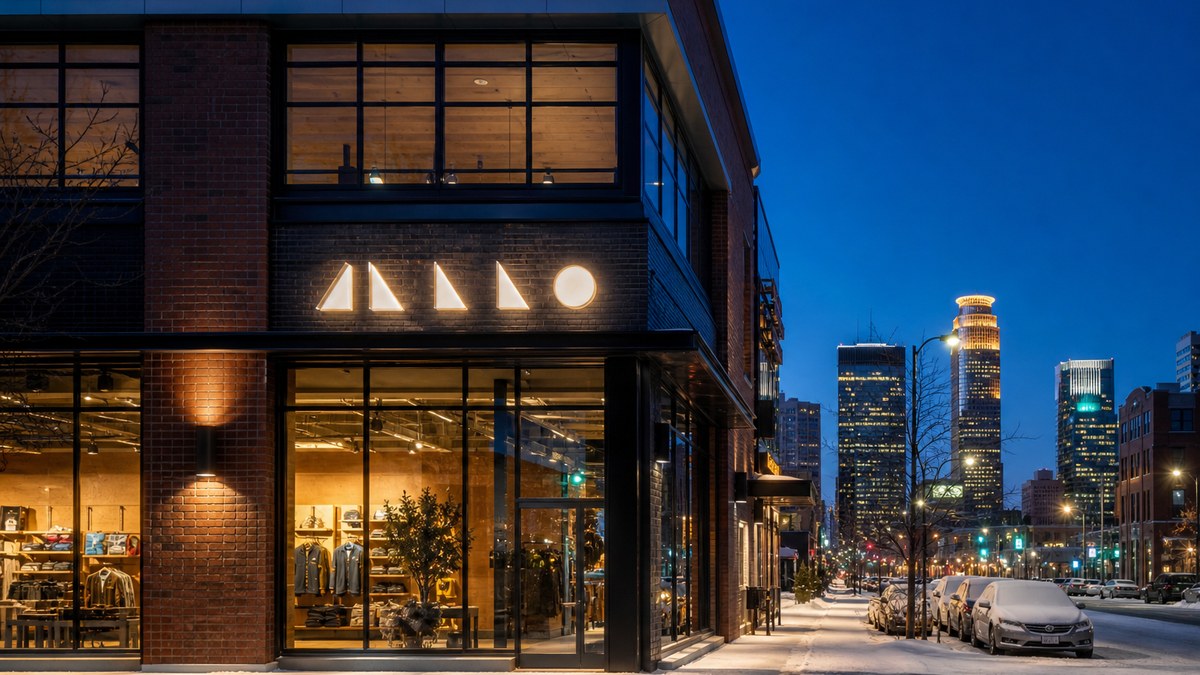
Planning LED signs in Minneapolis or St. Paul means working with two very different sign codes that sit only a few miles apart. Minneapolis regulates signs under Chapter 560 of its zoning code. St. Paul uses Chapter 64 of its Legislative Code. They treat electronic message centers, brightness, and residential neighbors in different ways, and the suburbs around them each add their own rules.
Then there is the weather. Twin Cities signs live through subzero cold snaps, freeze-thaw cycles, road salt, hail, and spring storms. A sign that looks great in a southern showroom can crack, fog up, or go dark here by its second winter. This guide covers both sides: what the cities allow and how to build a channel letter sign, monument sign, or LED message center that lasts in Minnesota.
We serve the whole metro from our Minneapolis sign page and St. Paul sign page, plus east-metro suburbs like Oakdale. Here is what you need to know before you order.
To install an LED sign in Minneapolis or St. Paul, you need a city sign permit pulled by a city-licensed sign contractor, an electrical permit for illuminated signs, and a design that meets each city's electronic sign limits:
- Minneapolis code: Zoning Code Chapter 560 · permit from Zoning Administration · only a licensed sign hanger can apply
- Minneapolis digital: dynamic signs max 32 sq ft · 60-second hold · 100 ft from residential districts · 5,000 nits day / 500 nits night
- Minneapolis text-only boards: max 16 sq ft · 15-minute hold · black background, colored text
- St. Paul code: Chapter 64 · permits through PAULIE · 48-hour notice before install
- St. Paul digital: 12-second hold · 0.3 fc above ambient · 20% of total signage · 75 ft from residential
- Electrical: Minnesota enforces the 2026 NEC for permits filed on or after Aug. 17, 2026
- Footings: 3.5 ft (42 in) minimum frost depth in the Twin Cities metro (Zone II)
Minneapolis vs. St. Paul: two cities, two sign codes
The first question on any Twin Cities sign project is simple: which city is the property in? The border runs through busy commercial corridors, and the rules change at the line. A sign that is legal on one side of the border can need a variance on the other.
Here is how the two core codes compare on the points that matter most for LED signage.
| Topic | Minneapolis | St. Paul |
|---|---|---|
| Sign code | Chapter 560 | Legislative Code Chapter 64 |
| Who applies | City-licensed sign hanger / sign contractor | Licensed sign contractor (Sec. 64.202) |
| Where to apply | Zoning Administration (sign permit application) | PAULIE online permit portal |
| Message hold time | 60 sec (dynamic) | 12 sec (stable messages) |
| Brightness limit | 5,000 nits day / 500 nits night | 0.3 fc above ambient at 50 ft |
| Digital size | 32 sq ft max (dynamic sign) | 200 sq ft per face, 20% of total signage |
| Residential buffer | 100 ft from UN / RMX district line | 75 ft along road, 50 ft radial |
| Roof signs | Allowed in limited cases; no dynamic roof signs | Prohibited in all districts |
The pattern is clear. Minneapolis keeps digital displays small and slow outside downtown. St. Paul allows larger and faster displays on business signs but controls brightness tightly and adds quiet hours near homes. Neither city allows flashing.
Confirm the zoning district before you pick a sign type. In Minneapolis, the district table decides whether a digital display is allowed at all. CM1 lots say "no" to dynamic signs, while CM2, CM3, CM4, downtown, and production districts say "yes, see section 560.230."
Minneapolis sign rules: Chapter 560 explained
Minneapolis rewrote its zoning code in recent years, and signs now live in Chapter 560. If you are reading older guides that cite Chapter 543, the numbers and districts have changed. Always check the current code.
Who can pull the permit
Minneapolis is strict here. Under Sec. 560.120(a), no one may install, alter, repair, or remove a sign, or even submit a sign permit application, without a sign hanger's license. The city's sign permit page says the same thing in plain words: you must be a city-approved sign contractor to apply. A business owner cannot self-permit an exterior sign. Licensed sign hangers must also carry a surety bond.
Sec. 560.120(b) requires a zoning administrator permit before a sign goes up. A few small items are exempt, including signs under 8 sq ft and face replacements with no structural or electrical change. Window signs are exempt except a dynamic sign. Sec. 560.140 also makes every sign subject to the building code and the state electrical code.
Dynamic signs (full LED message centers)
A "dynamic sign" in Minneapolis is a full electronic display that can show graphics. Under Sec. 560.230(d):
- It is allowed as of right only in downtown districts and the Downtown Entertainment Area. Elsewhere it needs a conditional use permit under Chapter 525.
- One per zoning lot, on a primary building wall or as part of a freestanding sign.
- The lot must be at least 12,000 sq ft.
- It must be at least 100 ft from the nearest urban neighborhood or residential mixed-use district line.
- The lot must sit within at least 660 ft of continuous commercial, downtown, or production zoning on the same side of the street.
- Maximum size is 32 sq ft. Messages must stay static for at least 60 seconds.
- Pixel pitch can be no larger than 20 mm. Fading, dissolving, scrolling, and wipes are prohibited.
- Brightness tops out at 5,000 nits from sunrise to sunset and 500 nits from sunset to sunrise, with an automatic dimmer.
Dynamic changeable copy (text-only boards)
The second category, "dynamic changeable copy," is a simple electronic reader board. Sec. 560.230(c) limits it to letters and numbers on a black background with colored text. It can be up to 16 sq ft, one per lot, and mounted no higher than 14 ft or the top of the wall. Each message must stay up for at least 15 minutes. The same 20 mm pitch limit and 5,000/500 nit brightness caps apply, and the sign must turn off when the business is closed (institutional and civic uses excepted).
For schools, churches, and parks, Table 560-1 allows a dynamic changeable copy portion of up to 16 sq ft on certain signs. That is why many Minneapolis institutional monument signs carry a small text-only LED board instead of a full-color screen.
Wall, projecting, and illuminated sign details
- Wall signs: may not project more than 24 inches from the building (Sec. 560.230(o)(1)).
- Over the sidewalk: a sign projecting over a public sidewalk needs at least 8 ft of clearance above grade (Sec. 560.150(a)).
- Near homes: lighted signs in urban neighborhood or RMX districts cannot be backlit, must sit at least 20 ft from the district property line, and can only use white or amber light (Sec. 560.90).
- Near traffic signals: no red, green, or amber illumination in direct view of a traffic signal within 150 ft (Sec. 560.160).
- Prohibited: backlit awning and canopy signs, dynamic roof signs, and moving-part signs outside downtown and CM4 (Sec. 560.70).
- Window signs: no more than 30% of window area (Sec. 560.230(p)).
Historic districts and landmarks
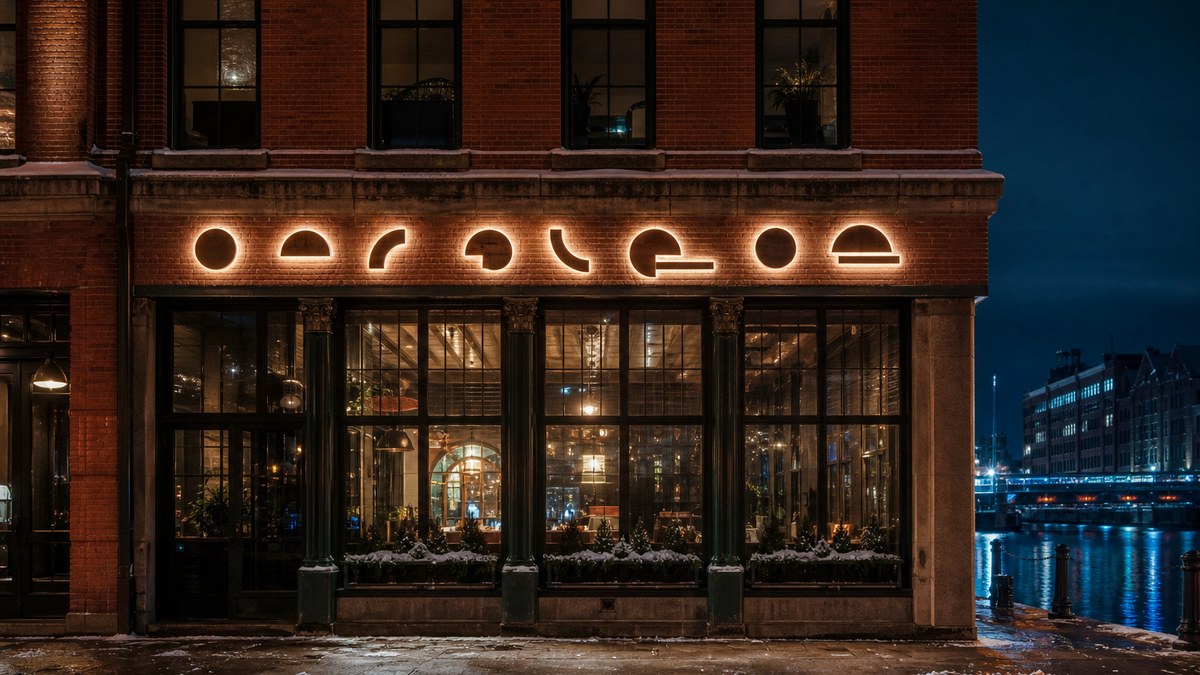
Minneapolis has active local historic districts, including warehouse areas downtown and along the river. Signs on designated landmarks and in local historic districts follow the Heritage Preservation Commission's Design Guidelines for On-Premises Signs and Awnings (adopted June 2023). Where the guidelines and the zoning code conflict, the stricter rule wins.
- Signs may be lit externally, internally, or with neon, but not backlit.
- LED may stand in for neon if it looks like neon banding.
- Plastic face covers are not allowed, except on channel letter faces.
- Wall signs should not extend more than 8 inches, and projecting signs should be no thicker than 8 inches.
- Dynamic signs and dynamic changeable copy signs are not permitted.
- Attach to masonry through mortar joints only, never through the brick face.
Simple changes can get a staff-level Certificate of No Change, usually within 10 business days of a complete application. Bigger changes need a Certificate of Appropriateness and a public hearing, which generally takes 6 to 8 weeks. Read our halo-lit vs. front-lit channel letter guide before you choose a lighting style for a historic facade.
St. Paul sign rules: Chapter 64 and dynamic displays
St. Paul says it plainly in Sec. 64.203: a permit is required for all exterior signs visible from a public right-of-way. Only very small signs (6 sq ft or less) and copy changes on changeable-copy signs skip the permit.
Licensing and the PAULIE permit process
Erecting, repairing, or maintaining signs in St. Paul requires a sign contractor license with a surety bond (Sec. 64.202). Minnesota Statutes 325E.58 also allows a state sign contractor bond as an alternative. When an owner hires a sign company, the contractor obtains the license and the permit.
Applications go through PAULIE, the city's online permitting and licensing platform. Each sign type (awning, freestanding, marquee, monument, roof, wall/projecting) has its own application. A typical package includes:
- A site plan showing sign locations and the square footage of existing signs
- Each sign's type, size, height, and a rendering
- A master sign plan for multi-tenant buildings
- Structural plans for freestanding or roof signs over 50 sq ft
- A certificate of insurance if a sign projects 15 inches or more over the right-of-way
- A separate electrical permit for illuminated signs
Two field rules catch out-of-town installers. Sec. 64.206(a) requires the installer to notify the zoning administrator at least 48 hours before installation. Sec. 64.206(c) requires electrical components to carry the label of an approved testing agency, so a UL-listed sign is not optional.
Dynamic display rules (Sec. 64.405)
- Distance from homes: at least 75 ft from a residential district measured along the road, and 50 ft measured radially.
- Size: no more than 200 sq ft of dynamic display per sign face, and no more than 20% of the property's total allowable signage.
- Brightness: no more than 0.3 foot-candles above ambient light, measured 50 ft from the sign face, with an automatic dimmer. Brightness violations must be fixed within one business day of notice.
- Hold time: stable messages can change no more than once every 12 seconds. Scrolling cannot exceed one word per second.
- Transitions: direct and immediate, except fades or dissolves under one second.
- No video facing the public right-of-way (except at professional sports facilities). No flashing modes.
- Near homes: within 100 ft of a residential use, no scrolling, and the display must be off from 11 p.m. to 7 a.m. or after business hours, whichever is later.
- Malfunctions: the display must freeze in one position and be able to shut off immediately.
Business and identification text must be one color, though images can be full color. In the T1–T4 traditional neighborhood districts, rules are tighter: displays must be monochrome, change no more than every 20 minutes, and go dark from 11 p.m. to 7 a.m.
St. Paul measures brightness in foot-candles above ambient light, not nits. That means the sign's photocell and dimming curve matter more than its peak brightness rating. Ask for a sign controller that can be set to a measured night level, and have it checked after install. Our programmable LED sign buyer's guide explains nits, pitch, and dimming.
Other St. Paul limits
Roof signs are prohibited in every St. Paul zoning district (Sec. 64.414). Business sign area depends on lot frontage and district, from about 1.5 times frontage in traditional neighborhood districts up to 4 times frontage in B4–B5 districts. Adding lights to a nonconforming sign requires the whole sign to be brought into compliance (Sec. 64.301), and signs for a closed business must come down within 30 days (Sec. 64.205).
The suburbs: every city writes its own rules
Most Twin Cities retail and office growth is in the suburbs, and each one has its own sign ordinance. A few examples show how much they vary:
- Bloomington: electronic messages of 10 words or less must display for at least 8 seconds. Graphics, logos, or text of 11 words or more must stay for at least 20 seconds. All messages are static, with instant changes and no fading, scrolling, or color effects. Flashing signs and roof signs are prohibited.
- East metro (Oakdale, Woodbury, Maplewood): each city sets its own hold times, brightness rules, and district limits for LED message signs in Oakdale and nearby. Expect conditional or district-based approval for electronic displays.
- Unincorporated and township land: the county or township zoning office takes the city's place.
For highway-facing signs, the Minnesota Department of Transportation regulates off-premise advertising along trunk highways under the state outdoor advertising law (Minn. Stat. Chapter 173). On-premise business signs are mainly a local matter, but a highway-frontage pylon may still need state review. Always confirm before you finalize the design.
Code-checked LED signs for Minneapolis, St. Paul & the suburbs
We check zoning districts, dynamic display limits, and permit requirements before design is final, then build for Minnesota winters with UL-listed components and multi-year warranties.
Electrical code: 2026 NEC and Article 600
Every illuminated sign needs electrical work done under permit. Minnesota adopts the National Electrical Code through Chapter 1315 of the State Building Code. The Board of Electricity adopted the 2026 NEC, effective August 17, 2026. Permits filed before that date follow the 2023 NEC. Permits filed on or after it follow the 2026 NEC.
For signs, the key part of the code is NEC Article 600 (electric signs and outline lighting). In practice, that means:
- A disconnect for each sign circuit, located per Article 600
- Listed signs and listed retrofit kits (UL 48 for signs, UL 879A for LED retrofit kits)
- Class 2 LED power supplies sized with headroom
- Proper grounding and bonding of metal sign bodies and poles
- Wiring by a Minnesota-licensed electrical contractor with the required electrical permit and inspection
St. Paul's permit page lists an electrical permit as a separate item for illuminated signs, and Minneapolis's code ties every sign to the state electrical code. Plan for the electrical inspection in your schedule. For the full install process, see our channel letter sign installation guide.
Building LED signs for Minnesota winters
The Twin Cities climate is the second big reason Minnesota sign projects fail or succeed. Long subzero stretches, dozens of freeze-thaw cycles, heavy road salt, hail, and summer storms all attack a sign. Here is what a cold-climate build should include.
1. Cold-start, UL-listed power supplies
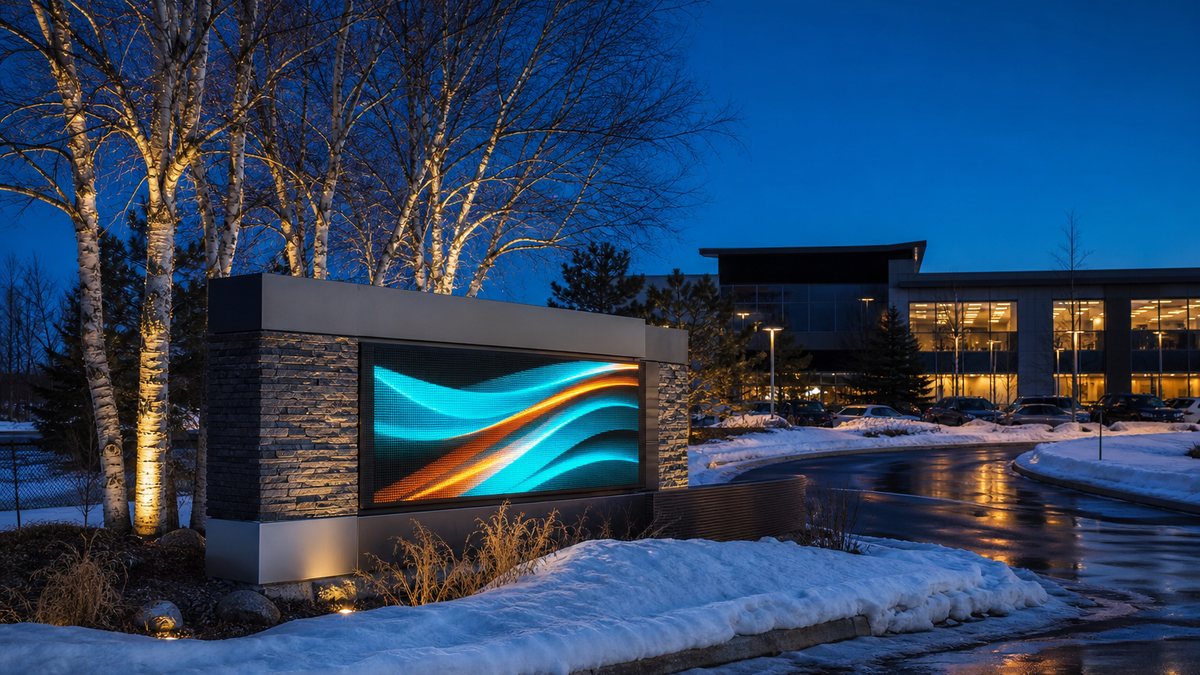
Cheap LED drivers can fail to start or flicker in deep cold. Specify UL-listed power supplies rated for low-temperature starting; many are rated to -40°F. Mount them where a technician can reach them in winter without removing faces.
2. Sealed seams, weep holes, and drip loops
Melting snow and ice get into every gap. Each channel letter and cabinet needs sealed seams, clear weep holes at the bottom so water can drain, and drip loops on every wire entry. Water that freezes inside a letter can crack faces and short connections.
3. Impact-resistant faces
Hail and cold make thin acrylic brittle. Polycarbonate or impact-modified acrylic faces hold up far better. Metal-faced or halo-lit letters avoid the issue entirely on the face.
4. Salt-resistant hardware and finishes
Road salt spray reaches signs along busy streets and parking lots. Use stainless or coated fasteners and quality paint systems, especially on pole bases and anchor bolts near plow lanes.
5. Footings below the frost line
Minnesota Rule 1303.1600 sets the minimum footing depth for frost protection at 5 ft in Zone I (northern counties) and 3.5 ft (42 in) in Zone II. Hennepin, Ramsey, Washington, Anoka, Dakota, Scott, and Carver counties are all in Zone II. Pylon and monument foundations are usually deeper than the frost minimum because wind load controls the design. Our pylon sign foundation engineering guide covers the details.
6. Snow, ice, and wind loads
Cabinets and tops of monument signs collect snow and ice. Tall pylon signs in open suburban lots face strong winds from summer storms. A licensed engineer should size the structure for both, using the current Minnesota Building Code and ASCE 7.
Schedule foundations before the ground freezes. Winter pours are possible with ground thawing, heated blankets, and cold-weather concrete methods, but they add time and risk. Many Twin Cities owners permit in fall, fabricate through winter, and install wall signs any time but pour pylon footings in spring.
Choosing the right LED sign type for the Twin Cities
Given the codes, here is how the common sign types fit Minneapolis and St. Paul properties.
| Sign Type | Best For | Twin Cities Notes |
|---|---|---|
| Channel letters | Storefronts, strip centers, offices | Max 24 in projection (Mpls); halo-lit for historic facades |
| Monument sign | Office parks, clinics, churches, schools | Small text-only LED board fits most Mpls districts |
| LED message center | Retail, auto, entertainment | Mpls 32 sq ft + 60 sec; St. Paul 12 sec + 0.3 fc |
| Pylon sign | Highway and arterial frontage | Engineered footing below 42 in frost; check MnDOT |
| Lighted box sign | Budget-friendly tenant signs | Not backlit near homes; no plastic faces in historic areas |
| Blade / projecting sign | Downtown, walkable corridors | 8 ft sidewalk clearance; COI in St. Paul at 15 in+ |
If you are replacing an older fluorescent cabinet, an LED retrofit may keep the existing structure. Be careful with nonconforming signs: Minneapolis treats added illumination as more than normal maintenance (Sec. 560.170(c)), and both cities limit changes to nonconforming signs. Our sign repair vs. replace guide walks through that decision. We also handle wall signs, lighted box signs, marquee signs, and digital billboards.
A typical Twin Cities sign project timeline
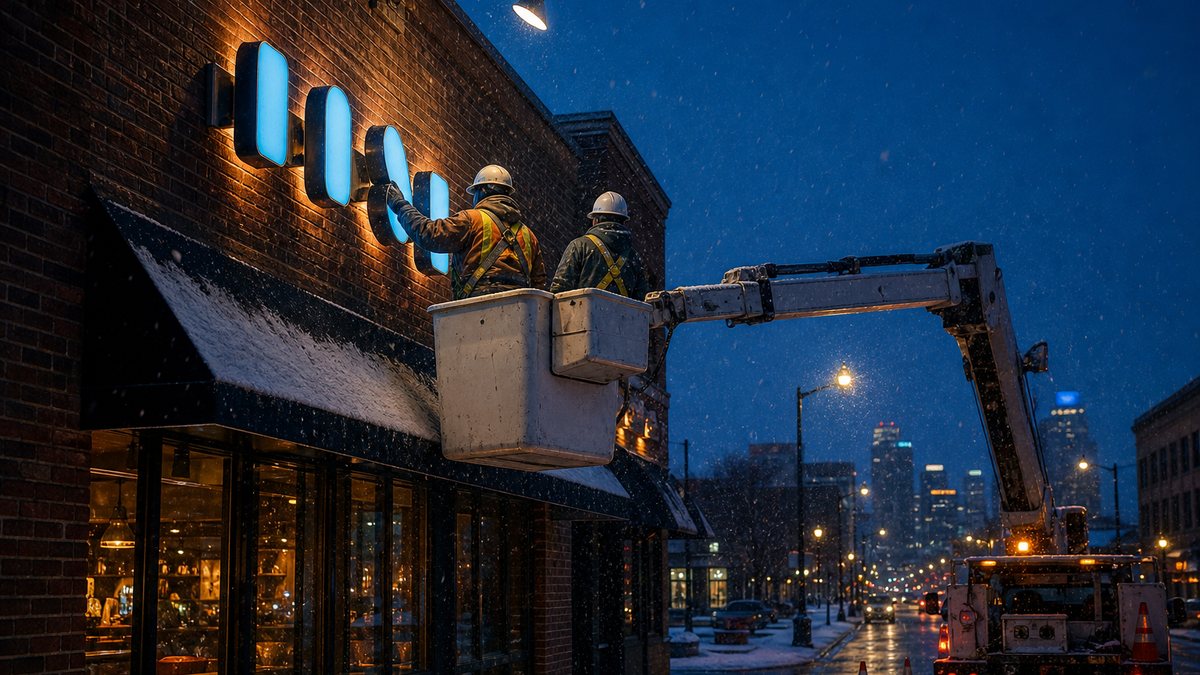
Every project is different, but most follow the same sequence. These are planning ranges, not guarantees.
- Site survey and code check (1–2 weeks): confirm the city, zoning district, existing sign area, landlord rules, and any historic designation.
- Design and engineering (1–3 weeks): drawings, structural calculations for freestanding signs, and electrical layout.
- Permits (a few weeks for simple wall signs; longer for conditional use, HPC review, or large freestanding signs): a Minneapolis conditional use permit for a dynamic sign or a Certificate of Appropriateness adds a public hearing.
- Fabrication (runs during permitting): cold-rated drivers, sealed letters, impact faces.
- Installation and inspection (1–3 days on site): St. Paul's 48-hour notice, electrical inspection, and final zoning sign-off.
The biggest delays come from incomplete applications, missing landlord approval, and choosing a digital display that the zoning district does not allow. Our sign permit timelines by state guide shows how Minnesota compares with other markets.
What drives the cost of a Twin Cities LED sign
We do not publish prices because materials and labor change too often. Instead, here are the factors that move a quote up or down:
- Size and sign type: letter count and height, cabinet size, single or double face.
- Illumination: front-lit, halo-lit, or combination letters; message center pixel pitch and color.
- Engineering and foundation: soil, wind and snow loads, and footings below frost.
- Permits and reviews: conditional use, HPC review, or MnDOT coordination.
- Electrical: new circuits, distance to the panel, and trenching through frozen or paved ground.
- Season: winter foundation work needs extra steps.
- Long-term care: cold-climate parts and a maintenance plan lower lifetime cost. See our commercial LED sign maintenance guide.
The fastest way to a real number is a site-specific quote. Request a free quote and we will review your address, zoning, and goals.
Serving the Upper Midwest
Many Twin Cities businesses have locations across the region. We also build signs for Milwaukee, Des Moines, Omaha, Chicago, and Indianapolis. For chains, our multi-location rollout guide explains how to keep one brand standard while meeting each city's code. Cold-climate peers like our Denver signage guide and Massachusetts channel letter guide cover similar winter design issues. Browse all services, locations, and our project gallery.
Frequently Asked Questions
Do I need a permit for an LED sign in Minneapolis?
Yes, in almost all cases. Minneapolis Zoning Code Sec. 560.120 requires a zoning administrator permit for signs, and only a city-licensed sign hanger can submit the application. Small exceptions include signs under 8 square feet and face replacements with no structural or electrical change. Illuminated signs also need electrical work done under permit.
Can a business owner pull their own sign permit in Minneapolis or St. Paul?
Generally no. Minneapolis requires a sign hanger's license to install a sign or submit a sign permit application. St. Paul requires a licensed sign contractor, and when an owner hires a sign company, the contractor obtains the permit. Both cities require the sign contractor to carry a surety bond.
How long must an LED message stay on screen in Minneapolis?
A full dynamic sign must hold each message for at least 60 seconds under Sec. 560.230(d). A text-only dynamic changeable copy sign must hold each message for at least 15 minutes under Sec. 560.230(c). Transitions must be instant, with no fading, scrolling, or other effects.
How bright can an LED sign be in Minneapolis?
Minneapolis caps electronic signs at 5,000 nits between sunrise and sunset and 500 nits between sunset and sunrise. An automatic dimmer is required so the sign adjusts to light conditions.
What are St. Paul's rules for digital signs?
St. Paul Sec. 64.405 limits dynamic displays to 200 square feet per face and 20 percent of a property's total allowable signage. Messages may change no more than once every 12 seconds, brightness is capped at 0.3 foot-candles above ambient light measured 50 feet away, and displays must be 75 feet along the road and 50 feet radially from residential districts. Within 100 feet of a residential use, displays cannot scroll and must be off from 11 p.m. to 7 a.m. or after business hours.
Are digital signs allowed in Minneapolis historic districts?
No. The Minneapolis Heritage Preservation Commission design guidelines do not permit dynamic signs or dynamic changeable copy signs on landmarks or in local historic districts. Signs may be lit externally, internally, or with neon-style LED, but not backlit, and must be attached through mortar joints.
How deep does a sign footing need to be in the Twin Cities?
Minnesota Rule 1303.1600 sets a minimum frost-protection footing depth of 3.5 feet (42 inches) in Zone II, which includes Hennepin and Ramsey counties, and 5 feet in northern Zone I. Most pylon and monument foundations go deeper because wind load and soil conditions control the engineered design.
Which electrical code applies to signs in Minnesota?
Minnesota enforces the 2026 National Electrical Code for electrical permits filed on or after August 17, 2026. Permits filed before that date follow the 2023 NEC. Sign wiring falls under NEC Article 600 and should be done by a Minnesota-licensed electrical contractor with a permit and inspection.
Are roof signs allowed in Minneapolis and St. Paul?
St. Paul prohibits roof signs in every zoning district. Minneapolis allows roof signs only in limited situations, such as on buildings of six stories or fewer, and prohibits dynamic on-premises roof signs.
How much does an LED sign cost in Minneapolis?
Costs vary with sign type, size, illumination, engineering, foundation work, permits, and electrical runs, so we quote each project individually. Request a free quote from American LED Signage at (702) 738-2218 for a site-specific price.
Ready for a sign that passes code and survives winter?
Tell us your address and goals. We will check the zoning, map the permit path, and design an LED sign built for Minnesota conditions.
American LED Signage is part of a network of commercial lighting and signage specialists. For projects beyond signage, see our partner sites: Dallas commercial LED, Fort Worth LED lighting, Arlington LED specialists, Plano commercial LED, Irving LED installations, statewide Texas LED lighting, wholesale LED components, American Starlight Ceilings for premium interior fiber optic ceilings, fiber optic lighting systems, modular building solutions, and modular structures in Dallas.