Business Signs in Philadelphia: Permits, Sign Codes & Illuminated Sign Guide
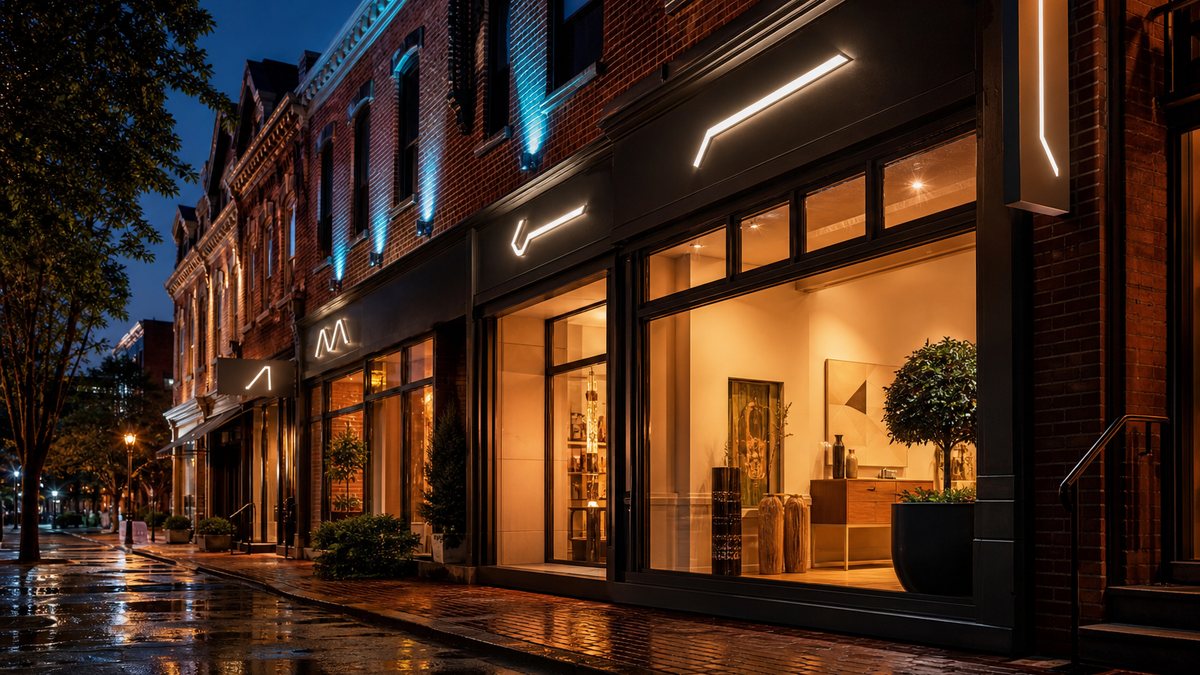
Business signs in Philadelphia go through one of the most layered approval systems on the East Coast. A new set of illuminated channel letters on a Center City storefront can need a zoning permit, a building permit, an electrical permit, and sometimes a sign-off from the Art Commission or the Historical Commission before a single bolt goes into the brick.
None of that is a reason to settle for a weak sign. It is a reason to plan the sign and the paperwork together. This guide walks through how Philadelphia sign permits actually work, which sign types fit which neighborhoods, the brightness rules for digital displays, and how to keep your project on schedule — whether you are opening a restaurant on East Passyunk, a clinic in University City, or a retail pad on Roosevelt Boulevard.
If you want the local overview first, start with our Philadelphia business signs page. If you are ready to plan, keep reading.
Most permanent business signs in Philadelphia need city approval from the Department of Licenses and Inspections (L&I). Here is the short version:
- Zoning permit first: Required for most exterior signs; building approval cannot be issued until zoning is approved
- Building permit: Required for most signs except small or non-illuminated exceptions (e.g., projecting signs of 2.5 sq ft or less)
- Electrical permit: Required for any illuminated sign or sign with moving parts
- Review time: About 20 business days with plans; about 5 business days for EZ and accelerated reviews
- Wind design: Signs must resist a 3-second, 115 mph gust plus snow loads (IBC Appendix H as applied by L&I)
- Digital brightness: Accessory digital signs are capped at 1,500 nits by day and 150 nits at night, with 8-second minimum message hold
- Extra reviews: Art Commission for projecting signs over the sidewalk and some overlay areas; Historical Commission for historic properties
How Philadelphia sign permits work
Philadelphia treats a sign as two separate questions. The Zoning Code (Title 14, with sign rules in Chapter 14-900) asks whether this sign is allowed at this location, at this size, with this kind of lighting. The Building Code asks whether the sign is built and attached safely. Electrical review asks whether the wiring and components are safe. Each question has its own permit, and the order matters.
1. Zoning permit
The zoning permit comes first. L&I checks the sign type, area, height, location on the building, illumination type, and any overlay district rules that apply to the property. Applications are filed online through eCLIPSE by the property owner or an authorized agent such as a tenant, contractor, or design professional. Tenants need an executed lease, and the application must use the property's legal address from the Office of Property Assessment.
2. Building permit
Once zoning is approved, the building permit covers structure: sign weight, wall construction, anchors (size, quantity, and spacing), and foundation details for freestanding signs. L&I applies IBC Appendix H, which requires signs to withstand a 3-second, 115 mph wind gust and Chapter 16 snow loads. Plans must show how the sign attaches to the specific wall it is going on — brick, block, steel stud, or EIFS.
3. Electrical permit
Any illuminated sign, or any sign with mechanical movement, also needs an electrical permit. That covers the power feed, disconnect, transformers or LED power supplies, and the connection to the building circuit. Signs should carry a UL 48 listing (or equivalent) and be installed per Article 600 of the National Electrical Code as adopted locally.
| Permit | What It Covers | Typical Review | Common Triggers |
|---|---|---|---|
| Zoning (with plans) | Sign type, size, height, illumination, overlays | ~20 business days | Most new exterior signs |
| Zoning (EZ, no plans) | Simple flat wall signs in eligible districts | ~5 business days | Single tenant, up to 3 signs |
| Building | Structure, anchors, wind and snow loads | ~20 business days | Most signs except listed exemptions |
| Building (EZ) | Small flat-mounted signs | ~5 business days | Up to 36 sq ft per sign, not historic |
| Electrical | Power, wiring, components | Varies | Any illumination or moving parts |
| Art Commission | Design review in sensitive areas | Monthly committee | Projecting signs over sidewalk, overlays |
Zoning approval must come before building approval, and Historical Commission approval must come before L&I will even accept a building application on a historic property. Sequence your submittals in that order or you will lose weeks to rejected applications.
The EZ permit shortcut (and when you can't use it)
Philadelphia offers a faster EZ path for simple storefront signs. It is a real time-saver for small retailers and restaurants, but the eligibility rules are tight.
EZ zoning permit conditions
- Single tenant with a single street frontage
- No more than three signs, including existing signs
- Accessory signs only, mounted flat (12 inches or less from the wall) or on the front of an awning
- Not above the roofline or the second-floor windowsill, with the bottom of the sign no more than 12 feet above grade
- Non-illuminated or static illumination only — no flashing, intermittent, or animated lighting
- Property zoned CMX-1, CMX-2, CMX-2.5, CA-1, or CA-2
EZ zoning is not available for cabinet signs, freestanding signs, projecting signs, roof signs, marquees, or window signs, and it is not available in the Center City overlay districts, the Ridge Avenue neighborhood commercial control, or the City Avenue control.
EZ building permit conditions
The building-side EZ permit covers flat-mounted signs up to 36 square feet each, no more than 12 feet in any direction, with the bottom no higher than 12 feet and the top no higher than 15 feet above grade. It is not allowed on historic buildings. A typical set of front-lit channel letters on a neighborhood corridor storefront often fits this path; a large cabinet sign or anything on a Center City tower does not.
Philadelphia sign types and how the code defines them
The Zoning Code's definitions decide which rules apply to your sign, so it pays to know them before you design.
- Wall signs extend 12 inches or less from the wall. Letters on the front or slope of an awning also count as wall signs.
- Projecting signs extend more than 12 inches from the wall, or sit on the side of an awning. Blade signs over the sidewalk fall here.
- Freestanding signs are supported by poles, frames, or structures set permanently in the ground — pylon signs and monument signs.
- Marquee signs sit on a permanent overhang projecting more than 18 inches over a sidewalk or right-of-way — think theaters and venues. See our marquee signs service.
- Roof signs sit on and above a roof, supported by the roof structure.
- Cabinet signs have an enclosed face, like a traditional lightbox.
- Window signs are within 18 inches of a street-facing window or door and visible from outside.
The code also separates accessory signs (advertising a business on the same property) from non-accessory signs (billboards and off-premise advertising). Almost every business sign is accessory. Non-accessory signs face a separate, much stricter set of rules covered below.
Choosing the right sign for your Philadelphia neighborhood
Philadelphia's commercial corridors look very different from each other, and reviewers expect signs that fit the street. Here is how the main sign types tend to line up.
| Area | Typical Fit | Watch For |
|---|---|---|
| Center City & Rittenhouse | Halo-lit or front-lit channel letters, slim blade signs | Center City overlay rules, no EZ zoning, Art Commission for projecting signs |
| Old City & Society Hill | Halo-lit letters, painted or externally lit blade signs | Historical Commission review on designated buildings |
| University City | Building ID letters, monument signs, wayfinding | Institutional campus standards, high-rise attachment engineering |
| Fishtown, Northern Liberties, East Passyunk | Channel letters, blade signs, awning letters | Projecting sign clearance and Art Commission review |
| Roosevelt Blvd & auto corridors | Pylons, monuments, LED message centers | Parks & Recreation and Art Commission review within 200 ft of the Boulevard |
| I-95 / I-76 frontage | Tall pylons, highway-scale displays | Sealed structural drawings, digital conversion limits |
Channel letters: the default for storefronts
Individually lit channel letter signs are the most common storefront sign in the city because they read clearly, fit most wall signage allowances, and adapt to brick, stone, and modern facades. Raceway-mounted letters reduce the number of wall penetrations, which matters on older masonry. For the tradeoffs, see our channel letters vs box signs comparison.
Halo-lit letters for historic and upscale blocks
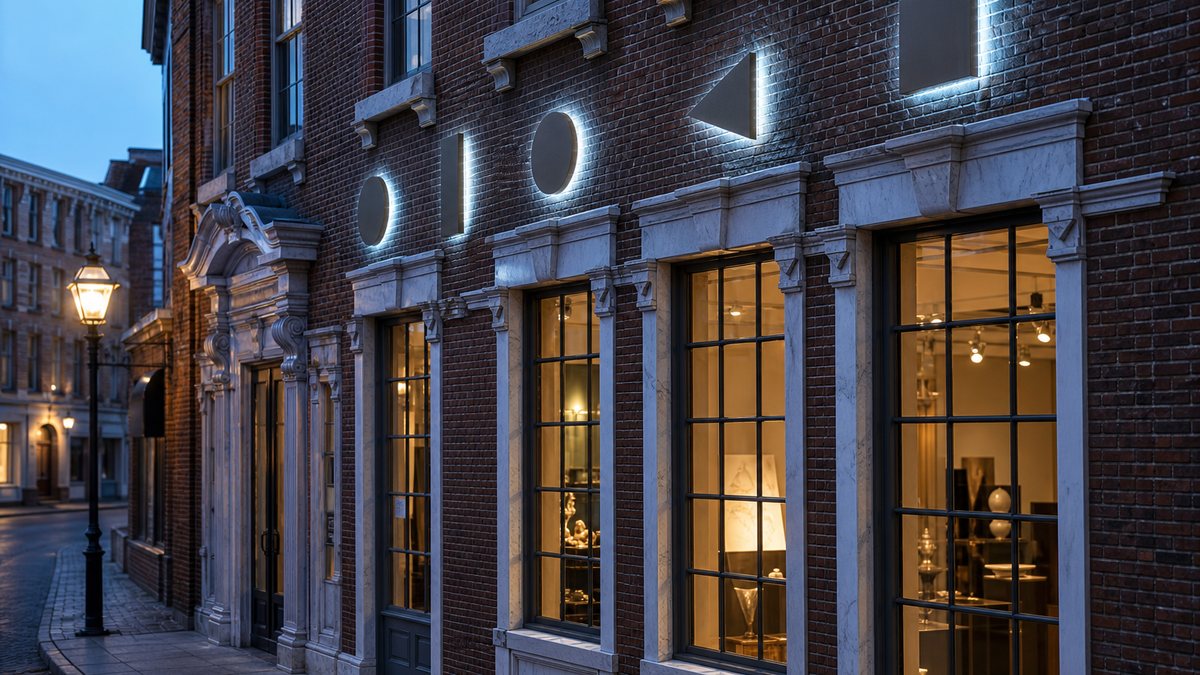
On historic blocks and premium retail streets, halo-lit (reverse-lit) letters are often the easiest illuminated sign to get approved because they glow softly against the wall instead of pushing light at the street. Our halo-lit vs front-lit guide covers the visibility differences.
Blade and projecting signs
Blade signs are a Philadelphia tradition on walkable corridors. Because they project over the public sidewalk, they often trigger Art Commission review, and the Department of Streets weighs in when a sign projects beyond Zoning or Streets Code limits. Clearance above the sidewalk is a recurring review point — the Art Commission's sign committee has approved projecting signs after applicants raised them to 9 feet above grade.
Pylons, monuments and message centers
Outside the dense core — Northeast Philadelphia, the Roosevelt Boulevard corridor, and industrial and auto districts — freestanding signs do the heavy lifting. Freestanding signs over 12 feet high need sealed plans from a Pennsylvania-licensed design professional, which includes the foundation design. Our pylon foundation engineering guide explains how those foundations are sized.
Sealed plans from a Pennsylvania-licensed design professional are required for wall signs on an unbraced parapet or EIFS wall, projecting signs over the public right-of-way, certain awnings, and freestanding signs over 12 feet high. Plan the engineering into your schedule from day one.
Art Commission, Historical Commission & other approvals
Philadelphia Art Commission
The Art Commission is the city's design review body, and its Sign and Streetery Committee reviews signs in specific situations. Art Commission approval is required for:
- Projecting signs or awnings with text on perpendicular sides over the right-of-way
- Signs in certain Center City (CTR) overlay areas and in the Germantown–Mount Airy neighborhood commercial overlay
- Signs in the Market East Advertising District
- Signs within 200 feet of Roosevelt Boulevard, Cobbs Creek Parkway, Fairmount Park, or Cobbs Creek Park
Committee reports show what reviewers look for: elevation drawings that show the sign in context with the existing storefront, reuse of existing raceways and infrastructure, pedestrian impact, and avoiding redundant signs. Applications that include clean context drawings tend to move faster.
Philadelphia Historical Commission
If your building is individually designated or sits in a local historic district — much of Old City, Society Hill, and the Rittenhouse area — the Historical Commission must approve the sign before L&I will accept the building permit application. Reviewers generally favor signs that are attached through mortar joints rather than historic masonry, sized to the storefront bay, and lit in a restrained way. Halo-lit letters, externally lit blade signs, and painted or gilded window lettering are common approvals.
Streets, Parks & Recreation
The Department of Streets reviews signs that project into the right-of-way beyond code limits, and Parks & Recreation approval is required for signs on its land and in the Parkway, Cobbs Creek, and Roosevelt Boulevard buffer areas.
Landlord approval is a fourth gate most people forget. Many Center City and shopping-center leases include sign criteria that are stricter than the Zoning Code — letter height, color, illumination type, and mounting method. Get the landlord's written sign criteria before design starts.
Get your sign and your permits planned together
We design to Philadelphia's zoning, building and electrical requirements from the first drawing — channel letters, blade signs, pylons, monuments and LED message centers with UL-listed components and multi-year warranties.
Illumination and digital sign rules in Philadelphia
Philadelphia regulates lighting by type, and the type you choose can change which permits and reviews you need.
Static vs animated illumination
Static illumination does not change color or intensity — standard LED channel letters, halo-lit letters, and lightboxes. Animated illumination changes. Many districts allow static lighting broadly but restrict animated lighting, and some residential-adjacent districts (RSA-4/5/6 and RM-1) prohibit animated illumination and mechanical movement entirely, allow only wall and freestanding signs, and cap freestanding signs at 7 feet tall.
Digital signs and electronic message signs
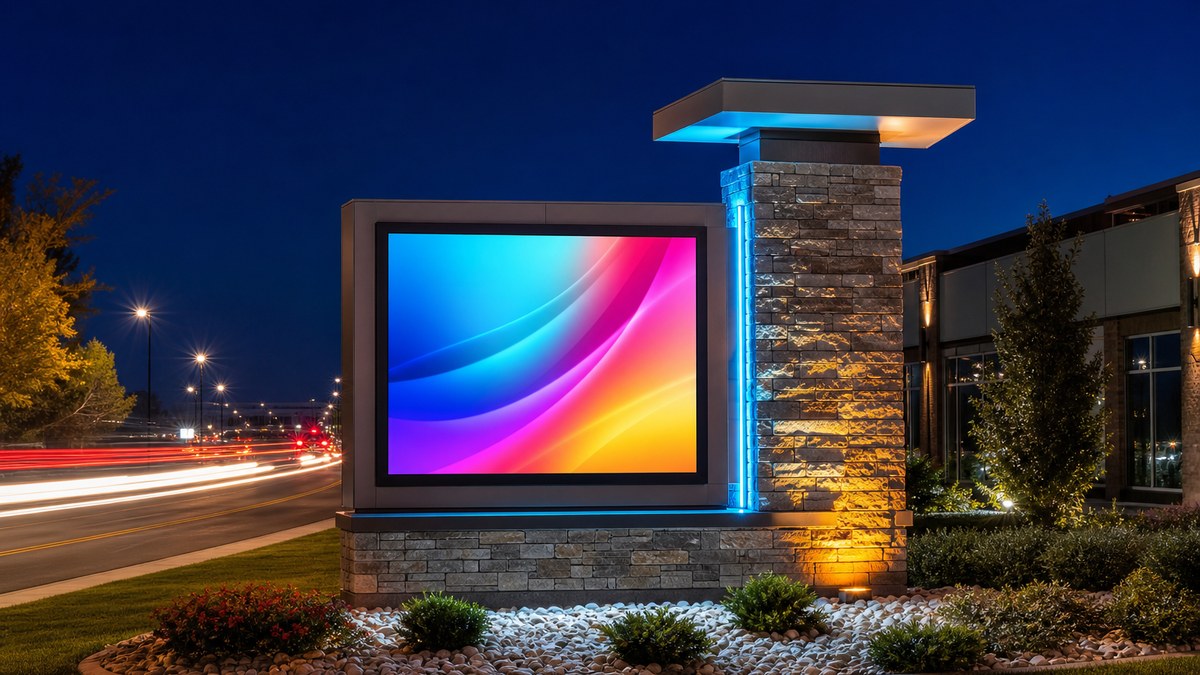
The code distinguishes digital signs (a series of still images, usually remotely programmed), electronic message signs (changeable text such as fuel prices), and digital news tickers (scrolling text). In the CA-2 district, digital and electronic message signs are allowed only on walls and news tickers are not permitted. Check the base district and every overlay before you commit to an LED message center.
Brightness, dwell time and inspection
L&I's code bulletin on digital signage sets clear performance limits for accessory digital signs:
- Daytime brightness: 1,500 nits maximum
- Other times: 150 nits maximum
- Automatic dimming: required at all times
- Dwell time: each message held at least 8 seconds
- Transition: changes completed in 0.25 seconds or less
After installation, a Pennsylvania-licensed professional engineer or approved third-party agency must measure brightness with a calibrated luminance meter and submit an inspection report within 30 days. Final inspection and the Certificate of Approval are held until that report is in. Specify a display with a light sensor and programmable dimming curve so the numbers are easy to hit. Our programmable LED sign buyer's guide covers pixel pitch and brightness specs in detail.
Billboards and non-accessory digital signs
Off-premise signs are tightly controlled. They are allowed only in certain industrial districts, must be 500 feet from other non-accessory signs, and face strict separation from residential zoning. Conversion to digital is limited to locations within 660 feet of I-95 and I-76 oriented toward those highways, and each new digital face requires removing two existing lawful billboards of equal or greater area. If you are exploring highway displays, see our digital billboards page.
Engineering for Philadelphia's climate
Philadelphia gets humid summers, nor'easters, freeze-thaw cycles, and road salt. Signs built for the Sun Belt can struggle here. Plan for:
- Wind: 115 mph 3-second gust design per L&I's application of IBC Appendix H, with higher exposure on open highway frontage and upper-story locations
- Snow and ice: Chapter 16 snow loads on cabinets, raceways, and marquee canopies
- Freeze-thaw: foundations for pylons and monuments set below local frost depth, with sealed anchors and drainage
- Corrosion: stainless or galvanized hardware, sealed penetrations, and powder-coated returns to handle salt spray near roads
- Masonry: anchors set in mortar joints on historic brick, with sleeves or through-bolts where the wall requires it
Cold weather can also slow installs. Concrete for freestanding sign foundations needs protection in winter, and some Historical Commission and Art Commission timelines stretch around holiday schedules. For the full install sequence, read our channel letter installation guide; for winter-specific detailing in a similar climate, see our Massachusetts cold-climate sign guide.
A realistic Philadelphia sign timeline
Every project is different, but most Philadelphia business sign projects follow this sequence:
- Site survey and landlord criteria (week 1–2): photos, wall construction, electrical access, existing sign removal, zoning district and overlay check.
- Design and engineering (weeks 2–4): shop drawings, elevation in context, sealed structural plans where required.
- Prerequisite approvals (varies): Historical Commission, Art Commission, Streets, or Parks & Recreation as needed — often the longest variable.
- Zoning permit (about 5–20 business days): EZ or full review depending on eligibility.
- Building and electrical permits (about 5–20 business days): filed after zoning approval.
- Fabrication (overlaps permitting): letters, cabinets, or displays built while permits are in review.
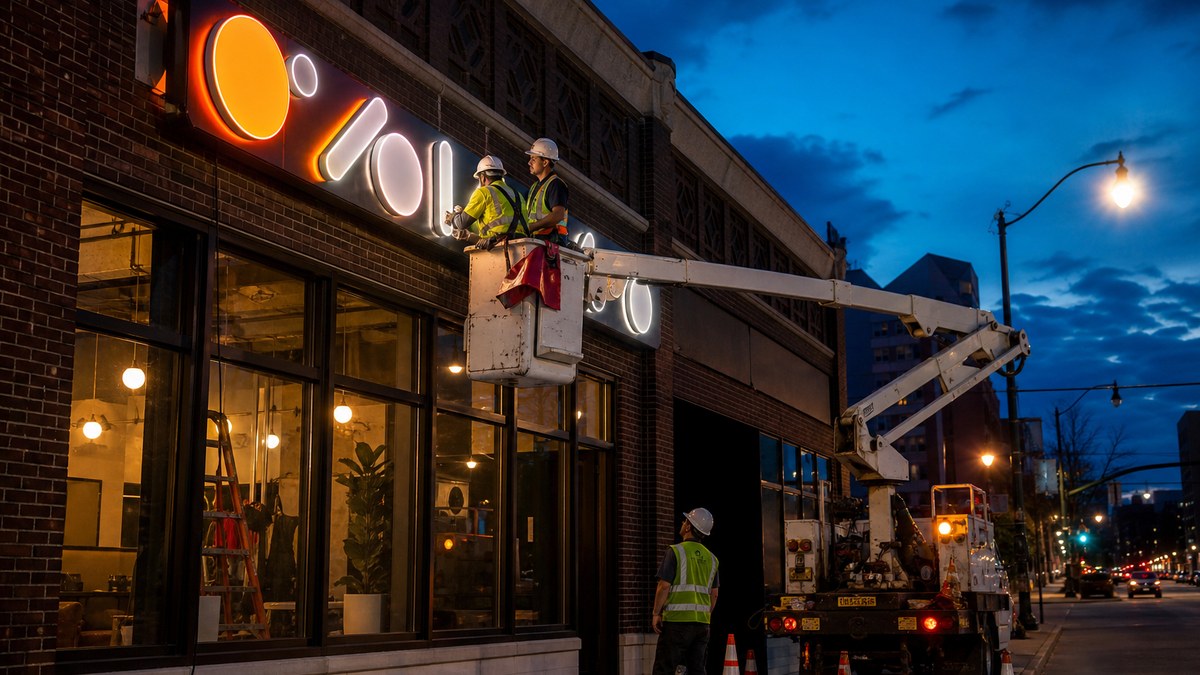
- Installation and inspection: install, electrical inspection, and for digital signs the brightness report within 30 days.
A simple EZ-eligible storefront sign can move quickly. A projecting sign on a historic Center City building or a freestanding sign near Roosevelt Boulevard can take considerably longer because of the extra reviews. Our sign permit timelines by state guide puts Philadelphia in national context.
What drives the cost of a Philadelphia business sign
We don't publish prices because materials, permits, and site conditions change constantly. What we can tell you is what moves the number up or down:
- Size and sign type: letter height and count, cabinet size, single vs double face
- Illumination: non-lit, front-lit, halo-lit, or full-color digital
- Engineering: sealed drawings, parapet bracing, EIFS backing, foundations
- Approvals: Historical Commission or Art Commission submittals and revisions
- Site access: narrow streets, sidewalk closures, lift or crane access, after-hours work
- Electrical: new circuits, disconnects, timers, and controllers
- Removal: taking down and disposing of an existing sign and patching the facade
For the long view on operating cost, read our true cost of LED sign ownership guide, then request a free quote for your specific site.
Greater Philadelphia and multi-location brands
Step outside city limits and the rules change completely. King of Prussia, Conshohocken, Bensalem, and the Main Line towns each have their own sign ordinances, and New Jersey suburbs like Cherry Hill follow municipal codes under a different state framework. A brand rolling out across the region should expect a different permit package for nearly every location.
That is where a standardized sign package pays off: one set of brand drawings, adapted per municipality, with permits filed in parallel. Our multi-location rollout guide explains the process. We also serve other Pennsylvania and Northeast markets, including Pittsburgh, New York, Boston, and Washington, DC. See all markets on our locations page.
Keeping your sign bright and compliant
A permit is not the finish line. Dark letters, flickering modules, and failed timers make a business look closed, and a damaged projecting sign over a busy sidewalk is a liability. Schedule inspections of anchors, power supplies, and seals, especially after winter. Our commercial LED sign maintenance guide lays out a schedule, and our sign repair and maintenance team handles service calls. Note that customary maintenance and changing a sign's content without structural or electrical changes are exempt from a new zoning permit — replacing the structure is not.
Frequently Asked Questions
Do I need a permit for a business sign in Philadelphia?
How long does a Philadelphia sign permit take?
What is an EZ sign permit in Philadelphia?
When does a Philadelphia sign need Art Commission approval?
Can I put an illuminated sign on a historic building in Philadelphia?
How bright can a digital sign be in Philadelphia?
Do Philadelphia signs need engineered drawings?
What is the best sign type for a Philadelphia storefront?
Can I convert my sign to a digital billboard in Philadelphia?
How much does a business sign cost in Philadelphia?
Plan your Philadelphia business sign today
Tell us your address, sign idea and opening date. We'll check zoning, overlays and historic status, then design a sign that gets approved and gets noticed — built with UL-listed components and backed by multi-year warranties.
American LED Signage is part of a network of commercial lighting and signage specialists. For projects beyond signage, see our partner sites: Dallas commercial LED, Fort Worth LED lighting, Arlington LED specialists, Plano commercial LED, Irving LED installations, statewide Texas LED lighting, wholesale LED components, American Starlight Ceilings for premium interior fiber optic ceilings, fiber optic lighting systems, modular building solutions, and modular structures in Dallas.