Building Signage in San Francisco & San Jose: Permits, Sign Codes & Dimensional Letter Guide
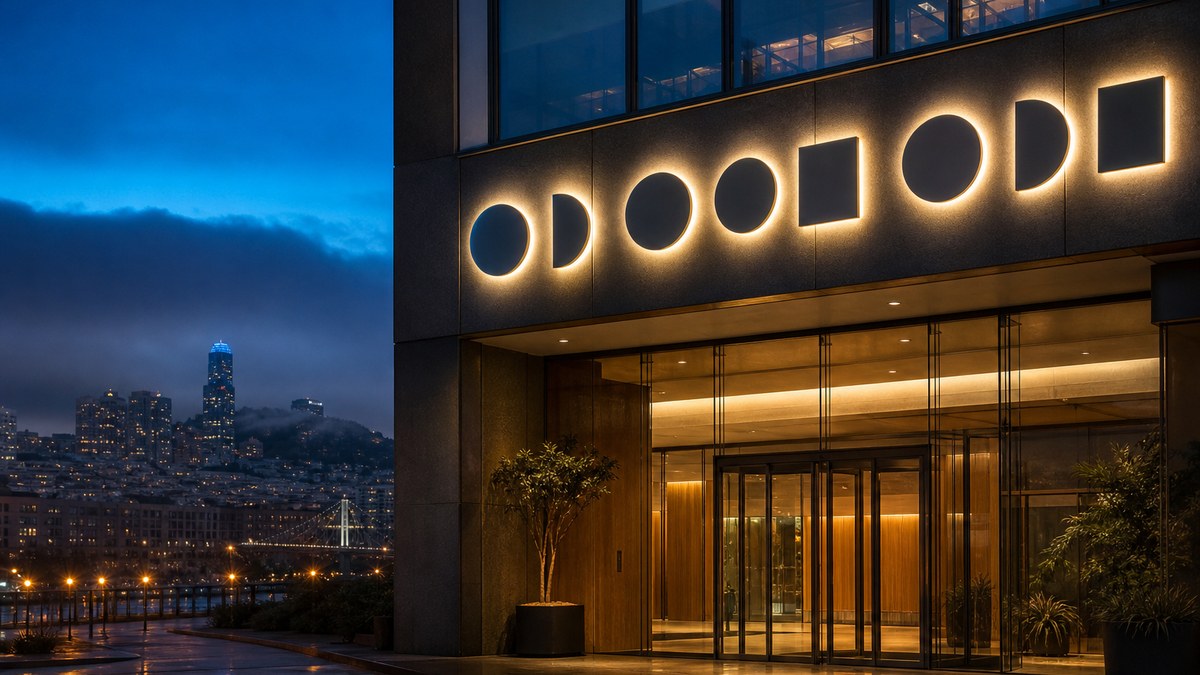
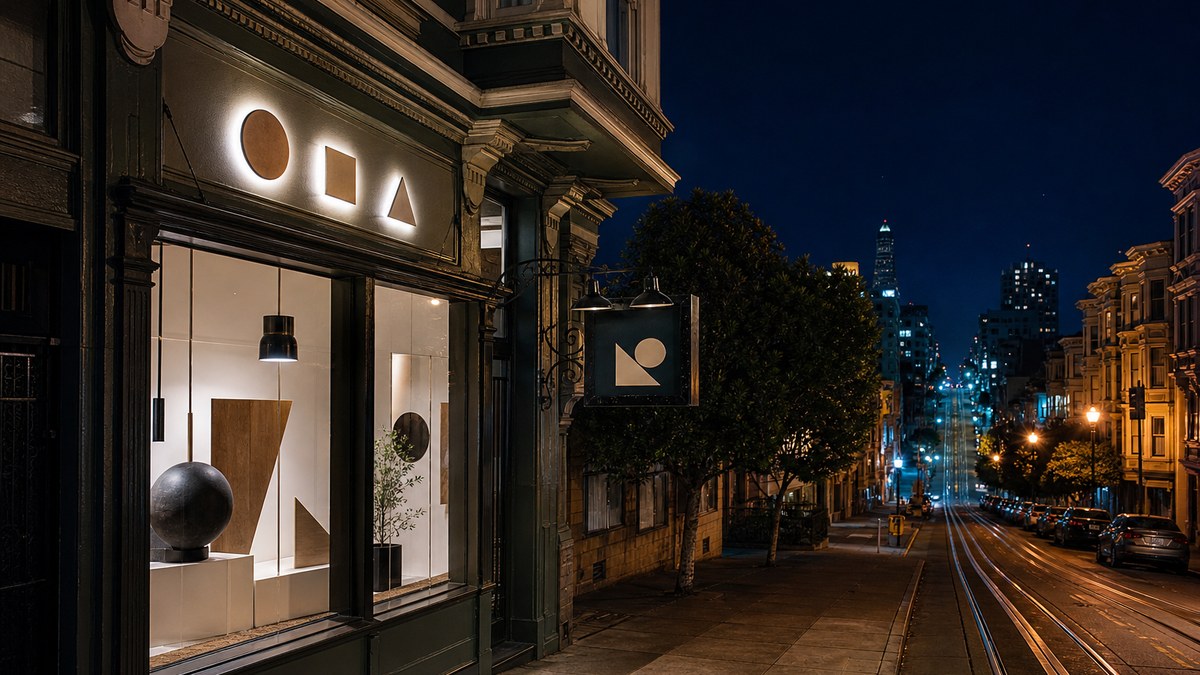
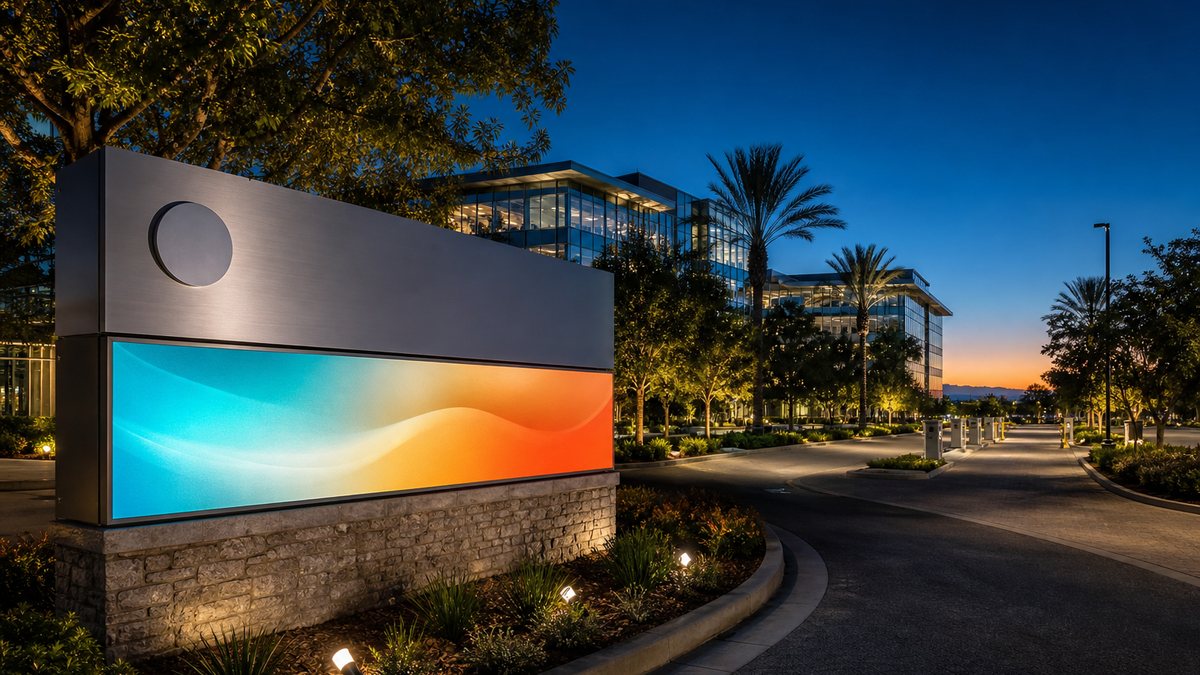
Building signage in San Francisco and San Jose looks simple from the street: a row of lit letters over a lobby, a projecting blade sign on a Victorian storefront, a monument at an office campus entrance. Behind each one sits two very different sign codes, a stack of permits, and some of the strictest building and energy rules in the country. If you are planning channel letters, dimensional letters, or an LED message center anywhere in the Bay Area, the rules decide what you can build long before the design does.
This guide walks through both cities side by side. We cover San Francisco Planning Code Article 6 and the Department of Building Inspection (DBI) permit path, San Jose Municipal Code Title 23 and its rules for programmable electronic signs, historic review, California's 2025 building, electrical and Title 24 energy codes, seismic and marine-air build specs, and a realistic timeline. There are no prices here, because sign costs change with every site. When you are ready, request a free quote and we will price your exact project.
Building signage in San Francisco and San Jose needs a city sign permit, and every lit sign also needs an electrical permit and inspection. The key numbers:
- SF sign code: Planning Code Article 6 · permit for almost every exterior sign · illuminated signs installed by a C-45 sign contractor
- SF no-go list: no new general advertising signs (Prop G, 2002) · no video signs or roof signs in C/M districts · no flashing unless in a Special District for Sign Illumination
- SF wall sign size: 50–150 sq ft in neighborhood commercial districts · up to 200 sq ft near schools, parks or transit in C/M districts
- San Jose sign code: Title 23 · sign permit under Sec. 23.02.1300 · programmable signs always need a permit
- San Jose digital rules: 4-second hold (8 seconds near freeways) · 0.3 fc above ambient · auto-dimming · no animation
- State codes: 2025 California Building and Electrical Codes in effect since Jan. 1, 2026 · Title 24 sign lighting controls · Seismic Design Category D or higher across much of the Bay Area
Two cities, two very different sign codes
San Francisco and San Jose are 50 miles apart, but their sign codes feel like they come from different states. San Francisco regulates signs through Planning Code Article 6, with rules that change by zoning district, and it adds historic review across a large share of its commercial corridors. San Jose regulates signs through Title 23 of its Municipal Code, which is more built around shopping centers, office campuses and freeway frontage.
The practical difference is simple. In San Francisco, the hard questions are usually about the building: is it a landmark, is it in a historic district, does the district allow direct illumination, and how far can the sign project over the sidewalk? In San Jose, the hard questions are usually about the site: how much street frontage you have, whether the sign is freestanding, and whether you want a programmable (digital) element.
| Topic | San Francisco | San Jose |
|---|---|---|
| Sign code | Planning Code Art. 6 | Municipal Code Title 23 |
| Who issues the permit | DBI, with Planning review | Planning Division / Permit Center |
| Digital / video signs | Video signs banned in C/M | Allowed in certain business zones with strict rules |
| Flashing or animation | Not allowed (except special illumination districts) | Not allowed on programmable signs |
| New billboards | Banned since Prop G (2002) | Controlled by Title 23 and Council policy |
| Historic review | Article 10 / 11 properties | Historic buildings: no irreversible damage |
| Electrical | Separate DBI electrical permit + Title 24 affidavit | Electrical permit + Title 24 compliance |
San Francisco: Planning Code Article 6
San Francisco requires a permit to install, replace, reconstruct, expand, intensify or relocate almost any exterior sign. That includes a new face on an existing cabinet if the sign gets bigger or brighter. A short list of signs is exempt, such as window decals, interior hanging signs, temporary sale or lease signs and construction signs. If your sign is lit, mounted to the building, or freestanding, plan on a permit.
Your zoning district sets the rules
Start with the zoning district, which you can look up on the city's property information map. San Francisco groups its rules roughly like this:
- Commercial and industrial (C and M) districts: no limit on the number of attached business signs, and signs may be directly illuminated. Sign area is capped at 100 sq ft when the sign is within 100 feet of and visible from a residential district, and 200 sq ft near a school, park, scenic street or rapid transit route. Attached signs can go up to 60 feet high or the roofline, whichever is lower (up to 100 feet in C-3 downtown). Freestanding signs top out at 36 feet in C-2 and 40 feet in other C, M and PDR districts.
- Neighborhood commercial (NC) and residential-commercial (RC) districts: wall sign area runs from 50 to 150 sq ft depending on the district, based on 1, 2 or 3 sq ft per linear foot of frontage. One projecting sign per business, typically 24 or 32 sq ft. Direct illumination is often limited to business hours.
- Residential districts: small identifying signs only, and no direct illumination in RH districts.
What San Francisco does not allow
Across commercial and industrial districts, San Francisco bans roof signs (except designated historic and vintage signs), wind signs, general advertising signs and video signs. Signs may not have moving parts, other than barber poles and time-and-temperature displays. Animated lighting, meaning flashing or blinking, is not allowed unless the property sits in a Special District for Sign Illumination. Neighborhood commercial districts add a ban on signs mounted on canopies.
The Planning Department's sign handout goes further on design. Signs should appear indirectly lit, with individually illuminated letters and logos on an opaque background. Transformers should be remote, and the city points to LED as a way to keep sign profiles thin. That guidance is a strong nudge toward halo-lit or reverse-lit channel letters and away from plastic-faced light boxes.
If your design is an internally lit cabinet with a plastic face, check the district before you go further. In historic and Article 11 downtown districts, San Francisco lists internally lit box signs with plastic lenses as not permitted. Individually lit dimensional letters usually get through review faster.
Projecting signs, blade signs and awnings
Projecting signs over the sidewalk are a San Francisco staple. In C and M districts, a projecting sign can extend up to 75% of the distance from the property line to the curb, or 6 feet, whichever is less. Neighborhood commercial districts use the same 75% rule with a 6 foot 6 inch cap. Awnings follow Planning Code Sec. 136.1: no higher than the ground floor, at least 8 feet above the sidewalk, and no covering of horizontal moldings, piers or columns. Storefront windows must stay at least 75% transparent, so window graphics cannot cover more than a quarter of the glass.
No new billboards
San Francisco voters passed Proposition G in 2002, which prohibits new general advertising signs anywhere in the city. Existing legal billboards may change copy, but each must display a placard with the sign company name, permit number and legal dimensions. For a business, this means any sign you install must advertise the business on that site. If you are weighing an off-premise digital board, our LED billboards guide explains why San Francisco is effectively closed to them.
Historic buildings and Article 10 & 11 review
A large share of San Francisco's commercial buildings are landmarks or sit in historic or conservation districts under Planning Code Articles 10 and 11. Signs on these properties need historic preservation review in addition to the standard sign check. If the building is a landmark, the online sign permit application asks for a Planning Approval Letter before DBI will move forward.
The city's guidance for historic and Article 11 downtown districts is specific:
- No flashing, animation or moving text, unless the sign itself has been found historically significant
- No internally lit box signs with plastic lenses, and no internally lit fabric signs or awnings
- No strobes, moving signs or signs that project an image
- All conduit concealed, with no exposed raceways or wiring
- Design, materials, placement, illumination and attachment all reviewed, so plan mounting into mortar joints rather than historic masonry faces
For many historic storefronts, the best fit is halo-lit letters on stand-offs, a painted or metal blade sign with small shielded lights, or non-illuminated letters washed by discreet fixtures. If you need help deciding between letter styles, see our channel letters vs. box signs comparison.
The San Francisco permit path, step by step
San Francisco sign permits run through the Department of Building Inspection, with routing to Planning and other departments as needed. The steps look like this:
1. Confirm the contractor license
Only certain licensed contractors can be issued a sign permit. A C-45 (sign) contractor can install every sign type, including illuminated electrical signs. A D-42 contractor can install non-electrical signs and awnings only. If your sign lights up, your installer needs the C-45.
2. Prepare construction drawings
Drawings must show sign area with dimensions, height from the ground to the bottom of the sign, projection from the building face, and lettering dimensions. Scaled front and side elevations are required, along with a manufacturer spec sheet. The application also asks for the sign's weight, attachment method, illumination type, and the building's occupancy class and construction type. The Planning checklist adds the length of your business frontage along the public right-of-way, which drives allowable sign area.
3. Apply online and respond to corrections
Plans are uploaded as a PDF and routed through multi-department review. Corrections show up in the application's attachments. Only the primary applicant can upload revised plans, and each revision round starts a new review. A complete, code-checked package on the first try is the single biggest time saver.
4. Pull the electrical permit
Every illuminated sign or awning also needs a DBI electrical permit and a separate electrical inspection. A Title 24 Compliance Affidavit must be uploaded before that inspection. If the crew needs the street or sidewalk during installation, a Public Works street space permit is also required.
5. Install and pass final inspection
After installation, the sign needs a final inspection. Keep the permit card and inspection records with your property files. Landlords, insurers and future buyers will ask for them. For how this compares with other major cities, see our sign permit timelines by state.
San Francisco does not limit the number of attached business signs in C and M districts. The limits come from area, height, projection and illumination. That means a well-planned sign program can include wall letters, a blade sign and window graphics, as long as each piece fits its own rule.
San Jose: Title 23 sign rules
San Jose's sign code lives in Title 23 of the Municipal Code. Its stated goals include keeping signs from creating traffic hazards and making sure signs on buildings add to the architecture rather than detract from it. Most signs need a permit under Sec. 23.02.1300. A few compliant signs are exempt under Sec. 23.02.1310, such as window signs, small non-electronic directional signs of 4 sq ft or less, temporary signs and flags. Programmable signs are never exempt.
Sign area and height
In San Jose's commercial and industrial districts, sign area is tied to the length of your occupancy frontage. The code sets an aggregate allowance per linear foot of frontage, with a smaller cap for any single sign, and limits flat-mounted signs to a set height above grade. Freestanding signs have their own area and height limits. Downtown and along certain corridors, special rules apply:
- Downtown Sign Zone: created for the Downtown Core, with extra allowances for programmable signs on ground-floor uses and taller flat-mounted signs on large nonresidential buildings
- Supergraphic signs: allowed downtown and in North San Jose under past ordinances, with a 2025 update proposed for large events — confirm current status before you plan one
- Freeway signs (Sec. 23.04.035): limited to large shopping centers within 250 feet of a freeway lane, capped at 500 sq ft, with height limits that drop near homes
- Large single-tenant spaces: a 2017 ordinance allowed more attached signs for big tenants on large shopping-center sites
Because San Jose has amended Title 23 many times, always design to the current text and confirm the numbers for your parcel with Planning staff. We do this check at the design stage on every San Jose channel letter project.
Programmable electronic signs (Sec. 23.02.905)
San Jose allows programmable electronic signs, which most people call digital signs or LED message centers, only in certain business zones. When allowed, they must follow strict operating rules:
| Rule | San Jose requirement |
|---|---|
| Message hold | 4 sec minimum (8 sec within 400 ft of a freeway) |
| Transitions | Instant; each message complete |
| Animation | No flashing, fading, rolling or animation |
| Sound | No audio |
| Brightness | 0.3 fc above ambient |
| Measuring distance | 100–350 ft, based on sign area |
| Dimming | Automatic, gradual |
| Malfunction | Default to black |
| Content | On-site messages only |
Some programmable sign types must also turn off overnight, and freeway-oriented digital signs must stay at least 150 feet from any dwelling. These rules are why we spec a photocell, a scheduler and a controller that can lock the hold time before the sign ever ships. Our programmable LED signs buyer's guide explains pixel pitch, brightness and controller features in more detail.
San Jose measures brightness against ambient light at a distance set by sign size, from 100 feet for signs up to 100 sq ft to 350 feet for signs over 1,000 sq ft. Ask for a sign with a calibrated ambient-light sensor and a commissioning report, so you can show the city the sign meets 0.3 foot-candles above ambient.
Historic buildings in San Jose
San Jose protects historic buildings too, though with a lighter touch than San Francisco. A programmable sign on a historic building must not cause irreversible damage or cover character-defining features. Signs listed in the city's Historic Resources Inventory need Planning approval to move, and the city has allowed sign variances for historic buildings since 2013. If your building is downtown or in an older neighborhood, ask about historic status early.
California's state code layer
Both cities sit on top of California's statewide codes. The 2025 California Building Standards Code took effect on January 1, 2026. It includes the 2025 California Building Code for structure and the 2025 California Electrical Code, which is based on the 2023 National Electrical Code. NEC Article 600 covers electric signs, including the disconnect, branch circuit and listing rules. Every sign must be built from listed components, which in practice means UL 48 for electric signs and UL 879A for LED retrofit kits.
Title 24 sign lighting controls
California's Title 24 energy code adds rules most other states do not have. Outdoor signs generally need automatic controls that shut the lights off when daylight is enough, plus a time switch, and signs lit at night must be able to dim. San Francisco requires a Title 24 Compliance Affidavit before the electrical inspection, and San Jose's digital sign rules point to Title 24 energy limits too. Our Los Angeles channel letter guide covers the same Title 24 requirements in detail.
Caltrans and state highways
If a sign faces a state highway or freeway, Caltrans outdoor advertising rules and California Vehicle Code limits on sign brightness may also apply. On-premise business signs are usually treated differently from billboards, but a large digital sign facing US-101, I-280 or I-880 deserves an early check.
Seismic, wind and marine-air build specs
The Bay Area is one of the most active seismic regions in the country. Most commercial sites in San Francisco and San Jose fall in Seismic Design Category D or higher. That affects how signs attach and how freestanding signs are founded:
- Engineered attachment: wall signs need anchors sized for seismic as well as wind loads, set into structure, not just veneer or stucco
- Lighter letters: aluminum channel letters and dimensional letters keep the seismic load down compared with heavy cabinets
- Projecting signs: brackets and through-bolts engineered for both directions of shaking, a big deal for blade signs over a sidewalk
- Freestanding signs: engineered foundations based on a soils report; see our pylon foundation engineering guide
Wind loads in most of the Bay Area are moderate compared with the hurricane coasts, but exposed sites on hills, waterfronts and wide-open freeway frontage still need site-specific wind design. San Francisco adds a third factor: fog, salt air and constant moisture. We specify stainless or coated hardware, sealed wire entries with drip loops, weep holes in letter returns, and UV-stable finishes. Our commercial LED sign maintenance guide explains what to inspect each year.
Building signage for San Francisco, San Jose & beyond
Code-checked designs, Article 6 and Title 23 permit packages, seismic engineering, Title 24 controls and UL-listed components — backed by multi-year warranties. Tell us about your building and we will build a plan.
Choosing the right sign for Bay Area buildings
The right sign type depends on the building, the district and how people see your business. Here is how the main options usually work out in these two cities.
Dimensional and channel letters
Individually lit channel letters are the most widely accepted lit sign in San Francisco because they match the city's preference for individually lit text on an opaque background. Halo-lit letters work especially well on stone, brick and historic facades. Non-illuminated dimensional letters in brushed metal or painted aluminum are common on office lobbies and tech campuses in San Jose. See our channel letter installation guide for the build sequence.
Projecting and blade signs
On narrow San Francisco storefronts, a blade sign is often the only sign that pedestrians see from down the block. Watch the 75% of curb distance rule, the 6 foot cap, and the one-projecting-sign-per-business limit in neighborhood commercial districts.
Monument signs
Monument signs are the workhorse at San Jose office parks, medical buildings and shopping centers. They sit low, read well at driveway speeds, and can carry an LED message center where the zone allows it.
Pylon signs and message centers
Pylon signs make sense for large San Jose retail sites, especially near freeways, where Title 23 has specific rules for freeway signs. In San Francisco, freestanding signs are limited by district height caps, and video signs are banned in C and M districts, so most San Francisco projects skip digital displays entirely.
Typical project timeline
Every project is different, but these ranges are typical for Bay Area building signage. They are planning ranges, not guarantees.
| Phase | Typical range | What drives it |
|---|---|---|
| Site survey & design | 1–3 weeks | Landlord criteria, zoning check, frontage measurements |
| Engineering | 1–2 weeks | Seismic and wind calcs, attachment details |
| City permits | 4–12+ weeks | Correction rounds, historic review, digital sign review |
| Fabrication | 3–6 weeks | Runs during permitting; sign type and finish |
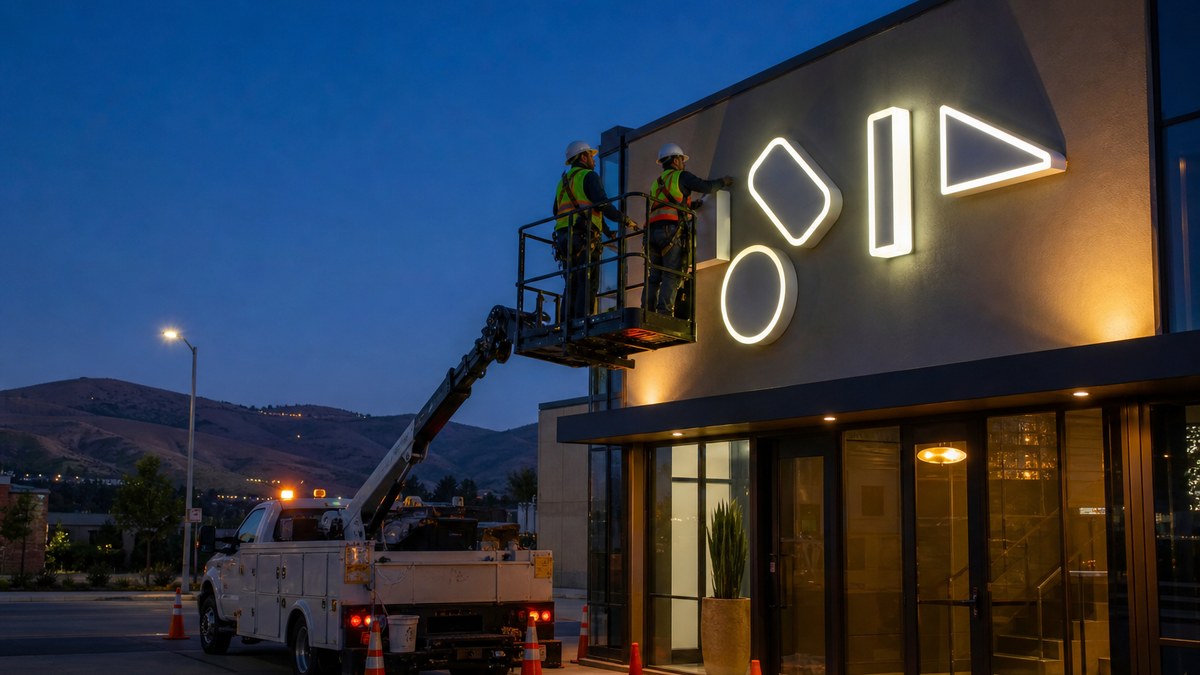
| Install & inspection | 1–3 days on site | Street space permit, lift access, electrical and final inspections |
Historic review in San Francisco is the most common reason a project stretches past three months. Programmable signs in San Jose can also add time if the zone requires extra findings. Starting the permit package early and running fabrication in parallel keeps the schedule tight.
What drives the cost
We do not publish prices because sign costs change with materials, labor and every site's conditions. These are the factors that move a Bay Area quote the most:
- Sign type and size: letter height, number of letters, cabinet size, single or double face
- Illumination: front-lit, halo-lit, combination or non-illuminated, plus Title 24 controls
- Engineering: seismic and wind calcs, stamped drawings, soils reports for freestanding signs
- Permitting: historic review, correction rounds, street space permits
- Electrical: new circuits, disconnects, conduit concealment on historic buildings
- Access: high-rise lobbies, busy sidewalks, lift and crane needs
- Digital components: pixel pitch, display size, controller and sensors
Send us your address, photos of the wall, and your logo files, and we will return a free, itemized quote. Already have a sign that needs work? Our sign repair and maintenance team handles LED retrofits and repairs too.
Beyond SF and San Jose: other California markets
Every California city writes its own sign code on top of the same state codes. If your rollout includes other California locations, see our pages for business signs in San Francisco, channel letter signs in Los Angeles, LED signs in Long Beach, LED signs in Sacramento and LED signs in Stockton. For the Pacific Northwest, our Portland digital signs guide covers Oregon's rules. You can also browse every market on our locations page, all of our sign services, or past work in the project gallery. Brands with many sites should read our multi-location rollout guide.
Ready to light up your building?
Share your address, wall photos and logo files. We will check the sign code, design to it, and handle permits, engineering, fabrication and installation.
Frequently Asked Questions
Do I need a permit for building signage in San Francisco?
Who can pull a sign permit in San Francisco?
Are digital or LED video signs allowed in San Francisco?
How big can a wall sign be in San Francisco?
Can I put a lit sign on a historic building in San Francisco?
What are San Jose's rules for digital signs?
Do all signs in San Jose need a permit?
Which electrical code applies to signs in California?
How long does a sign project take in San Francisco or San Jose?
How much does building signage cost in the Bay Area?
American LED Signage is part of a network of commercial lighting and signage specialists. For projects beyond signage, see our partner sites: Dallas commercial LED, Fort Worth LED lighting, Arlington LED specialists, Plano commercial LED, Irving LED installations, statewide Texas LED lighting, wholesale LED components, American Starlight Ceilings for premium interior fiber optic ceilings, fiber optic lighting systems, modular building solutions, and modular structures in Dallas.